H2 Deck By Bold Name
h2 xxxxxx
H1 xxxxxx
h2 xxxxx

Management
The convergence of several trends makes standardized cobot inspection systems especially compelling today. By Joshua Person
Standardized Cobot Inspection Is Reshaping Quality Control—And Every Manufacturer Should Pay Attention
Robotics
H2 Deck Info By Paragraph Style Bold
Headline
Manufacturers today face a paradox: quality expectations continue to rise, yet the labor available to perform consistent, repeatable inspection continues to shrink. Whether you’re producing automotive components, consumer goods, medical devices or packaging, the pressure to verify quality at higher speeds and with greater accuracy is now a universal challenge. Historically, automated inspection required custom engineering—lengthy design cycles, high upfront costs and specialized programming expertise. But that model is changing.
A new generation of pre‑engineered, standardized collaborative robot inspection systems is reshaping how companies approach quality assurance. These systems combine proven robotic platforms with integrated vision, intuitive programming and modular tooling. The result is a practical, scalable path to automation that works not only for large manufacturers but also for small and mid‑sized businesses that may have previously viewed automation as out of reach.
The Shift Toward Standardization in Robotic Inspection
For decades, robotic inspection was synonymous with custom integration. Every project was a one‑off, tailored to a specific part, process or environment. While effective, this approach created barriers:
- Long lead times
- High engineering and commissioning costs
- Difficulty adapting systems to new products
- Reliance on specialized programming skills
Standardized cobot inspection systems flip this model. Instead of starting from scratch, manufacturers begin with a pre‑engineered foundation—a robot, vision hardware, software and fixturing designed to work together out of the box. This reduces complexity and accelerates deployment while still allowing customization where it matters.
Collaborative robots amplify this shift. Their inherent safety features, small footprint and ease of use make them ideal for inspection tasks that require close interaction with operators or frequent changeovers. When paired with integrated 2D or 3D vision, cobots become powerful inspection tools capable of detecting defects, verifying labels, measuring features and ensuring assembly correctness.
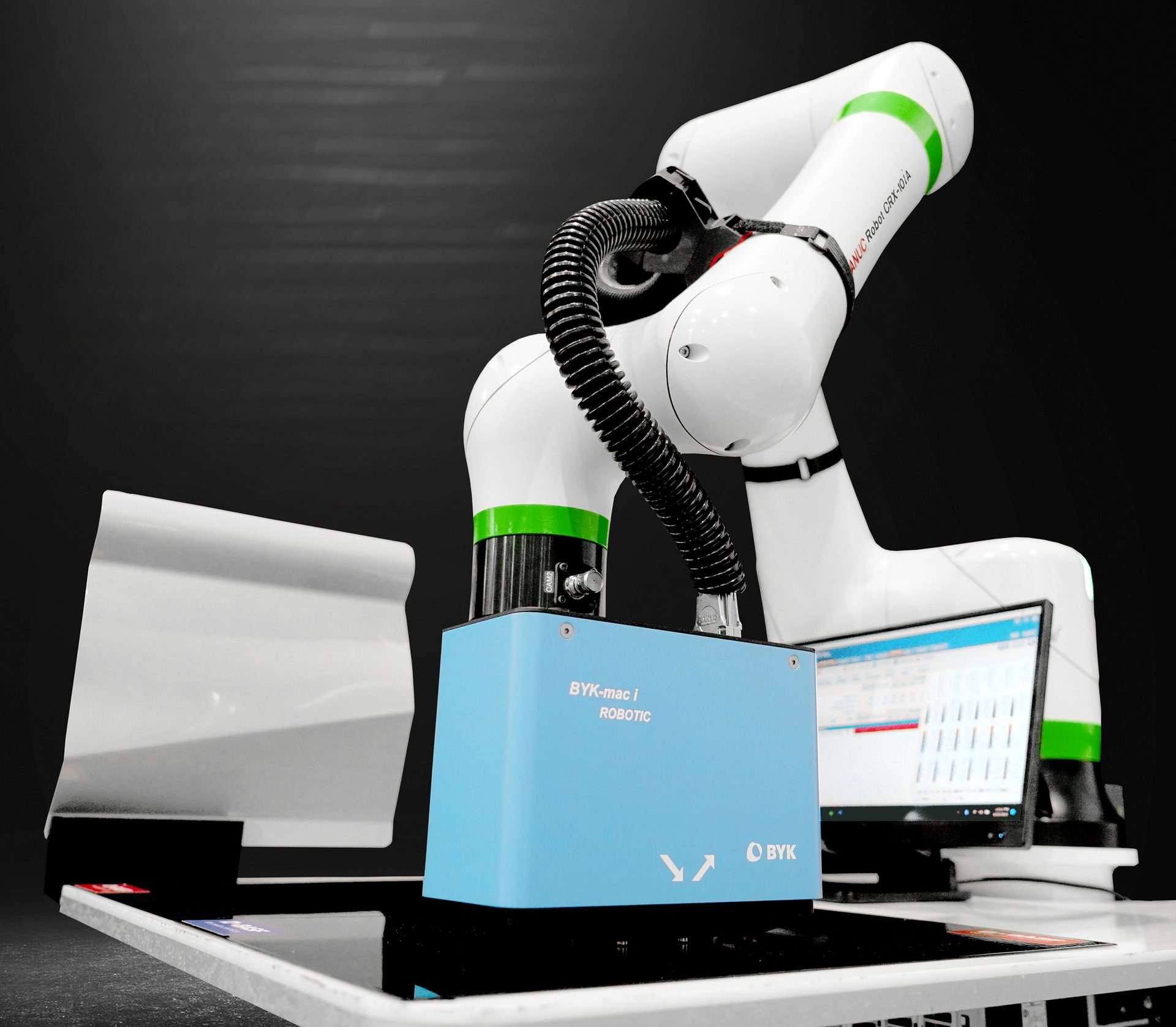
caption
Standardized Cobot Inspection Systems and the Problems They Solve
From paint color matching to EV battery inspection, across industries, standardized inspection solutions are emerging that combine collaborative robots with vision hardware and application‑specific tooling. Several examples illustrate how these systems address real‑world challenges.
Automated Surface Inspection for Industrial Components
Some standardized systems are designed specifically for surface defect detection on metal, plastic or composite parts. These solutions often integrate high‑resolution cameras and lighting with a cobot that moves the sensor around the part or presents the part to the camera.
Industries such as automotive, heavy machinery, and general manufacturing benefit from:
- Detection of scratches, dents, and surface anomalies
- Inspection of complex geometries
- 24/7 runtime capability
- AI‑based defect classification for tighter tolerances
These systems reduce the subjectivity of manual inspection and help manufacturers catch defects earlier in the process.
Label and Packaging Verification
In packaging and logistics, label accuracy is critical. A mislabeled box can lead to shipping errors, regulatory issues or customer dissatisfaction. Standardized cobot systems for label inspection typically use 2D or 3D vision to verify:
- Presence and placement of labels
- Legibility of barcodes or text
- Correct orientation
- Proper packaging assembly
This type of system is ideal for contract packagers, food and beverage producers, and e‑commerce fulfillment centers.
Dimensional and Assembly Verification
Standardized cobot inspection cells can also verify that components are assembled correctly or that critical dimensions fall within tolerance. These systems often integrate:
- 3D vision for depth measurement
- Laser scanners for profile verification
- Multi‑camera setups for complex assemblies
Industries such as electronics, medical devices and consumer products rely on these systems to ensure that even the smallest, most intricate parts meet strict quality standards.
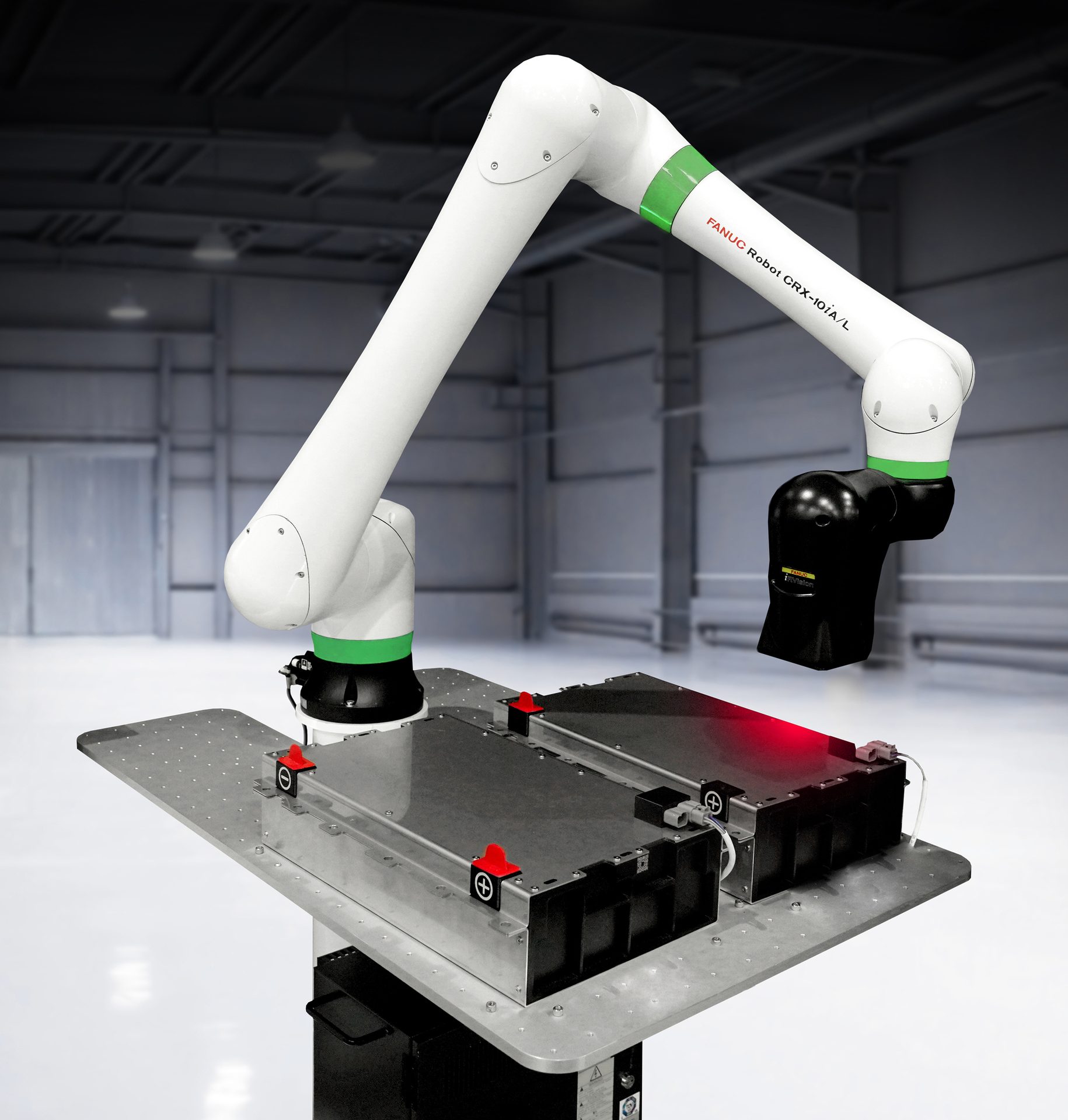
caption
High‑Mix, Low‑Volume Manufacturing
For manufacturers producing many different parts in small quantities, traditional automation can feel impractical. Standardized cobot inspection systems solve this by offering:
- Quick changeovers
- Intuitive programming
- Modular fixturing
- Vision tools that adapt to new geometries
This makes automation accessible even for job shops or specialty manufacturers.
But How Do These Systems Affect Workforce Development
One of the most overlooked benefits of standardized cobot systems is their impact on the workforce. The answer: instead of replacing jobs, these systems often elevate them.
Manual inspection can be monotonous and physically demanding. Cobot systems take on the repetitive portion of the work, allowing employees to focus on higher‑value tasks such as root‑cause analysis, process improvement or system oversight.
Because standardized systems are designed to be easy to use, operators can learn to:
- Teach inspection points
- Adjust vision parameters
- Interpret inspection data
- Maintain the system
Often, operators can learn and execute these tasks simply by manually moving a cobot arm, rather than relying on coding. This creates a pathway for employees to develop technical skills without the prerequisite of formal engineering backgrounds.
Most importantly, collaborative robots are designed to work safely alongside people. By automating inspection tasks that involve awkward postures, sharp edges, or hazardous materials, manufacturers can reduce workplace injuries.
The Role of Integrated Vision in Standardized Inspection
Vision is the heart of any automated inspection system. Modern cobot inspection solutions increasingly rely on integrated 2D and 3D vision to perform tasks that once required human judgment, with standardized system integrators selecting the best-fit vision and sensing technology for the given application.
2D Vision Ideal for:
- Label verification
- Barcode reading
- Presence/absence checks
- Surface-level inspections
3D Vision Essential for:
- Measuring depth, height, or volume
- Inspecting complex geometries
- Verifying assembly alignment
- Detecting subtle dimensional deviations
When vision is fully integrated into the cobot platform, manufacturers gain a unified interface, simplified setup and more reliable performance.
So, Is Now the Right Time to Consider Standardized Cobot Inspection?
The convergence of several trends makes standardized cobot inspection systems especially compelling today:
- Labor shortages are driving demand for automation that is easy to deploy and operate.
- Quality expectations are rising across all industries.
- Vision technology has become more powerful and more accessible.
- Cobot platforms have matured, offering reliability and ease of use.
- Standardization has reduced cost and complexity, making automation viable for smaller manufacturers.
Together, these factors create a unique opportunity for businesses to modernize their inspection processes without the barriers that once accompanied automation.
Looking Ahead: The Future of Cobot‑Driven Inspection
As standardized systems continue to evolve, several trends are emerging:
- AI‑enhanced vision will improve defect detection and reduce false positives.
- Cloud‑based analytics will help manufacturers identify patterns and prevent defects before they occur.
- Modular inspection cells will allow companies to reconfigure systems quickly as product lines change.
- Greater interoperability will make it easier to integrate cobot inspection into broader digital manufacturing ecosystems.
The future of inspection is not just automated—it’s adaptable, intelligent and accessible.