H2 Deck By Bold Name
h2 xxxxxx
H1 xxxxxx
h2 xxxxx

measurement
Force and torque measurements are direct indicators of how a process is behaving.
By Mark Fridman
Force and Torque Sensor Integration Has Come a Long Way
measurement
H2 Deck Info By Paragraph Style Bold
Headline
Quality managers and engineers, like many other professionals, are often judged by what goes wrong. A product failure, a recall, or a customer complaint draws negative press, while processes that run smoothly can be taken for granted. It’s not always fair, but there are many solutions in the QC toolbox to achieve the highest possible success rate, as the pages of this publication enthusiastically discuss. Force and torque measurement, specifically the emerging trend of inline measurements, is one such tool.
Whether it is the force required to insert a component, the torque applied to a fastener, or the load a structure experiences during testing, force and torque measurement quietly support quality across a wide range of industries. As products and processes become more complex, these measurements are increasingly used not only in laboratory settings, but directly in production environments where problems can be identified early and corrected quickly.
At the same time, the tools used to measure force and torque have evolved significantly. The basic engineering principles of the Wheatstone bridge haven’t changed, but the interface between sensors and a PC has. What once required multiple pieces of hardware and specialized expertise can now be accomplished with compact, integrated instruments that communicate directly. This evolution has expanded the role of force and torque measurement, making it a practical part of everyday quality assurance rather than a specialized or occasional activity.
Why force and torque are powerful quality indicators
Force and torque measurements are direct indicators of how a process is behaving. Small changes in measured force often reflect changes in materials, tooling, alignment, lubrication, or environmental conditions - frequently long before defects appear.
Unlike final inspection, which focuses on outcomes, force and torque measurement capture the process itself. Because of this, it is particularly effective for detecting variation, supporting root-cause analysis, and preventing defects rather than reacting to them after the fact. In many cases, force and torque data reveal not just that something went wrong, but how and when it began to drift.
As quality systems continue to shift toward prevention, risk-based thinking, and continuous improvement, force and torque measurement fit naturally into this approach by providing objective, real-time feedback on process performance.

Inline quality: measuring where value is added
One of the most impactful applications of force and torque sensors is inline quality control - measuring critical parameters during manufacturing rather than after production is complete.
In automotive component assembly, press-fit operations are a common example. Bearings, bushings, connectors, and pins must be installed within carefully defined force limits. Too little force may indicate a loose or incorrect fit, while excessive force can signal misalignment, burrs, or damaged components. By monitoring the force profile of each insertion, manufacturers gain immediate insight into process health. A smooth, repeatable force curve confirms consistency, while deviations can trigger alarms or part rejection before additional value is added.
Fastening operations benefit similarly. Measuring applied torque ensures that bolts and screws are tightened correctly every time. Under- or over-tightening can cause trouble down the road. Inline torque verification enables each fastening event to be validated and recorded, supporting quality assurance and traceability requirements increasingly expected by customers and regulators.
In food and beverage production, monitoring forces on conveyers, belts, and other components common in high-production, automated facilities, can identify drift due to product variations, temperature changes, or equipment wear. A steady drift to a pre-established limit can trigger a preemptive line shutdown, avoiding more costly rework or repairs later.
Across industries, inline force measurement shifts quality control from periodic inspection to continuous assurance, reducing the cost of late-stage defects.
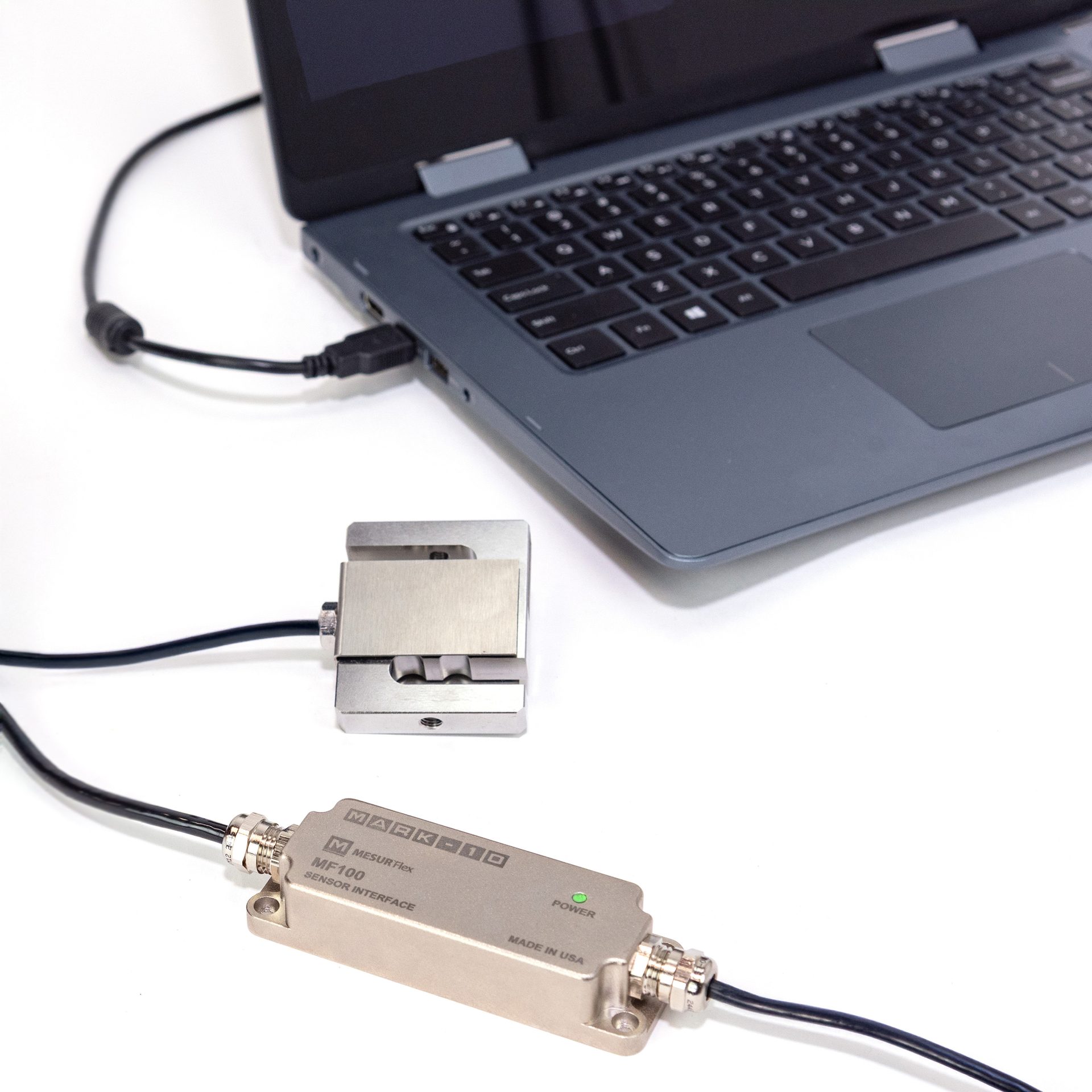
A load cell is connected to a PC via a single integrated interface, providing a direct digital signal without external amplification, conditioning, and conversion hardware.
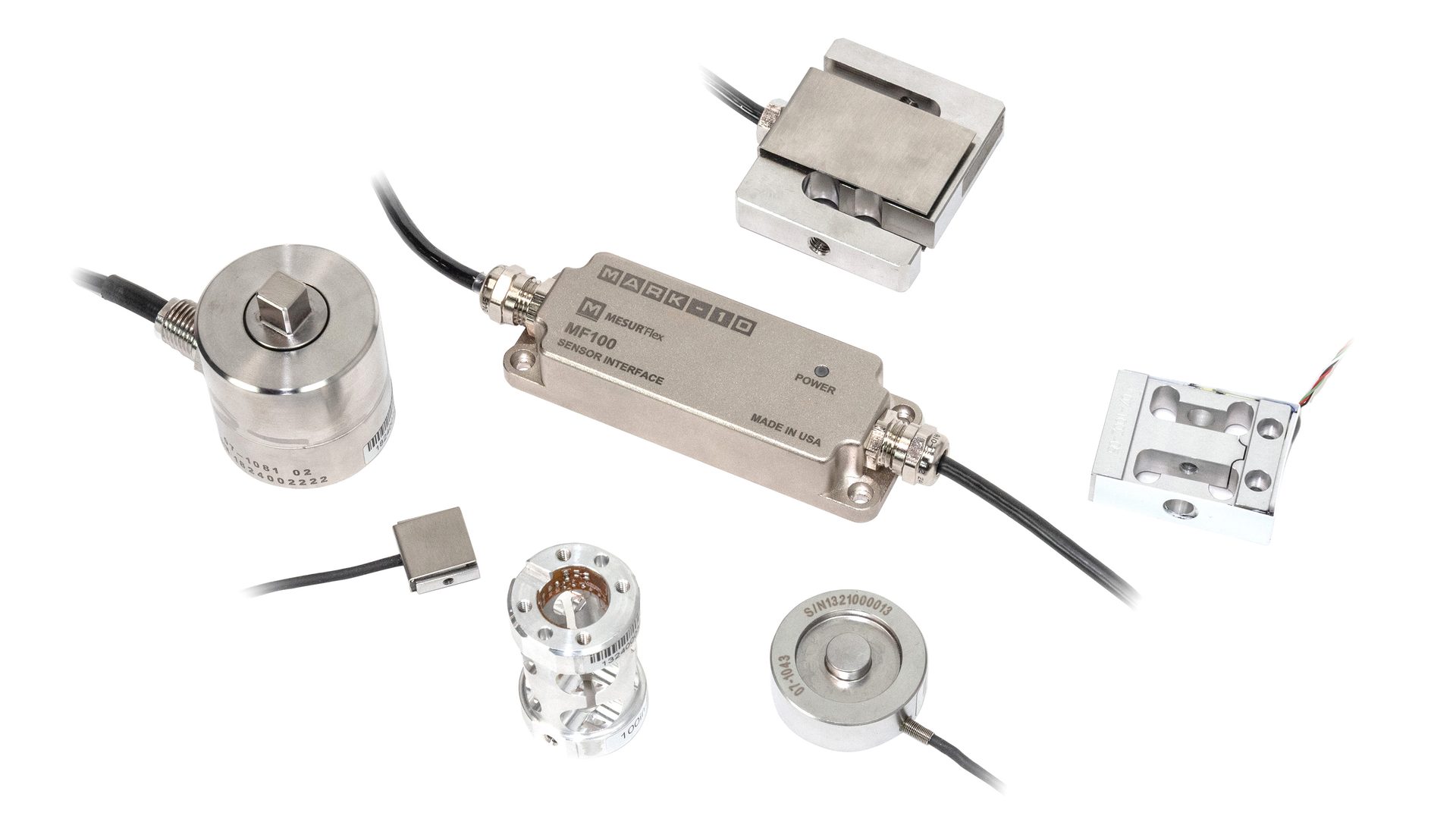
Force and torque sensors of many types and capacities are used for inline measurements on production lines, as well as quality and research applications.
R&D and validation: understanding behavior before release
While production environments emphasize speed and repeatability, research and development focus on understanding how products behave under simulated real-world conditions. Force and torque sensors are essential in this phase because they allow engineers to quantify performance under controlled loading.
In aerospace development, force measurement plays a central role in structural testing. During airframe and component validation, carefully controlled loads simulate aerodynamic forces, pressurization, and operational stresses. Force sensors embedded in test rigs measure how loads are distributed through structures, joints, and fasteners. This data is used to validate analytical models, confirm safety margins, and identify stress concentrations long before an aircraft enters service.
Force measurement is also critical for aerospace mechanism testing, such as evaluating actuation forces for control systems, latches, and access panels. These forces must remain within defined limits to ensure reliability, usability, and durability over repeated cycles and long service lives.
Other industries rely on force measurement in similar ways. Medical device manufacturers measure insertion and withdrawal forces to balance performance with usability and patient comfort. Consumer product designers evaluate actuation forces to ensure consistent behavior across large production volumes, such as in home appliances.
Validation testing bridges R&D and production. Force and torque measurement data become part of the product’s permanent quality record, supporting regulatory submissions, audits, and long-term traceability.
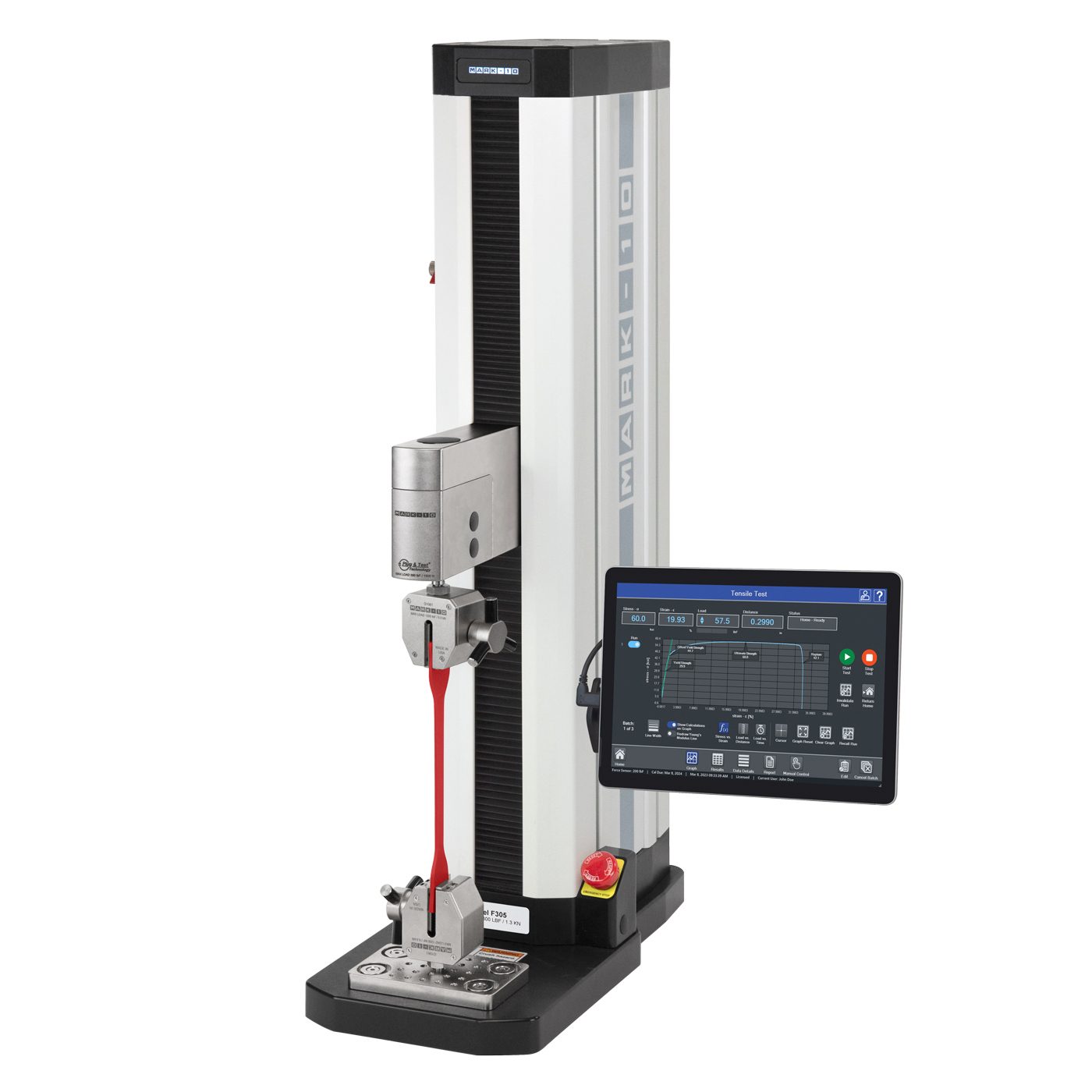
A benchtop force measurement system consists of a universal compression/tension testing machine, force sensor, and fixtures to grip the specimen.
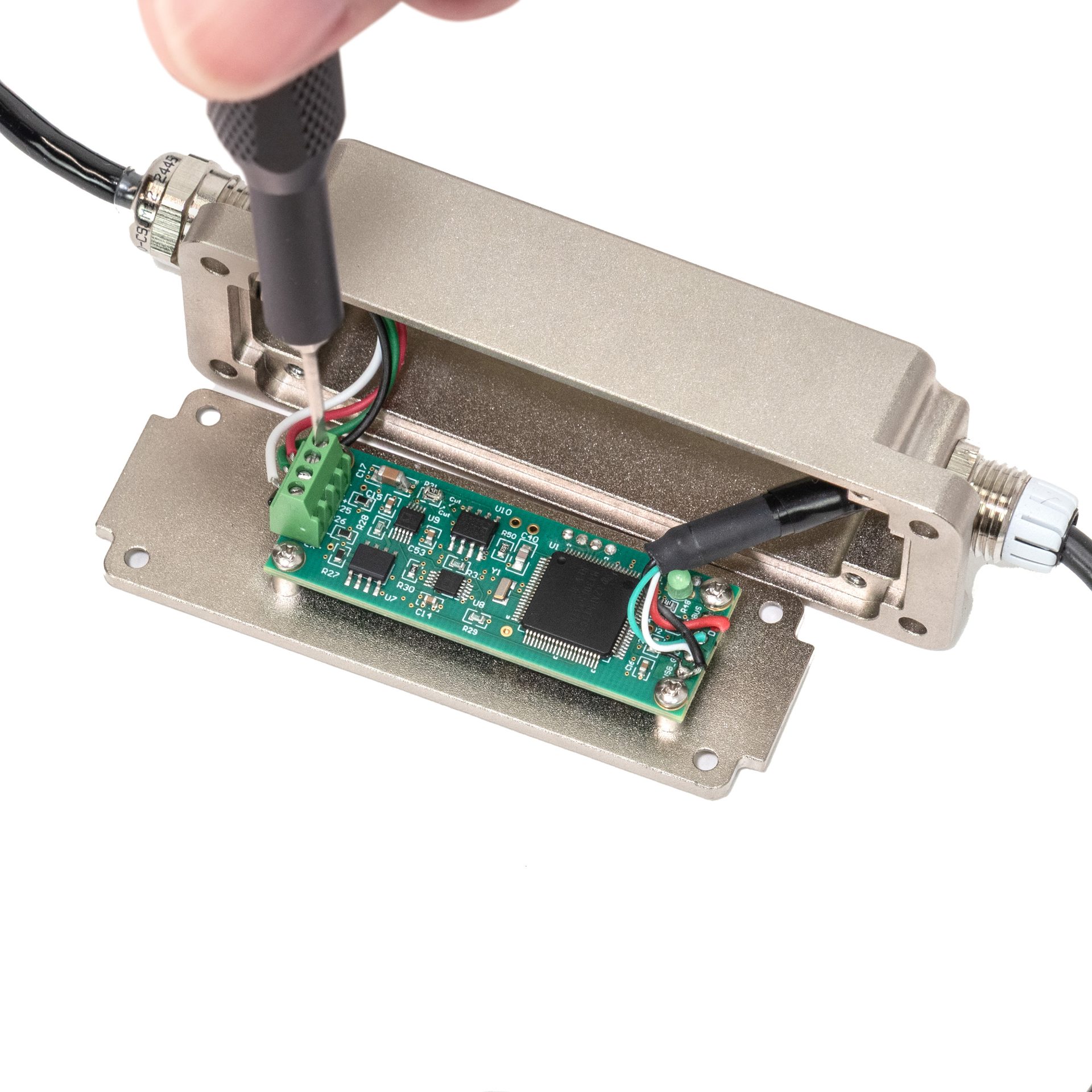
Connecting the leads from a force or torque sensor to an integrated digital interface.
From complex systems to integrated instruments
Connecting a load sensor to a PC used to be complex. A typical setup included an external amplifier, a signal conditioner, data-acquisition hardware, and dedicated software. While effective, these systems required specialized expertise and considerable cost.
Newer instruments have simplified this landscape by integrating sensing, conditioning, display, and digital communication into a single device. With direct USB connectivity, force data can be streamed straight to a PC without external DAQ hardware. In many cases, users can rely on a single software platform to monitor live readings, log data, and communicate with sensors via serial communication, further reducing system complexity.
This consolidation shortens setup time, minimizes potential points of failure, and lowers the barrier to adoption. As a result, force and torque measurement are increasingly deployed on production floors, research facilities, and quality departments where reliability, repeatability, and ease of use are essential.
A note about offline testing
Despite significant progress in sensor-to-PC connectivity, validation of materials, subassemblies, and finished products frequently still relies on benchtop tension and compression testing systems. These systems consist of a universal testing machine, a force sensor, and dedicated specimen gripping fixtures, and are commonly deployed in quality labs, engineering facilities, or production environments.
Turning force data into quality insight
Measurement alone does not ensure quality; insight does. Modern force measurement software, and quality software in general, is designed to support quality workflows through features such as programmable pass/fail limits, peak capture, real-time graphing, statistical summaries, and time-stamped data logging.
By making force data actionable and accessible, quality teams gain earlier warning, clearer diagnostics, and stronger control over their processes.
A common language across the product lifecycle
One of the most significant benefits of simplified force measurement is continuity. The same measurement approach used during R&D can often be applied during validation and adapted for production monitoring. This creates a common language across engineering, manufacturing, and quality functions.
Design limits established early become acceptance criteria later. Manufacturing data informs future design improvements. Quality is no longer inspected only at the end - it is built in from the beginning and reinforced throughout the product lifecycle.
Quiet measurements, lasting impact
Force and torque sensors quietly do their daily work, yet they play a substantial role in ensuring the reliability, safety, and consistency of countless products. By revealing what cannot be seen, they help organizations detect problems earlier, understand processes more deeply, and reduce reliance on end-of-line inspection.
As force measurement technology continues to simplify and integrate into everyday workflows, its role in quality assurance will only expand - quietly strengthening quality at every stage of the product lifecycle.