H2 Deck By Bold Name
h2 xxxxxx
H1 xxxxxx
h2 xxxxx

Management
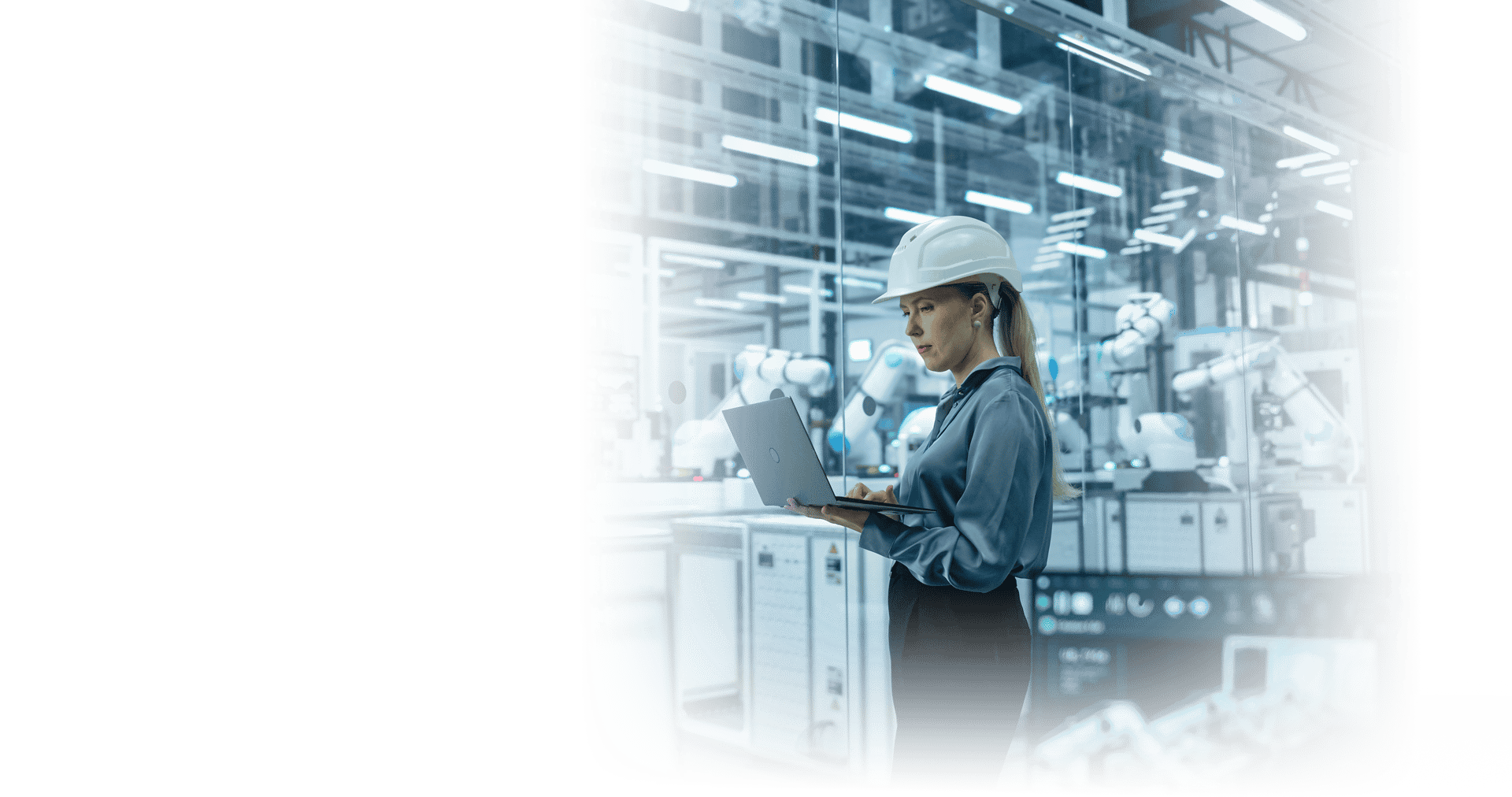
The integration of edge computing and IoT into industrial operations addresses several critical needs. By Anastasia Grishina
How Industrial IoT Trends
Are Reshaping the Manufacturing Industry
Management
H2 Deck Info By Paragraph Style Bold
Headline
The Industrial Internet of Things (IIoT) is a cornerstone of digital transformation in the manufacturing sector. According to Research and Markets, the global Industrial IoT (IIoT) market was valued at $194 billion in 2024 and will reach $286 billion by 2029. The primary reasons for this rapid expansion of IIoT lie in the urgent need for process optimization, operational efficiency, and cost reduction.
As IIoT adoption accelerates, being aware of the key technologies shaping this sector is essential to remain competitive and innovative. This article outlines the key industrial IoT trends and their impact on the manufacturing sector.
Trend 1. Edge Computing
Every year, manufacturing companies collect more and more data from IoT sensors, machines, and connected systems and a growing number of factories are turning to edge computing to quickly analyze this information and avoid delays by not sending all data to the cloud. This technology allows data to be processed locally, near the machines, controllers, and other IoT devices, instead of sending everything to a remote server.
The integration of edge computing and IoT into industrial operations addresses several critical needs, first and foremost among them are:
- Real-time data processing: Edge computing allows factories to analyze data instantly as it’s collected. It is essential for quality control, predictive maintenance, and time-sensitive operations.
- Improved security: As less data is transferred over the network, the risk of cyberattacks and data breaches is reduced.
- Bandwidth optimization: Since only relevant data is sent to the cloud, edge computing helps reduce network traffic, latency, and reliance on bandwidth-intensive cloud services, maintaining uninterrupted operations.
- Reduced costs: Edge computing reduces the cost associated with IoT data transferring, storing, and analyzing since only crucial information is sent to the cloud.
Trend 2. AI and Machine Learning
Integrating AI and ML into the IIoT ecosystem enables manufacturers to uncover hidden patterns in data generated by IoT sensors, machines, and other devices in real-time. These insights facilitate faster and more accurate decision-making and predictive maintenance, helping factories reduce downtime and enhance overall equipment effectiveness (OEE). Beyond these benefits, AI is also widely used in manufacturing for:
- Product quality and control: Manufacturers can use AI combined with computer vision to analyze camera images and identify product defects, like cracks, scratches, and geometric deviations, with accuracy beyond human capabilities. This reduces the time and cost of quality checks both during and after production.
- Inventory monitoring: IoT-enabled inventory monitoring systems use IoT sensors, such as RFID tags or GPS trackers installed on shelves and containers to track materials and products in warehouses and production lines. AI processes data from these IoT sensors in real-time to determine when inventory is needed, thereby reducing production downtime and waste.
- Improved workers safety: AI software analyzes data from IoT sensors that are placed on pipelines and in storage and production facilities to identify hazardous conditions in a factory, such as gas leaks or chemical spills, and promptly alerts employees to ensure a safer working environment.
Artificial intelligence in the manufacturing industry, alongside IoT, greatly improves data analytics capabilities and enables factories to make more accurate predictions and optimize industrial operations in real-time.
Trend 3. Digital twins
Currently, 24% of industrial enterprises using IoT have implemented digital twins, and another 42% plan to do so in the coming years, which shows the growing popularity of the technology.
A digital twin, or virtual copy of a physical object, like a factory, machine, or system, is created using data from IoT sensors and other connected devices. This “smart” digital copy is constantly updated in real-time to reflect its physical prototype’s current state and behavior, providing manufacturers with powerful insights and control capabilities. It allows them to:
- Prevent accidents and ensure compliance with safety standards by monitoring environmental parameters
- Monitor equipment/assets performance in real-time
- Remotely manage and optimize production processes
- Predict maintenance needs before failures occur
- Simulate new operating scenarios without risking real-world production
By utilizing digital twins, companies maximize resource usage, improve product quality, and drive innovation with minimal risk.
Trend 4. 5G connectivity
The number of IoT devices that support 5G is growing rapidly, from 25.6 million in 2023, it is projected to reach 800 million by 2030. This explosive growth is driven by the growing need for ultra-fast and stable wireless connectivity, which is essential for apps that require an instant response, like robotics management solutions or autonomous vehicle software, and manufacturing security systems.
5G supports up to one million devices per square kilometer, enabling widespread use of IoT sensors and devices on factory floors. This allows factories to connect thousands of sensors and machines simultaneously without losing signal or speed. By combining 5G with edge computing, manufacturing companies can process data closer to the source, thus reducing latency and speeding up decision-making.
Trend 5. Predictive maintenance
Predictive maintenance systems are commonly applied in manufacturing to anticipate equipment issues before they happen. Factories use IoT sensors installed on production lines, machines, and equipment to gather real-time data and AI and machine learning algorithms to analyze this data to assess equipment conditions, detect anomalies, and provide early warnings. As a result, maintenance teams can react promptly and more efficiently.
With predictive maintenance systems in place, manufacturers can:
- Proactively plan equipment maintenance
- Avoid costly downtime
- Extend equipment lifespan
- Reduce operation costs
According to the Deloitte report, predictive maintenance increases productivity by 25%, reduces breakdowns by 70%, and lowers maintenance costs by 25%. As a result, industrial companies can improve both their production efficiency and stability.
Trend 6. Decentralized energy systems
According to Business Research Insight, the global decentralized energy system market was valued at $52 billion in 2024 and is expected to reach $110 billion by 2030. This rapid growth is driven by the increasing use of decentralized energy systems in various sectors, including manufacturing.
Instead of relying on a central power grid, decentralized energy systems generate and use energy locally through solar panels, local wind turbines, batteries, and other distributed energy resources (DER) installed directly at the factory. These systems rely heavily on IoT to monitor, predict, and optimize energy production and consumption in real time. Beyond this, decentralized systems powered by IoT bring the following benefits:
- Increased energy efficiency: IoT sensors collect and analyze real-time data on energy consumption in the factory. They help optimize equipment performance, identify energy consumption inefficiencies, and reduce resource usage.
- Flexibility: IoT allows energy consumption to be automatically adjusted based on the current load in the factory, ensuring efficient resource utilization without manual control.
- Increasing reliability and resilience: These systems ensure stable power delivery and reduce dependence on the centralized grid, reducing the risk of mass outages. Integration with IoT reinforces this resilience through real-time data analysis systems that can proactively identify and respond to potential faults.
- Sustainability and ecology: IoT-based decentralized systems enable the tracking and real-time monitoring of energy use by collecting data from IoT sensors and connected devices. This data is used to optimize energy production, storage, and consumption, thereby reducing waste, preventing grid overload, and utilizing renewable resources more efficiently.
IIoT-enabled decentralized energy systems will most likely become an integral part of smart factories aiming for higher energy efficiency, sustainability, and competitiveness.
The future of Industrial IoT: summary
Over 65% of industrial enterprises have now incorporated IIoT solutions into their operations to improve decision-making and operational efficiency and create more flexible workflows. These advancements are driven by such technologies as AI, edge computing, digital twins, and 5G. As they continue to evolve, factories are likely to integrate them even further into their operations to become more intelligent, automated, and innovative.
While Industrial IoT deployment comes with certain risks, with a thoughtful strategy and solid technology expertise, factories can effectively navigate IoT adoption challenges. At this stage, an experienced IoT vendor plays a huge role because it can provide both the needed expertise and support at all stages of the IoT implementation process. Factories that invest in creating a robust IoT infrastructure with strong security safeguards from the beginning will be well-positioned to unlock the full potential of IIoT and adapt easily to changing manufacturing market needs.
References: