xxxxxx xx
xxxxxxxxxx
XRF
NDT
NDT
H2 Deck By Bold Name
h2 xxxxxx
H1 xxxxxx
h2 xxxxx

Used together, these technologies provide comprehensive coverage for complex applications, supporting traceability, audit readiness, and supply chain transparency. By Mark Lang
Enhancing Material Certification and Weld Procedures with Handheld XRF and LIBS Analyzers
In industries such as manufacturing, oil and gas, aerospace, and metal fabrication, ensuring the integrity of materials is of utmost importance for safety, performance, and regulatory compliance. Material certification verifies that alloys and metals meet the specified requirements of standards for composition, strength, and durability. In turn, weld procedures require precise control to prevent failures such as cracking or corrosion. Traditional methods for these processes often involve time-consuming lab tests or destructive sampling, leading to delays and increased costs. However, advancements in portable analytical tools, such as handheld X-ray Fluorescence (XRF) and Laser-Induced Breakdown Spectroscopy (LIBS) analyzers, have revolutionized these workflows. These devices provide rapid, on-site analysis, with real-time decision-making and improved quality control.
How XRF and LIBS work
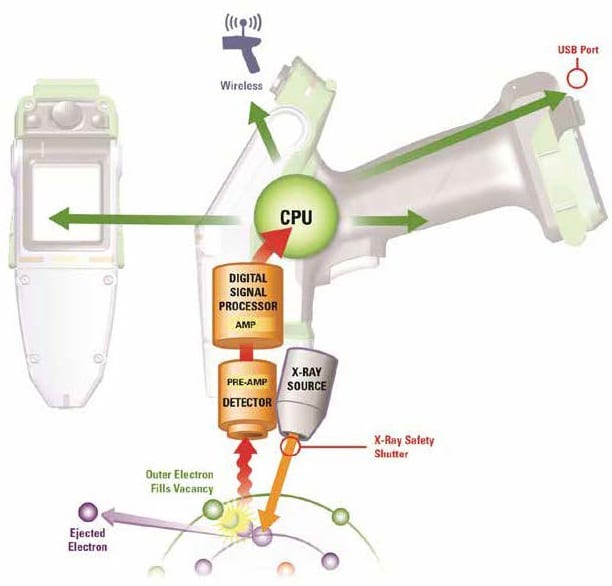
Handheld XRF analyzers work by emitting X-rays that excite atoms in a sample, causing them to fluoresce and emit secondary X-rays that are unique to each element. This nondestructive technique allows for quick identification of elemental composition from magnesium to uranium, making it ideal for verifying alloys without damaging the material.
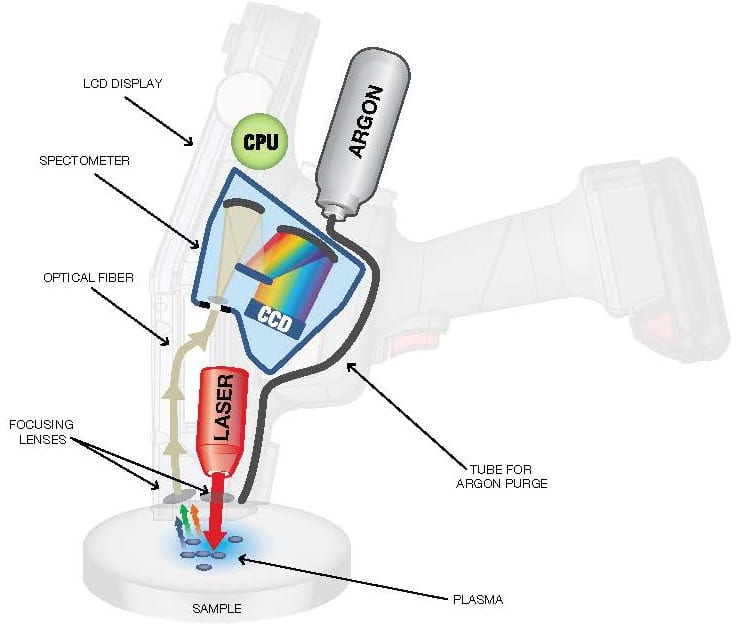
Similarly, handheld LIBS analyzers, such as those that use a high-powered laser to create a plasma on the sample's surface, analyze the emitted infrared light spectrum to detect elements, including carbon.
Both tools are lightweight, user-friendly, and designed for field use, featuring rugged construction suitable for harsh environments.

Sketch of handheld LIBS technology. Image credit: Thermo Fisher Scientific
Sketch of handheld XRF technology. Image credit: Thermo Fisher Scientific
Complementary strengths
Used together, these technologies provide comprehensive coverage for complex applications, supporting traceability, audit readiness, and supply chain transparency.
- XRF excels in broad elemental analysis and is completely nondestructive.
- LIBS offers superior sensitivity for light elements and low concentrations, though it leaves a small ablation mark.
LIBS complements XRF in scenarios where carbon content is critical. In certifying low-alloy steels, a LIBS portable analyzer measures carbon and carbon equivalency (CE) to predict properties like hardness and corrosion resistance. For example, in the oil and gas sector, certifying pipeline materials requires distinguishing between carbon steels and L-grade stainless steels (e.g., 316L with <0.03% carbon), which LIBS handles accurately in seconds. Both technologies support traceability, with spectral data exportable for mill certification reports, enhancing audit readiness and supply chain transparency.
Compliance and quality in material certification
Material certification involves confirming that raw materials, components, or finished products match required specifications, often to comply with standards like ASME, API, or ISO. Handheld XRF analyzers streamline this by providing instant positive material identification (PMI). For instance, in metal fabrication, XRF technology can scan incoming scrap or alloys to verify elements like nickel, chromium, and molybdenum, ensuring they meet grade requirements such as 304 or 316 stainless steel. In fabrication shops, XRF can sort materials, avoiding mix-ups that could compromise joint integrity. This reduces the risk of using substandard materials that could lead to product failures or regulatory non-compliance.
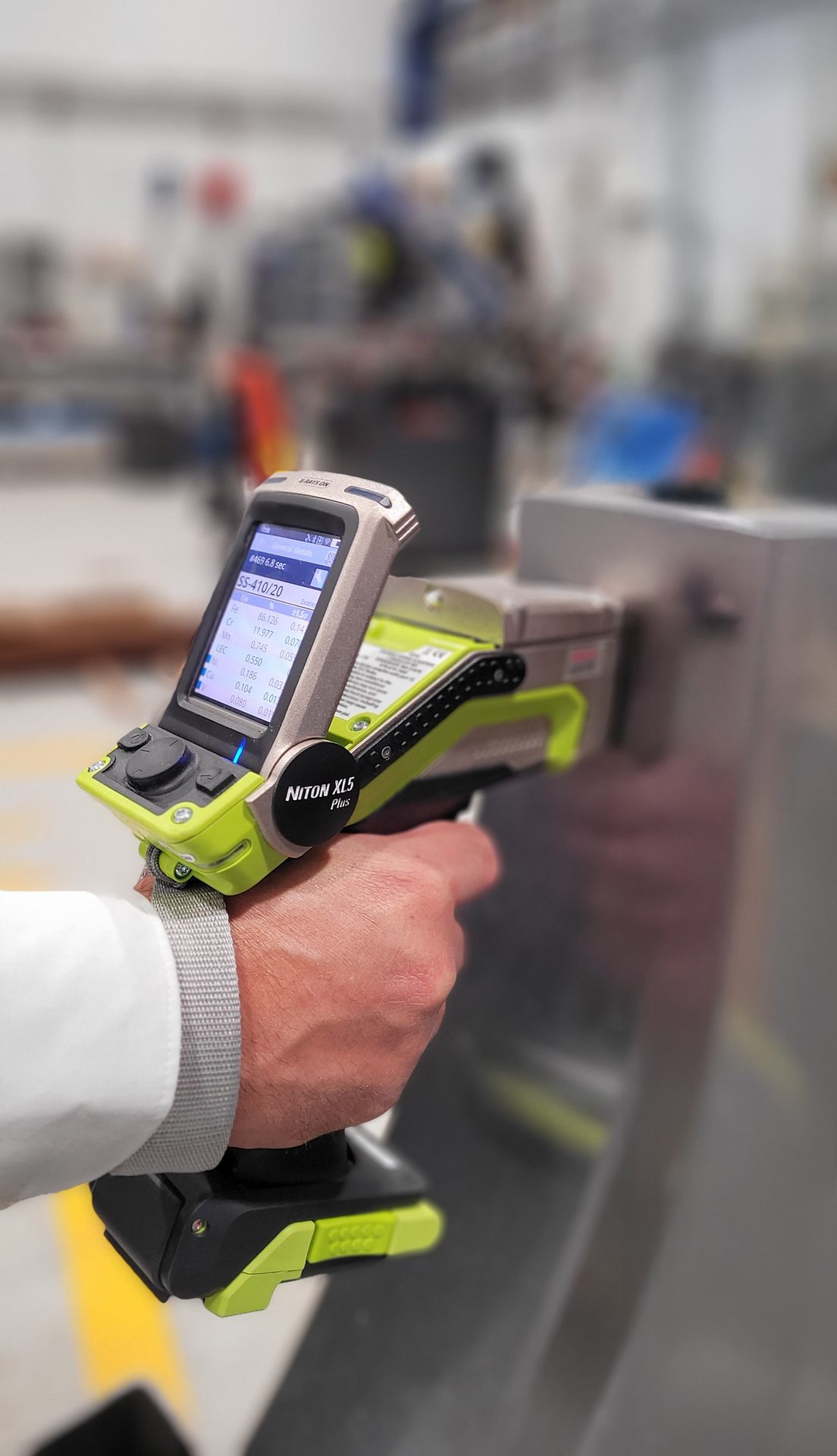
Thermo Scientific Niton™ XL5 Plus Handheld Analyzer verifying grade requirements.
Empowering professionals
Such innovation will continue to shape industry standards, making real-time, on-the-spot decision-making an accessible reality for a broad spectrum of professionals across sectors—from field technicians to quality managers. Handheld XRF and LIBS analyzers empower professionals with lab-quality analysis in the field, ensuring accurate material certification, and supporting weld procedure compliance.
The synergy between the two technologies—XRF for heavier elements and LIBS for light elements—delivers comprehensive coverage that enhances efficiency, safety, and confidence in every inspection within seconds. Work smarter not harder – with handheld elemental analysis.