Products
the latest products to help you improve your manufacturing process
LK Metrology FOCUS 2025 R1 Point Cloud Inspection Software
An intuitive point cloud inspection package, FOCUS 2025 R1, has been integrated into the software suite offered by portable measuring arm supplier and coordinate measuring machine and laser scanner manufacturer LK Metrology, Castle Donington, UK. Branded to align with other products in the company’s range, the easy-to-use, 3D digital inspection software provides users with part-to-CAD comparisons and advanced feature inspection. It includes the latest laser scanner driver NM API 5.0 R1 installer, ensuring optimal compatibility between the software and laser scanning hardware. New also is modernization of the file menu to a backstage interface, which provides clear visibility of a large set of recent files and their locations.
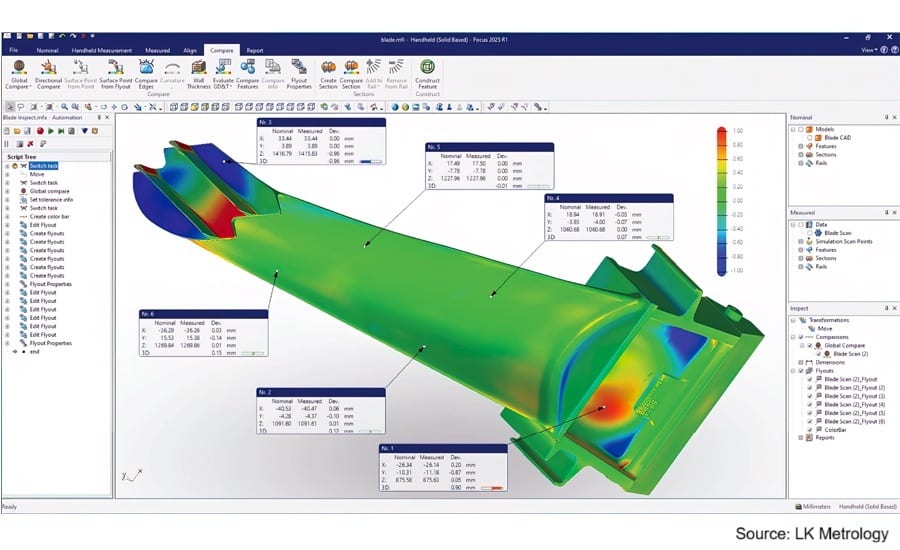
The software is designed to seamlessly drive LK Metrology's class-leading handheld H120 laser scanner and FREEDOM measuring arms. The clear GUI (graphical user interface) makes users feel at ease immediately, providing direct access to the most frequently used functions. Inspection is guided by an intuitive ribbon taskbar, which progressively leads the user through each stage of an inspection job. The process encompasses nominal part definition, including feature creation and extraction, GD&T (geometric dimensioning and tolerancing), handheld measurement through scanning and probing, alignment of the measured part and inspection reporting.
FOCUS supports a range of CAD formats, from neutral standards such as STEP and IGES to native formats including CATIA, Creo, NX, SolidWorks, ACIS, VDA-FS and Parasolid. By accommodating such a comprehensive library of formats, the software enables a seamless flow of information across design, manufacturing and quality functions. Tightly integrated data acquisition and intelligent processing and reporting are provided, with direct access to workflow selection, customization and automation to facilitate setup and job execution. Results including deviation analysis data are presented in clear graphical or tabular reports, making them easy to interpret and share among operators, managers and suppliers.
Further enhancing the software’s capabilities are the ability to analyze virtually unlimited point clouds, even those with over 100 million points, together with comprehensive point cloud tools including the proprietary FUSE algorithm, which can generate extremely high-quality polygon meshes automatically by intelligently leveraging scanner metadata. Advanced feature detection routines automatically identify and analyze geometric elements, ranging from simple holes and slots to complex fir-tree and T-stud features. The software also supports tactile probing and a leapfrog function to inspect very large parts by moving the measuring device. Virtual assembly functionality allows digital copies of reference parts to be used to build an assembly with a CAD model or point cloud data, saving material and time by avoiding expensive templates, fixtures and lengthy physical assembly builds.
Automation is a key benefit of FOCUS, which incorporates standard functionality to support non-stop execution of repetitive inspection tasks. Macro-based recording of actions requires no specific programming skills and can automate the entire inspection workflow, from nominal CAD import to final reporting. The software also offers a wealth of functionalities for specialized applications, such as the Airfoil Inspection module, which allows precise calculation of various aerofoil profile measurements from cross-sections and can generate dedicated reports.
The versatility of operation provided by the software benefits a range of industrial and non-industrial sectors. In the aerospace and defence sector, it can be used for quality control of landing systems, engine blades, structures and MRO (maintenance, repair and overhaul). For automotive applications, it is suitable for press and body, benchmarking, aerodynamics, ergonomics, styling and trim. It also serves general manufacturing, heavy industry such as rail, shipbuilding and construction, power generation including renewable, healthcare and consumer sectors.
Dave Robinson, LK’s marketing manager, commented, “As industries continue to evolve towards smarter and more connected manufacturing, the role of digital inspection becomes ever more important. FOCUS 2025 R1 reflects not only this trend, but also our philosophy of continuous innovation.
“We’ve listened closely to our customers and invested in capabilities that simplify complex inspection, while ensuring compatibility with the latest scanning technologies. The result is a software release that is not only powerful but also intuitive, designed to help our users maximize their productivity.”
LK Metrology
www.lkmetrology.com
Inspectis AB HD-041 Rotating Viewer
Simplifying inspection of an object from all angles, without the need for constant Z-axis adjustment of the digital camera, is enabled by the new HD-041 360-degrees rotating viewer from Inspectis© AB.
According to Alistair Gooch, Marketing Manager, “The 360-degree viewer has a built-in lens to maintain focus without Z-adjustment in both oblique and top view positions. The push-pull slide mechanism has spring-loaded ball screws to easily find and fix the positions.”
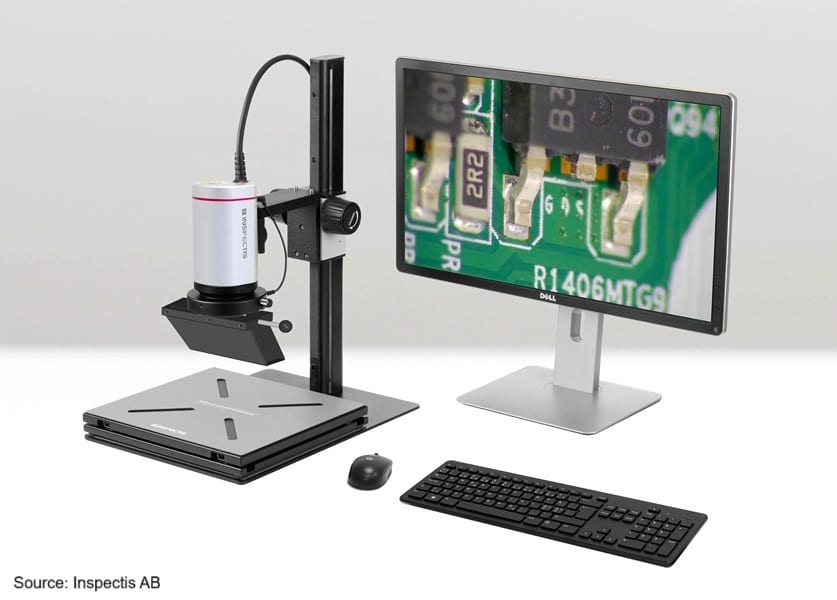
“Focus is maintained at all tilt angles once the working distance is set and fixed at 80 mm, as described in the user manual,” he adds. “Therefore, no Z-adjustment [axial movement of the camera] is required, simplifying the inspection process while keeping it steady and reliable.”
The viewer can be mounted on the ring light or screwed directly to digital F and U microscopes. The inspection process is powered by Inspectis Pro Utility and Metrology Software for image capture, measurement, analysis and reporting.
Inspectis AB
inspect-is.com
Mahr MarCator 1086/1087 Digital Indicators
Mahr Inc. announced the latest generation in the MarCator family, the new 1086 and 1087 digital indicators. Designed to redefine accuracy and connectivity in handheld metrology tools, the new instruments are equipped with state-of-the-art features tailored for both static and dynamic measuring tasks, including touchscreen buttons, extra-hardened glass fronts, colored LEDs for measured value classification, and remote control and connectivity options to ensure convenience when measuring and setting the instrument.
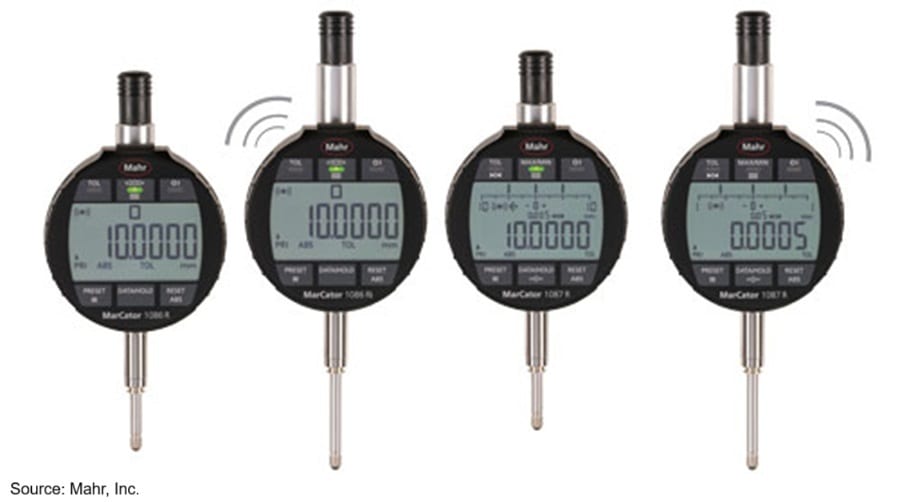
The new features enable the MarCator 1086 and 1087 digital indicators to be ideal for use in any work environment. The extra-large digital display, featuring a hardened glass front and touchscreen buttons with direct, practical functions, makes measuring and data recording easy and reliable. Innovative colored LED indicators facilitate quick and accurate classification of measurements, identify good products and waste, as well as reworks or warning limits. In addition, the large LCDs offer immediate visibility of measured values and symbols, enhancing clarity and reducing errors.
The MarCator 1086 and 1087 digital indicators are available for a wide range of measuring tasks: for static measurements such as lengths, distances, and length differences, and dynamic measurements such as radial runout, concentricity, straightness, and flatness. Measurement data is conveniently and securely transmitted wirelessly (Ri models) or via a USB data cable with bidirectional data transmission (R and Ri models).
Furthermore, specialized versions are available to meet specific requirements such as inside and outside comparison measurements, even higher accuracy, or special IP protection, enabling users to select the ideal solution tailored to their unique measurement needs. Using the complimentary MarCom Professional software, users can conveniently configure settings, customize locking functions, and remotely control the device from their PC. Three measurement presets and tolerance values are also available.
“The MarCator 1086 and 1087 handheld metrology tools seamlessly integrate advanced technology with a rugged, user-friendly design, making precise measurement both reliable and convenient,” said Dr. Farzad Azimi, Precision Gages Product Manager at Mahr Inc. “Advanced connectivity also provides faster, clearer decisions and seamless data integration, at the bench or on the shop floor.”
Mahr Inc.
www.mahr.com
Starrett-Bytewise Profile Measurement System
Starrett-Bytewise, a manufacturer of laser-based measurement systems and industry leader in profile laser measurement, and a division of The L.S. Starrett Company, has introduced the Profile360™ Blue Real-Time In-Line Laser Measurement System for continuous 2D profile inspection, the fifth generation in its Profile360 Line. Profile360 Blue features an innovative, streamlined design with new software and hardware offered in a compact footprint at a lower cost than previous generations. An embedded processor onboard eliminates the need for a separate PC interface, and the new Profile360 Blue contains one wavelength sensor model, saving additional costs by reducing the number of spare sensors required. Expanded field-of-view options, including 60 mm, 120 mm and 180 mm, provide larger inspection envelope capabilities in a smaller package.
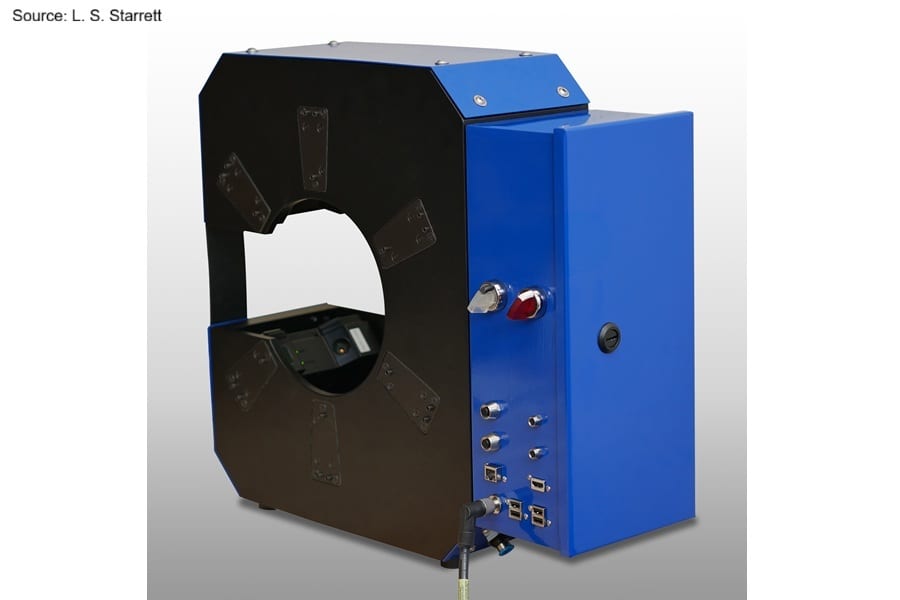
“We are pleased to offer the next generation of profile measurement that upholds our tradition of quality and reliability, while also lowering costs for our customers through an innovative design,” said Matt Orvis, Global Sales Director, Starrett-Bytewise “The Profile360 Blue seamlessly integrates into production lines, providing 100% inspection of the entire parts run. Manufacturers have the visibility and control to immediately address dimension changes, significantly increasing product quality, improving product yield and reducing costly scrap and rework.”
Starrett-Bytewise Profile360 Blue continuously monitors key profile dimensions in complex shapes and features in materials such as rubber, plastic, ceramic, wood-plastic composite extrusions, roll-formed metal profiles, ceramics, and large wire and cable to assure quality and avoid the high cost of defects. The system acquires thousands of data points around the profile and matches them to a CAD template, where key measurement parameters such as width, thickness, gap, radius, and angle are extracted. Measurement parameters are compared to allowable control limits and displayed on the operator's terminal with a pass/ caution/ fail status indicator. The Profile360 family is available in standard sizes and can also be custom-built for almost any size and shape.
The L.S. Starrett Company
https://www.starrett.com/products/laser-measurement-systems/profile-measurement-systems/profile360-blue
https://www.starrett.com/
ABB Robotics OmniCore EyeMotion
- Intelligent, hardware-agnostic vision system gives ABB robots the power to see and adapt in real time with advanced perception skills, through any camera or sensor
- Simple web interface and RobotStudio enables rapid set-up and deployment in hours
- Exceptional perception and visual reasoning is another milestone in ABB Robotics journey towards Autonomous Versatile Robotics (AVR)
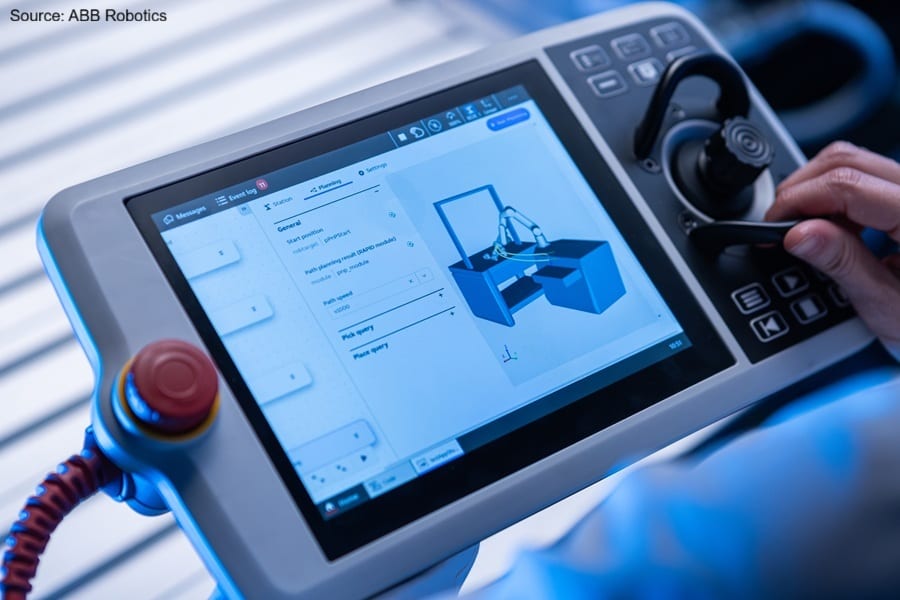
ABB Robotics has launched OmniCoreTM EyeMotion that enables any OmniCore-powered robot to recognize its surroundings using any third-party camera or sensor and adapt in real time, even in complex applications.
“Over the past decade, we have evolved AI vision to give robots ‘eyes’ that can see the world in 3D, but previously this required advanced camera hardware,” said Marc Segura, President of ABB Robotics. “In one step, OmniCore EyeMotion grants any robot the ability to both see and understand the world around it, for a wide range of 2D and 3D vision-based applications, advancing autonomy and versatility.”
Designed for users of all skill levels with a simple web interface through drag and drop sensors or cameras, the new software provides fast image acquisition and recognition. It is fully integrated in ABB’s software suite, complementing RobotStudio®, a popular programming and simulation tool, to enable rapid set-up and deployment. It achieves a commissioning time reduction of up to 90%, compared to custom solutions.
OmniCore EyeMotion will transform a wide range of robot tasks, from item sorting to quality inspection, across sectors from automotive and electronics manufacturing, to logistics, packaging, and food and beverage.
In more complex applications, OmniCore EyeMotion can be combined with ABB’s unique Automatic Path Planning Online, which can plan and execute the optimum, collision-free paths around obstacles and moving objects in real time, continually and without human intervention, increasing autonomy and reducing cycle times by up to 50 percent.
ABB Robotics & Discrete Automation
go.abb/robotics
LUCID Triton Smart Camera with On-Sensor AI for Edge Inference
LUCID Vision Labs, Inc., announced the launch of the Triton Smart, a compact machine vision camera featuring Sony’s IMX501 intelligent vision sensor with on-sensor AI processing. The camera enables efficient, real-time inference directly on the device—no external processing or cloud connectivity required.
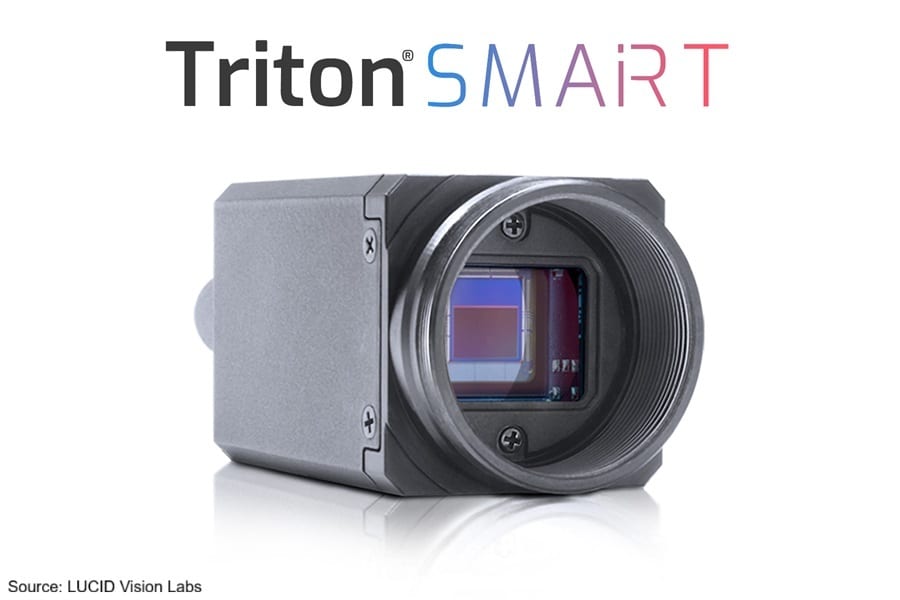
Built on LUCID’s Factory Tough™ platform, the Triton Smart combines AI and imaging in a rugged, lightweight 29 × 29 mm industrial housing. The Sony IMX501 is a 12.3 MP CMOS sensor with an integrated Image Signal Processor (ISP), Digital Signal Processor (DSP), and 8 MB of on-chip memory, allowing classification and object detection to be performed entirely offline. This architecture delivers a power-efficient, self-contained solution that reduces system complexity and latency.
The Triton Smart’s dual-ISP design allows for simultaneous AI inference and image processing, outputting the original image and AI results in a single data stream. Users can also configure the camera to lower image resolution for privacy or bandwidth efficiency, achieving up to 30 FPS with inference or 8 FPS at full resolution (4056 × 3040 px).
“Integrating AI directly into the sensor opens up a new class of edge applications,” says Rod Barman, founder and president of LUCID. “The Triton Smart camera delivers fast, reliable inference without the need for host or cloud resources. This makes it easier, more secure, and more cost-effective for customers to deploy AI in industrial and embedded environments.”
The Triton Smart works seamlessly with AI models created in Neurala’s Brain Builder for AITRIOS, which enables users to train and deploy optimized AI models with as few as 50 images per class—no deep learning expertise required. Once a model is trained, LUCID’s ArenaView MP software is used to upload it to the IMX501 sensor in the Triton Smart, configure camera settings, and stream real-time images with AI information overlays.
With robust M12 Ethernet and M8 GPIO connectors, an optional IP67 lens tube, and a -20°C to 55°C operating temperature range, the Triton Smart is ideal for factory automation, smart logistics, retail analytics, and access control applications.
All LUCID cameras conform to the GigE Vision 2.0 and GenICam3 standards and are supported by the Arena SDK. The SDK is compatible with Windows, Linux 64-bit, and Linux ARM platforms and supports C, C++, C#, and Python programming languages.
LUCID Vision Labs, Inc.
www.thinklucid.com
Hexagon CT-Scan Data Analysis Software
In this release of version 2025.3 of its VG software, Hexagon has now incorporated the enhanced version of its powerful Porosity & Inclusion analysis (PIA) tool that won an iF Award earlier this year.
Many automotive, aerospace and other manufacturers who use CT-scan-data analysis for quality assurance are already frequent users of this tool. Now enhanced with AI, the PIA quickly pinpoints and identifies discrepancies—such as pores and inclusions deep within metal, plastic or composite parts, components or material samples—from early product development stages through final manufacturing.
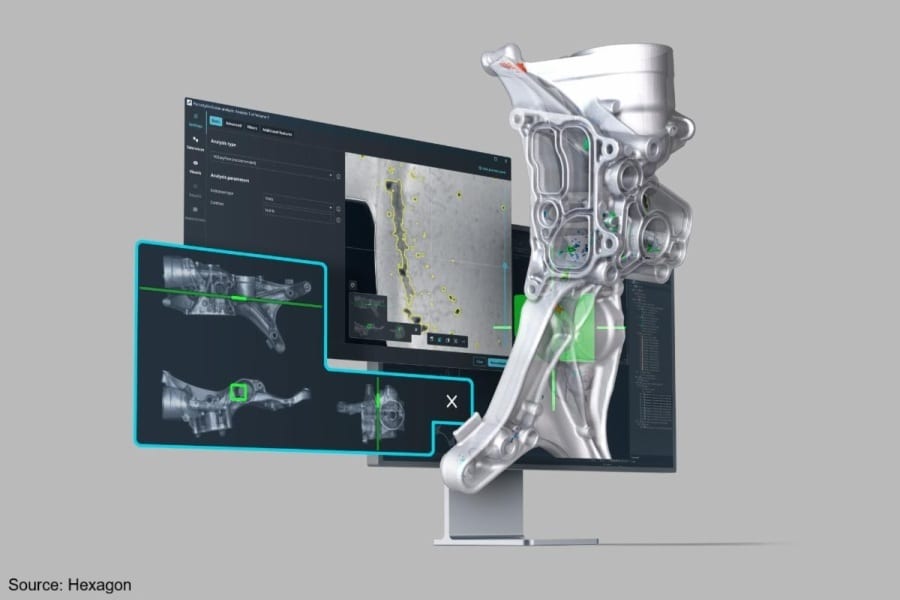
“This is the first time our tool combines all previous methods into a single, powerful solution, from analysis to reporting,” says Jan Gräser, Product Manager VG Product Line, Manufacturing Intelligence Division. “We’ve completely redesigned the user interface for this feature to make it easier for everyone—from beginners to experts—to employ the PIA to understand their results and conduct even the most complex analyses easily, accurately, and efficiently.”
Key features in the Porosity & Inclusion Analysis:
- Intuitive design: All important settings are immediately visible and summarized at a glance, while advanced options are clearly accessible on separate tabs.
- Efficient workflow: Fewer clicks, more overview, maximum control. For the first time, all porosity/inclusion analysis procedures have been brought together in a single solution. This allows for direct access to the core functions and eliminates the need to switch between different dialogs, saving valuable time.
- Easier navigation: The new preview in the analysis dialog combines all key information and makes navigation easier thanks to the interactive minimap that shows the user’s current position in the analysis window.
Other features in Hexagon’s 2025.3 VG software release:
- Multipart coordinate measurement. This feature simplifies the handling of complex projects by allowing users to view, analyze, and edit measurement plans for multiple parts in one central location. The enhancement includes essential statistics for features directly in the feature list; interactive plotting of different values across all parts for individual features; and functions for directly editing, removing, and transferring features and geometry elements across all parts.
- Create and modify dimensions directly in the 3D view (Image 3). With the “Dimensioning” dialog open, create and adjust dimensioning features by dragging and dropping the measurement lines directly in the 3D view, allowing for easy placement in the correct direction and optimal visibility. Additionally, by holding down the “Alt” key, you can create projected dimensions on a preview plane. This enhancement ensures that all lines remain both visible and adjustable, even when located inside the material.
- Improved deformation field capabilities for optical scans. This significant enhancement is specifically designed for complex morphing of incomplete optical scans. Optical scans can often be challenging in deformation field computation, including issues such as missing parts because of scanner limitations and the need for precise matching, particularly in one-sided scanning scenarios. This improvement allows for more accurate and comprehensive handling of complex optically scanned parts, ensuring precise alignment and analysis even under challenging conditions.
- Enhanced mesh import/export now supports GLB/GLTF, AMF, and 3MF file formats (Image 4). This makes it easier to exchange 3D surface data with other applications. This allows users, for example, to directly import and use mesh data created for additive manufacturing and stored in AMF or 3MF formats as nominal reference data without the need to convert it to an intermediate format—or export colored meshes created from analysis results or extracted from volume objects in GLB format, which can be easily exchanged with other applications such as PowerPoint.
“Our goal with the redesigned Porosity & Inclusion Analysis feature, as well as others in version 2025.3, is to streamline the way our users work with our software, helping them make decisions about design and manufacturing parameters faster and more efficiently,” says Dr. Daniela Handl, General Manager VG, Manufacturing Intelligence Division. “These robust capabilities will improve workflows and elevate the non-destructive evaluation process for a wide variety of manufacturers who employ 3D CT scanning for quality assurance.”
Hexagon
https://volumegraphics.hexagon.com/en/products/vg-software-release-updates.html
Universal Robots UR8 Long Cobot
Universal Robots (UR) introduced a new addition to its portfolio, the UR8 Long. Showcased for the first time at FABTECH in Chicago, the long-reach industrial collaborative robot is designed to tackle the most demanding automation challenges across industries. UR8 Long is available for order now.
With the same 1750 mm (68.9 in) reach as the popular UR20 and a significantly slimmer profile, UR8 Long combines reach, stability and precision in a rugged, compact, lightweight form, featuring an 8 kg (17.6 lbs) payload. This makes it ideal for space-constrained setups and industrial tasks, from complex weldments to precision dunnage picking and flexible multi-point inspections.
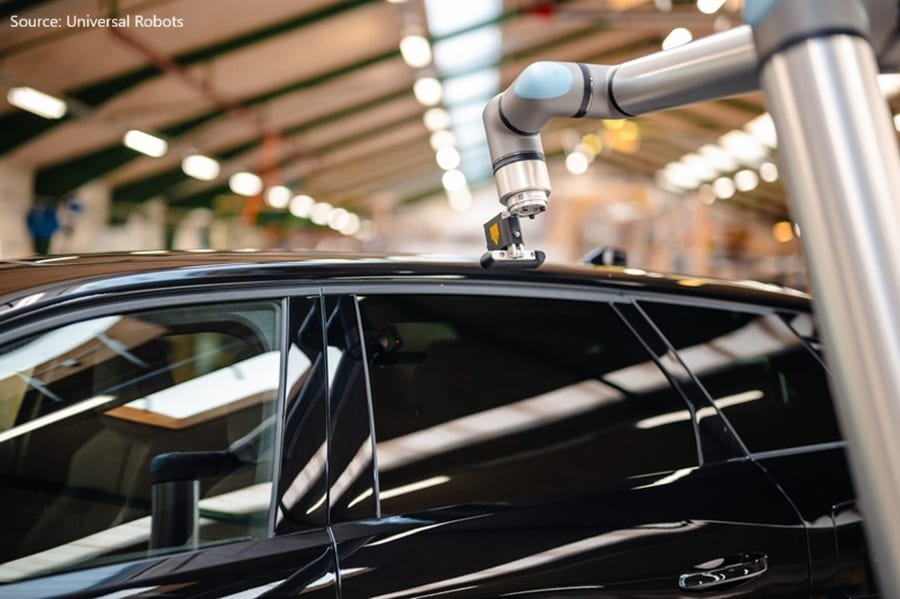
"The UR8 Long is a smart robotic arm that can reach farther and do more than ever before. It’s designed to help people and businesses work faster, more safely, and with less physical effort,” said Jean Pierre Hathout, President of Universal Robots. “Whether it’s lifting, moving, or handling tasks that are repetitive or hard on the body, this robot makes the job easier. Its longer reach means it can cover more space, and its advanced features open new ways to automate work that used to be done by hand.”
Advanced technology for synchronized robot motion, intuitive programming and inverted mounting UR8 Long runs with both PolyScope 5 and PolyScope X, UR’s industry-leading software platform, and can be extended with MotionPlus - UR’s new advanced motion control technology that allows for ease of integration with linear axis, rotary positioners and rotary turntables for precise control, smoother trajectories, and consistent accuracy.
Combined with UR’s upgraded freedrive capabilities, users can manually guide the arm with precision and ease - making lead-to-teach programming more intuitive and enabling quick, ergonomic setup even on complex parts, all without the need for layered interfaces or external tools.
UR8 Long’s lighter mass - 30% less than the UR20 - and compact wrist design also makes it perfect for mounting on gantries, rails, or overhead systems, where external axes can operate more efficiently.
With its long reach, advanced motion control and stellar precision and repeatability, UR8 Long is ideal for welding. “UR8 Long delivers an easier teaching experience than traditional welding robots, better weld quality than manual welding, and less overall rework, saving time and money,” said Will Healy III, Global Industry Manager for Fabricated Metals at Teradyne Robotics. “Following feedback from fabricators around the world, the UR8 Long was designed with the collaborative welding process in mind, boosting productivity and helping leaders to attract new talent who are often more motivated to operate a robot than perform repetitive manual welding.”
Universal Robots
www.universal-robots.com
Keyence IM-X1000 Series Measurement System
Keyence launches the IM-X1000 Series, the latest generation of the Instant Measurement System lineup, as a modular system designed to meet your inspection needs. Measure up to 5,000 dimensions now in as little as 1 second with the push of a button. The IM-X Series features a new ultra-wide large stage, multisensor measurement capabilities, and a world-first function to automate challenging and time-consuming part programming.
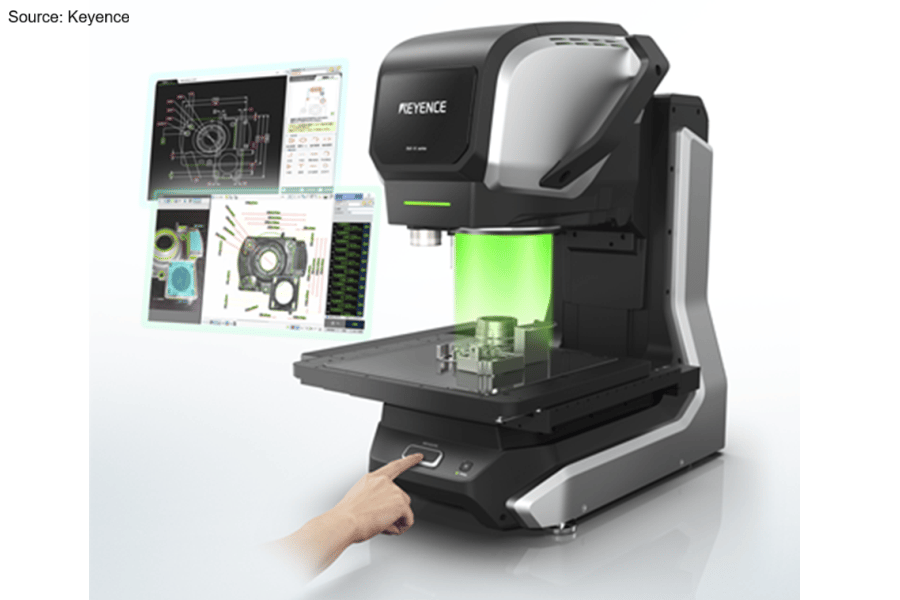
Fast, easy and accurate measurements to significantly reduce inspection time remains the core focus of the system, but with increased capabilities. The IM-X allows up to 20 different stage and camera combinations to build the measurement system that’s right for your work. From general purpose optical comparator applications to multisensor measurement, combining optical, probe, laser and rotational measurement to deliver comprehensive inspection. Even large parts are now possible with an increased measurement range of up to 16” x 20” – 3.3x the measurement area of previous generations. By encompassing a wide range of part sizes with a diverse array of measurement tools, this all-in-one system helps to streamline your quality control process.
Programming has also been innovated to further enhance efficiency with the ability to import drawings to automatically create programs. By importing CAD, PDF, JPEG and even paper drawings, you can simply select your critical dimensions, design values, and tolerances to create a program. The IM-X also uses a programming A.I. tool called Smart Assist that auto-adjusts focus, light, and edge extraction settings to eliminate guesswork and constant manual tweaks. Get expert level programming and optimal performance even with no prior optical metrology experience.
With the IM-X Series, fully inspect parts with the push of a button and save time, ensure product quality, reduce scrap and rework, remove bottlenecks, and enable continuous improvement.
Keyence
www.keyence.com/IMX1000_PR
Instron 100 kN Table Model Universal Testing System
Instron® announced the release of its new 100 kN table model for the 6800 and 3400 Series universal testing systems. Delivering unprecedented force capacity in a tabletop frame, it offers a powerful and space-efficient solution for labs testing materials such as metals and composites.
Until now, materials testing labs could achieve testing forces of 100 kN only with Instron’s floor model systems, but thanks to recent engineering advancements, they can now gain all the needed testing power from a model that reduces the footprint by 40% — eliminating a common hurdle for many space-constrained facilities.
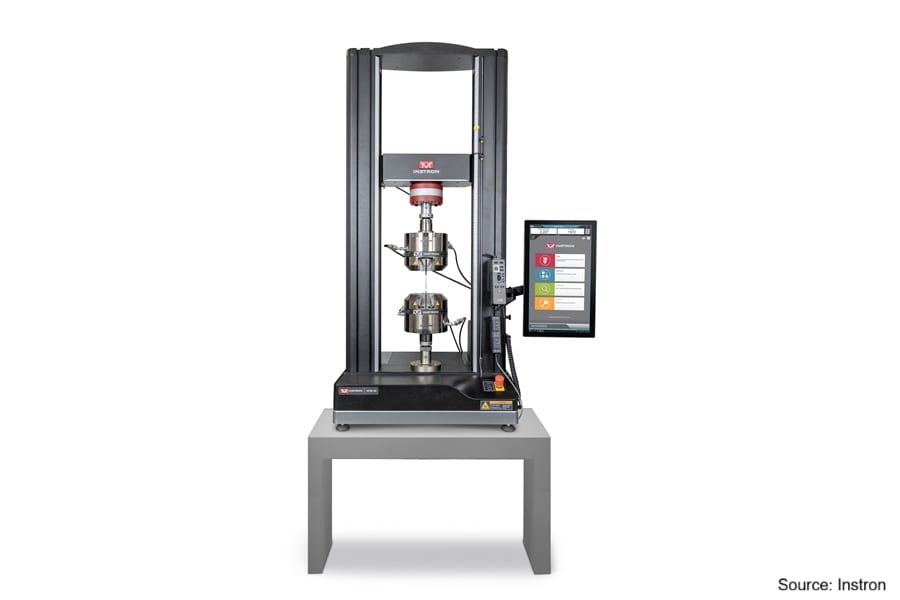
Because power constraints can pose another obstacle in many labs, the new 100 kN model operates off a standard electrical outlet — similar to Instron’s other table model systems — alleviating concerns about limiting placement options in the lab or needing an electrician to perform wiring upgrades.
While this versatile model capably handles a range of materials such as plastics and elastomers, it is primarily designed to test high-strength metals, alloys, and composites that commonly require force capacities in excess of 50 kN — the previous maximum for Instron table models — enabling labs to meet standards like ASTM E8 and ISO 6892. It is also capable of meeting stringent Nadcap alignment requirements when equipped with suitable accessories.
Among other advantages, the new table model enables strain control, a key benefit for metals manufacturers and labs that need to achieve repeatable, comparable results across different machines and locations.
Both the table model and floor model 100 kN systems are built by Instron to be versatile and handle low-force as well as high-force testing capacities. For lab managers, the choice primarily comes down to available space, power capabilities, and budget.
“We introduced this table model as a way to give this important market the flexibility to test how they want, whether that’s in a smaller or larger form factor,” said Instron product manager Joseph Blenkhorn. “Many of our customers who use table models want to expand their testing capabilities as they work with stronger materials. Now, with the 100 kilonewton model, they can future-proof their labs from a capacity standpoint.”
The new table model is compatible with nearly all of Instron’s 100 kN accessories for testing alloys and composites — plus hundreds of accessories used for plastics, elastomers, and other materials. It is available in standard and extra height versions to accommodate numerous fixtures and frame accessories, including temperature chambers for non-ambient applications.
Instron
www.instron.com
Siemens Optimize MyProgramming /3D Scanner
At EMO 2025, Siemens will introduce Optimize MyProgramming /3D Scanner, a software solution the company says will fundamentally transform shop floor-oriented CNC programming. This software combines cutting-edge 3D analysis technologies with programming right on the CNC control, maximizing efficiency, precision, and quality in production. Optimize MyProgramming /3D Scanner is part of the Siemens Xcelerator portfolio and enhances it with advanced technologies for process optimization in manufacturing.
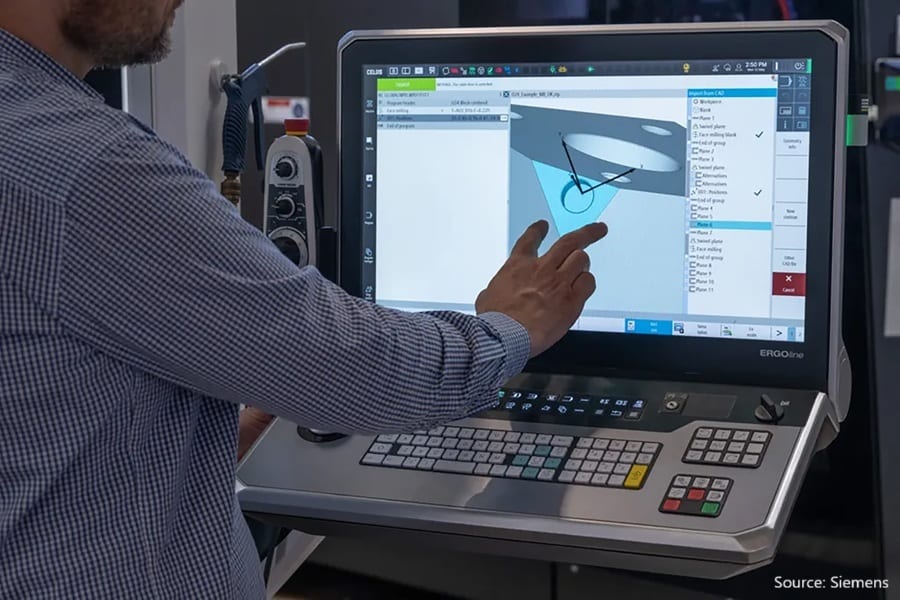
The solution is distinguished by its direct integration into Sinumerik Operate, which allows users to create and optimize programs on the control. Seamlessly transferring geometric information from 3D CAD models into programs eliminates the need for cumbersome and error-prone manual input. This function saves significant time and costs while minimizing sources of error.
The 3D Scanner offers customized suggestions for manufacturing strategies based on geometric features. This function not only leads to time and cost savings, but it also allows better parameterization of machining cycles. This prevents programming errors, which means consistently high quality in production. By integrating Optimize MyProgramming /3D Scanner, machine manufacturers can increase the attractiveness of their products in a competitive market and convince customers through measurable efficiency and quality advantages in production.
The software’s successful pilot with machine manufacturer DMG MORI demonstrated that the 3D Scanner is a powerful complement for optimizing manufacturing processes and can be seamlessly integrated into existing systems. Optimize MyProgramming /3D Scanner is integrated as a standard option in all DMG MORI machines equipped with Sinumerik One. The software will be available for purchase starting in autumn.
Optimize MyProgramming /3D Scanner is offered as a perpetual license for real machine tools and also as an option for their digital twin based on Run MyVirtual Machine. Experienced service providers offer support with comprehensive consulting as well as implementation. This ensures seamless integration of the software into modern production environments.
Siemens
www.siemens.com/press/emo25
Visual Components Debuts Next-Generation Platform
Visual Components debuted its Visual Components 5.0 software platform. The more powerful platform provides all-in-one manufacturing simulation and advanced robot offline programming (OLP). The company’s flexible and customizable software eliminates guesswork for manufacturers implementing automated processes and systems.
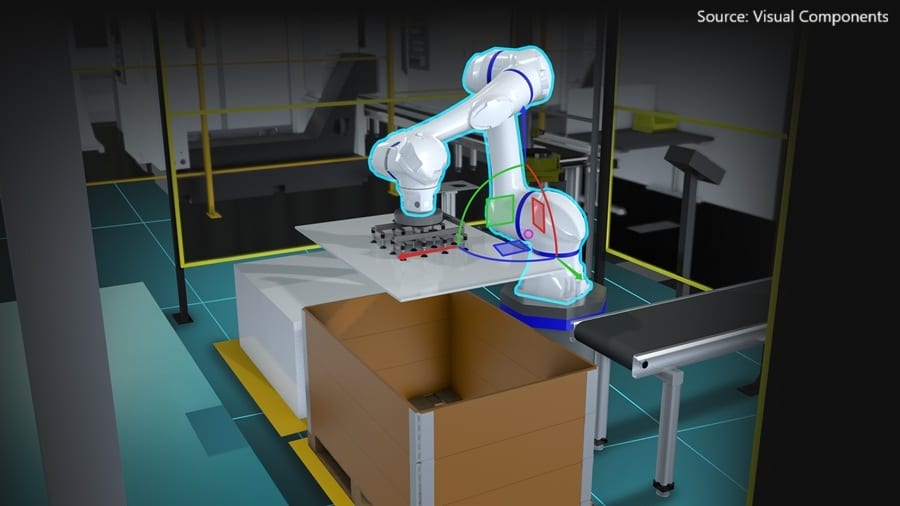
For all-in-one simulation, Visual Components 5.0 refines digital manufacturing workflows through a unified platform for layout design, process simulation and virtual commissioning. Its debut brings significant advancements in performance, connectivity and customization for better versatility among manufacturers and system integrators.
“Ultimately, version 5.0 runs faster and puts more control in the hands of users,” said Graham Wloch, Director of Business Development at Visual Components. “For engineers, production floor managers, CEOs and everyone working through the steps of digital production planning, it increases clarity of the process and confidence in the results.”
The upgraded end-to-end simulation capabilities are complemented by the most advanced level of OLP automation to date. Now, manufacturers can fully leverage model-based engineering from the earliest stages of production planning to final execution. Visual Components 5.0 supports model-based definition and product manufacturing information in one environment with compatibility across multiple brands. In turn, vital data is extracted directly from current CAD files for the robotic program.
“Brand-specific requirements create barriers for manufacturers or, at best, force them to use unreliable manual processes for data transfer,” Wloch said. “We eliminate the barrier to ensure tolerances, dimensions, surface finishes and additional specifications move seamlessly to the automated system.”
The new platform also supports modern scripting with a variety of programs, which gives its users the ability to tailor simulations, automate repetitive tasks and work with widely used libraries. For manufacturers with a welding applications focus, Visual Components 5.0 integrates automated welding parameter applications, collision-aware path solving and compatibility with other welding systems.
Connectivity is also widely expanded compared to its original version to support real-time simulation data across multiple hardware and robot systems. In addition, smarter collision geometry ensures smooth and accurate simulation even in complex environments.
Visual Components
www.VisualComponents.com
Carestream INDUSTREX Fieldview Tablet
Carestream’s Non-Destructive Testing (NDT) group announced the launch of the INDUSTREX Fieldview Tablet, a rugged industrial tablet designed to simplify digital radiographic (DR) imaging in the field. With the INDUSTREX Fieldview Tablet, radiographers can validate imaging compliance right at the inspection point, eliminating the need to return to previous locations for retakes.
Radiographers can easily verify proper positioning, validate markers and image quality indicators (IQI) sensitivity before moving to the next exposure. They can also instantly review, adjust, retake or wirelessly transfer images to a nearby review station for interpretation. This streamlined workflow keeps inspections moving faster and increases throughput.
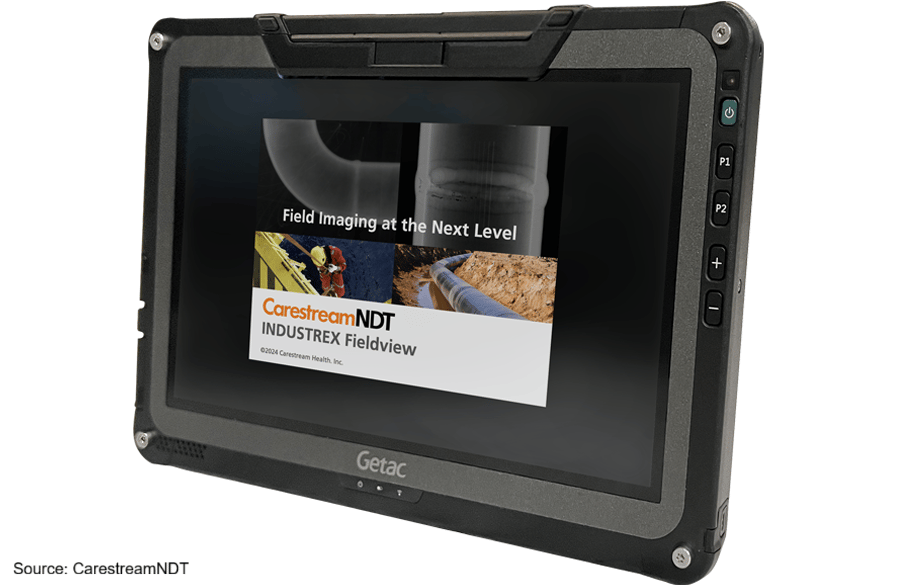
“Until now, it has been a challenge for inspectors to acquire and validate images, because review stations are often located away from the inspection point,” said David Chan, Global General Manager for Carestream NDT. “The new INDUSTREX Fieldview Tablet lets radiographers set up, expose, and review images at the inspection point, significantly boosting workflow and productivity.”
Designed to overcome the physical challenges of field imaging, the INDUSTREX Fieldview Tablet offers intuitive features that improve efficiency and ease of use:
- Lightweight and rugged: The new device replaces bulky laptops with a small, tough tablet built for rough terrain and hard-to-reach inspection sites.
- Industrial touchscreen interface: An intuitive, sun-readable touchscreen can be operated with gloved hands, wet hands or a stylus to simplify setup and operation.
- Seamless compatibility: The tablet works with the Carestream NDT family of DR solutions, including the NDT HPX-DR 3543 PE, HPX-DR 2530 PH, HPX-DR 2530 PC, HPX-ARC 1025 PH, and the HPX-ARC 1043 PH DDAs.
The new tablet is a touchscreen-optimized extension of INDUSTREX Digital Viewing Software, Carestream NDT’s all-in-one platform that enables radiographers to standardize on a single solution for both computed radiography (CR) and DR inspections. The software offers easy integration, high-resolution defect detection and advanced analysis capabilities.
Carestream
www.carestream.com
Onto Innovation’s 4D Technology Approved as FANUC Cobot Device Supplier with Launch of New Integration Plug-In
Onto Innovation, together with its Tucson-based subsidiary 4D Technology, announced that 4D Technology has been officially approved as a FANUC collaborative robot (cobot) device supplier. This milestone coincides with the release of a new FANUC-certified plug-in that enables seamless integration between 4D Technology’s 4Di InSpecTM Optical Surface Gauge and FANUC’s CRX series of cobots, streamlining automated inspection for high-precision manufacturing environments.
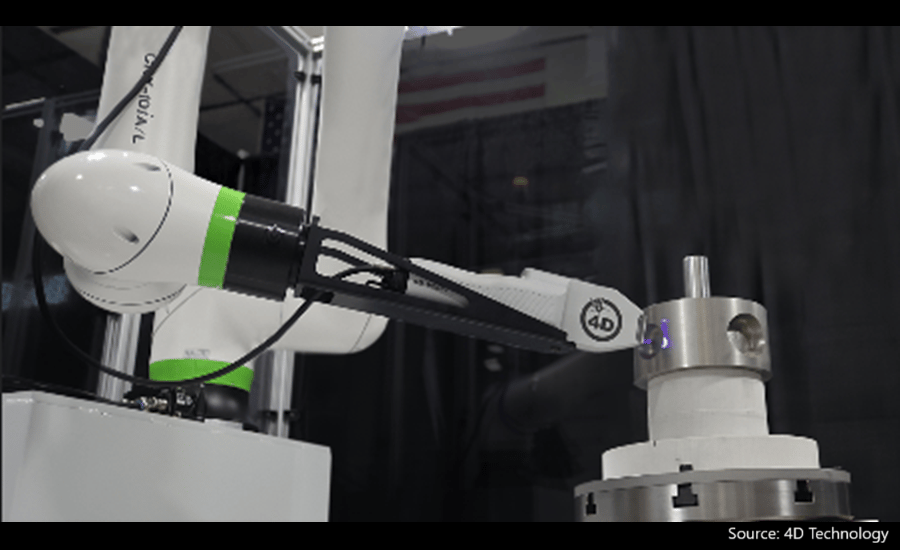
The certification confirms that the 4Di InSpec sensor and software plug-in have undergone rigorous testing by FANUC and are fully compatible with its CRX line of collaborative robots. This approval simplifies deployment for manufacturers seeking to enhance inspection throughput and quality across industries such as aerospace, aviation, medical devices, and precision machining.
The new plug-in facilitates integration of two proven technologies: the 4Di InSpec Optical Surface Gauge—featuring patented, vibration-immune, non-contact measurement capabilities—and FANUC’s CRX cobots, known for their reliability and ease of use. Together, they deliver rapid, automated inspection of edge breaks, chamfers, and radii, and surface defects including pits, scratches, dings, and corrosion, with resolution down to 2 µm (0.00008 inches).
Key Features and Functionality Include:
- Patented vibration-immune technology for automated, high-resolution measurements
- 3D, non-contact inspection of dozens to hundreds of edge break features, chamfers, radii, and
- defects in minutes rather than days
- Easily automate 4D InSpec measurements
- Plug and play compatibility with the 4D InSpec and 4D InSpec XL gauges
- Integration with all Fanuc CRX collaborative robots
- Simplified automation of surface inspection workflows
“The launch of the 4Di InSpec–FANUC plug-in reflects our continued commitment to delivering advanced automation solutions that empower manufacturers worldwide,” said Mayson Brooks, general manager of 4D Technology. “By providing a simple way to connect precision inspection with collaborative robotics, we’re enabling smarter, faster, and more reliable quality control across a range of high-performance industries.”
4D Technology
www.4dtechnology.com
https://crx.fanucamerica.com/cobot-devices/4d-inspec-3d-surface-snapshot-gauge
https://4dtechnology.com/industrial-measurement-automation/
Onto Innovation Inc.
www.ontoinnovation.com