H2 Deck By Bold Name
h2 xxxxxx
H1 xxxxxx
h2 xxxxx

Test & INspection
Because aerospace often involves frequent engineering model changes, the ability to modify a fixture in hours—rather than building a new one over weeks—is a major competitive advantage. By Linda Goodwin-Marino
Modular Tooling Takes Flight:
How Modular Tooling Can Reshape Aerospace Manufacturing
Test & INspection
Because aerospace often involves frequent engineering model changes, the ability to modify a fixture in hours—rather than building a new one over weeks—is a major competitive advantage. By Linda Goodwin-Marino
Modular Tooling Takes Flight:
How Modular Tooling Can Reshape Aerospace Manufacturing
Test & INspection
H2 Deck Info By Paragraph Style Bold
Headline
Aerospace manufacturers face constant pressure to increase precision, reduce lead times, yet stay adaptable as designs and production volumes change. A modular fixturing system answers these challenges with a flexible, reusable alternative to traditional welded or dedicated tooling and positions itself as a strategic asset for today’s aerospace operations.
A New Approach to Aerospace Fixturing
At its core, modular fixtures replace single use, custom-built fixtures with a modular system of standardized components — base plates, structural hollows, locators, clamps, and connection elements — that can be assembled and reconfigured to support virtually any aerospace part. Whether the task is CMM holding fixture requirements, welding tools, machined parts, functional tool final assembly, test or transport the same modular kit can be adapted to meet the requirement.
This flexibility is particularly important in aerospace, where manufacturers often deal with “high-mix, low-volume” (HMLV) production, complex geometries, and frequent design revisions. Rather than designing, fabricating, and storing a dedicated fixture for each part, by using a modular option, manufacturers can build a multi-purpose tool using reusable building blocks as shown in figure 1 encompassing two similar parts. The removable blocks were positioned to clamp both parts in the same frame.

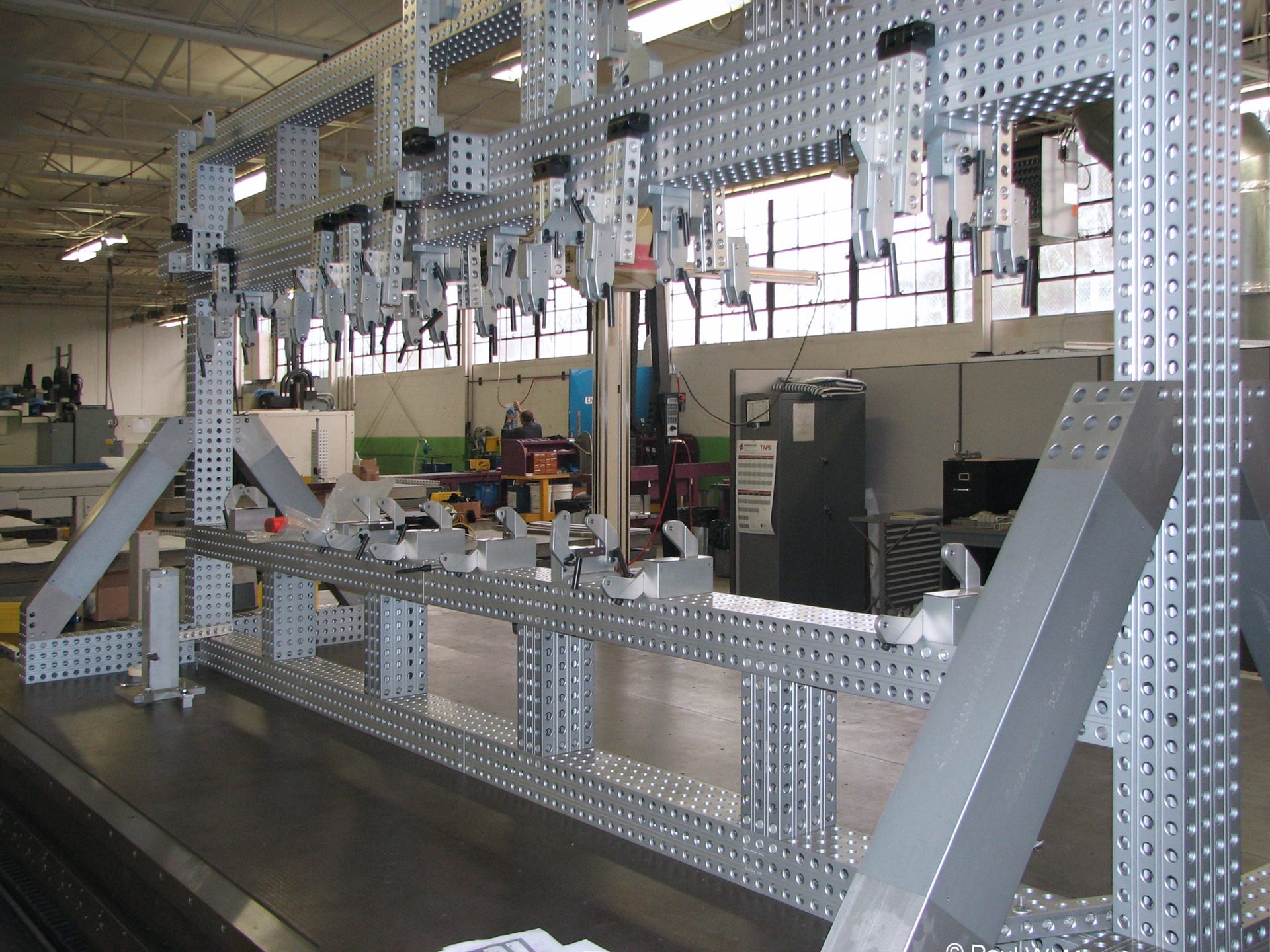
Figure 1
Cost, Time, and Efficiency Gains
Modular tooling can offer substantial efficiency improvements compared to conventional welded fixtures with the following features and benefits, all of which enable improved ROI:
- Reduction in design costs, “art to part”
- Lower tooling and labor/assembly costs
- Reduction in facility usage and storage
- Decrease in total tooling costs
These savings stem from three main factors: the rapid assembly of fixtures which require no welding or custom fabrication, the ability to reuse components for future projects, the avoidance of long lead times associated with machining or fabricating one-off tooling, accelerating program schedules and reducing downtime. Again, management will take notice.
In addition, some manufacturers offer the flexibility of leasing, giving “the people upstairs”, those accounting for cost over-runs and staying on budget, another possible option – especially for a short-term project where staying on target is critical. Imagine that!
Modular tooling can lead to improved assembly accuracy, greater throughput, and fewer inspection requirements—performance gains driven by repeatable, high-precision setups and reduced fixture variability.
caption
Material Advantages Built for Aerospace
A modular fixturing system’s structural elements are often manufactured from high-strength aluminum alloys such as 6061-T6, 7075-T6, and 2024-T6, each chosen for specific strength, weight, and durability characteristics. Often components are hard-coat anodized for corrosion resistance, which is particularly valuable for aerospace environments that demand longevity and dimensional stability.
The lighter weight makes modular fixtures suitable for large assemblies that need to be repositioned frequently—such as fuselage sections, engine components, or fuel-line subassemblies. Compared to heavy steel fixtures, aluminum-based assemblies offer several operational advantages:
- Light weight for easier handling and movement around the work environment
- Minimal maintenance and corrosion issues
- Reduced storage requirements for disassembled fixture no longer in use
- Lower shipping and logistics expenses
Scalability for Complex Aerospace Assemblies
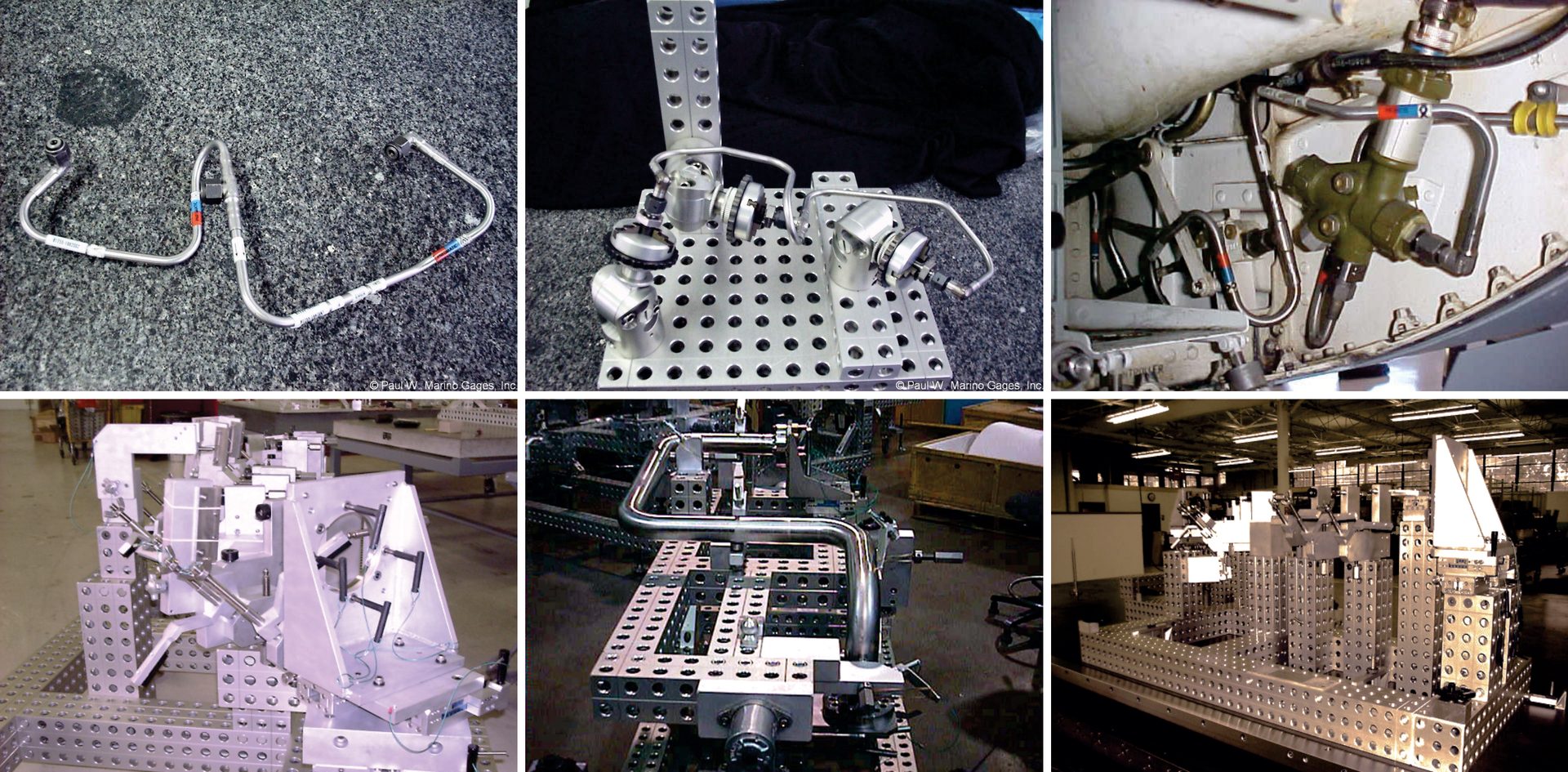
Depending on the depth of a given modular system’s components offering, fixtures can be designed and assembled for both small and large aerospace parts, from delicate components like fuel lines to complete fuselage (figure 2) or wing assembly tools (figure 3).
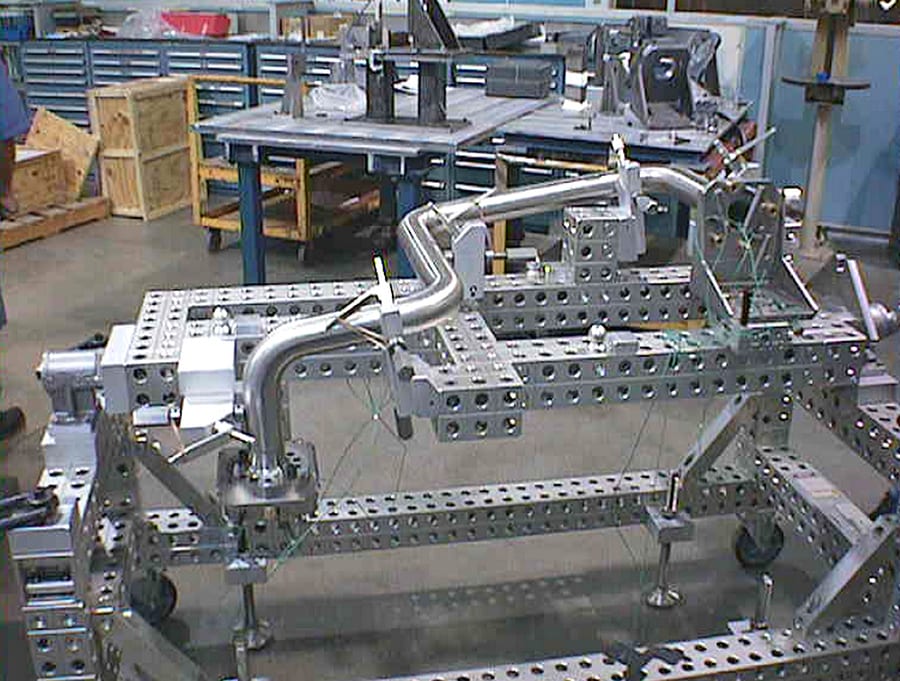
Figure 2
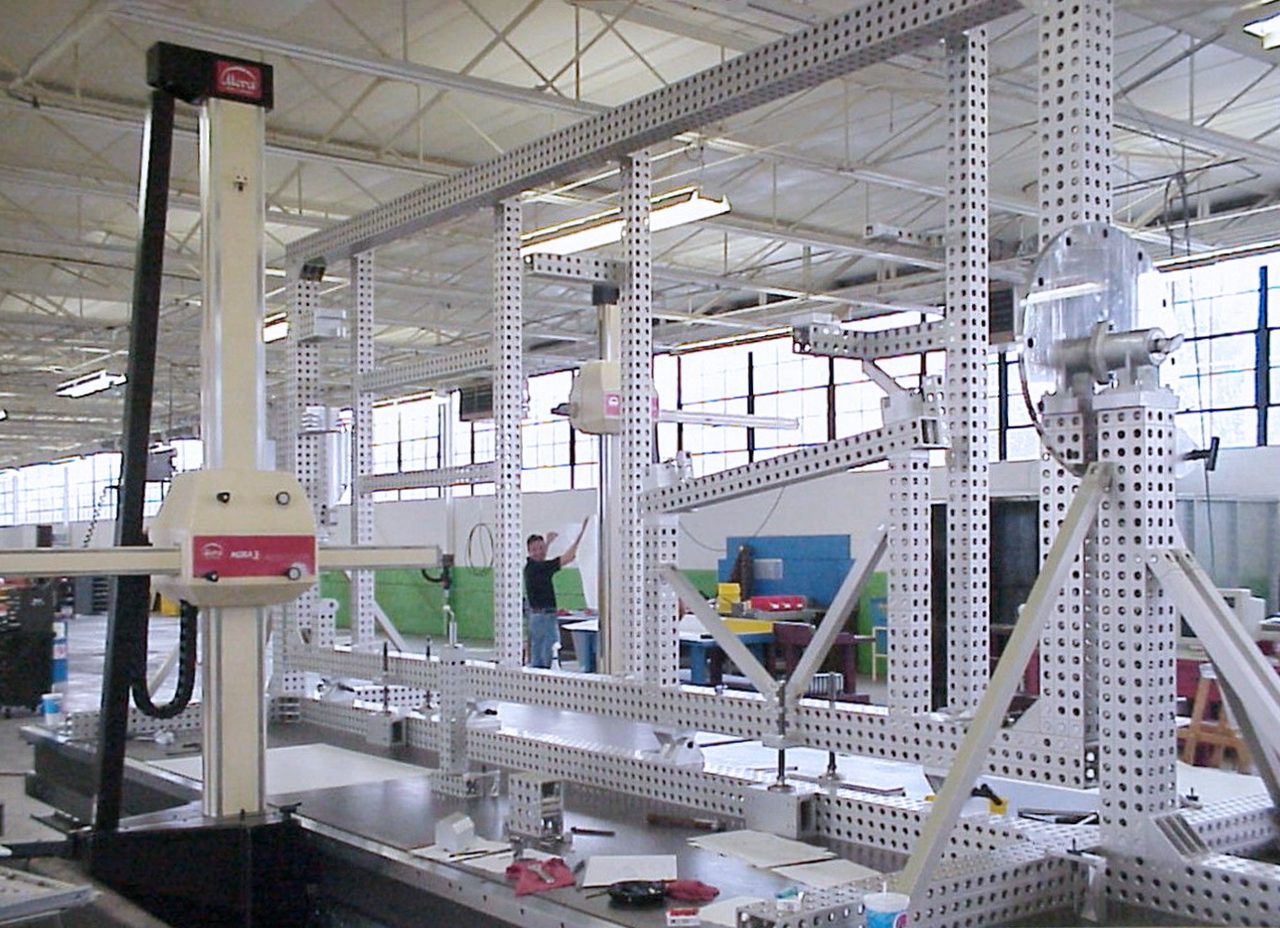
Figure 3
Fixtures can be built in sections, enabling manufacturers to create large structures that can be disassembled, relocated, and reassembled without losing accuracy. Think: Simplicity – Fun – Repeat.
This modular architecture is especially useful in environments where space is limited, where multiple shifts share fixtures, or where tooling must travel between facilities or vendors. With today’s high cost of real estate, this is measurable.
Real-World Aerospace Applications
Modular tooling has been used across a variety of aerospace engine processes including orbital weld inspection of liquid oxygen (LOX) propulsion fuel lines (figure 2) and complex assembly fixtures for airframe components (figure 3) including reverse engineered duct fighter jet maintenance tools (figure 4).
Because aerospace often involves prototype work and frequent engineering model changes, the ability to modify a fixture in hours—rather than building a new one over weeks—is a major competitive advantage.
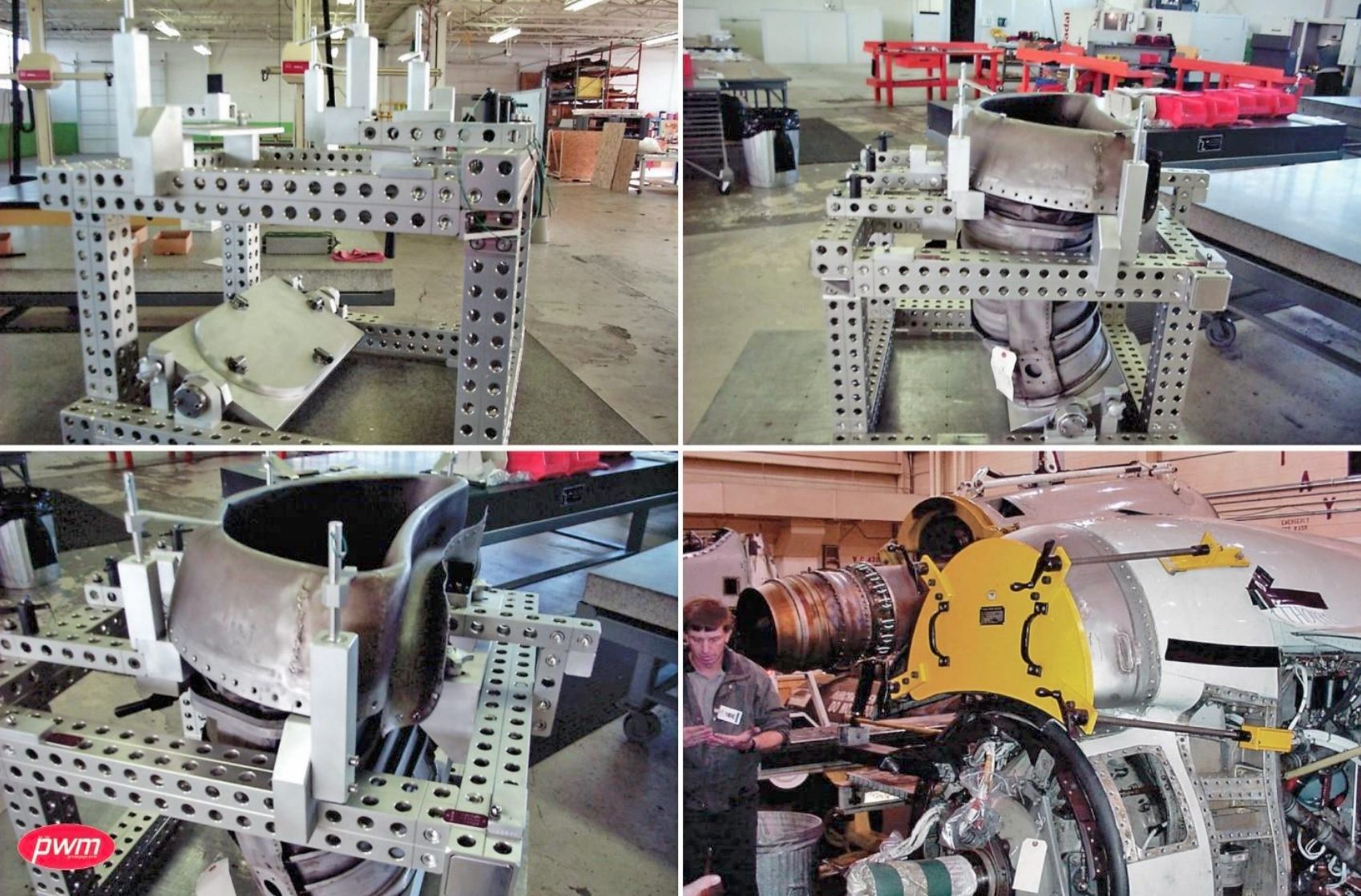
Figure 4
Supporting Lean Manufacturing Strategies
Traditional, dedicated fixtures tie up space, capital, and labor. Modular fixtures, in contrast, align with modern lean-manufacturing principles in that they are reconfigurable and reusable, reduce clutter and waste, and allow shops to respond rapidly to engineering changes or new requirements.
For aerospace suppliers competing in a rapidly changing market, this agility can make the difference for a successful program.
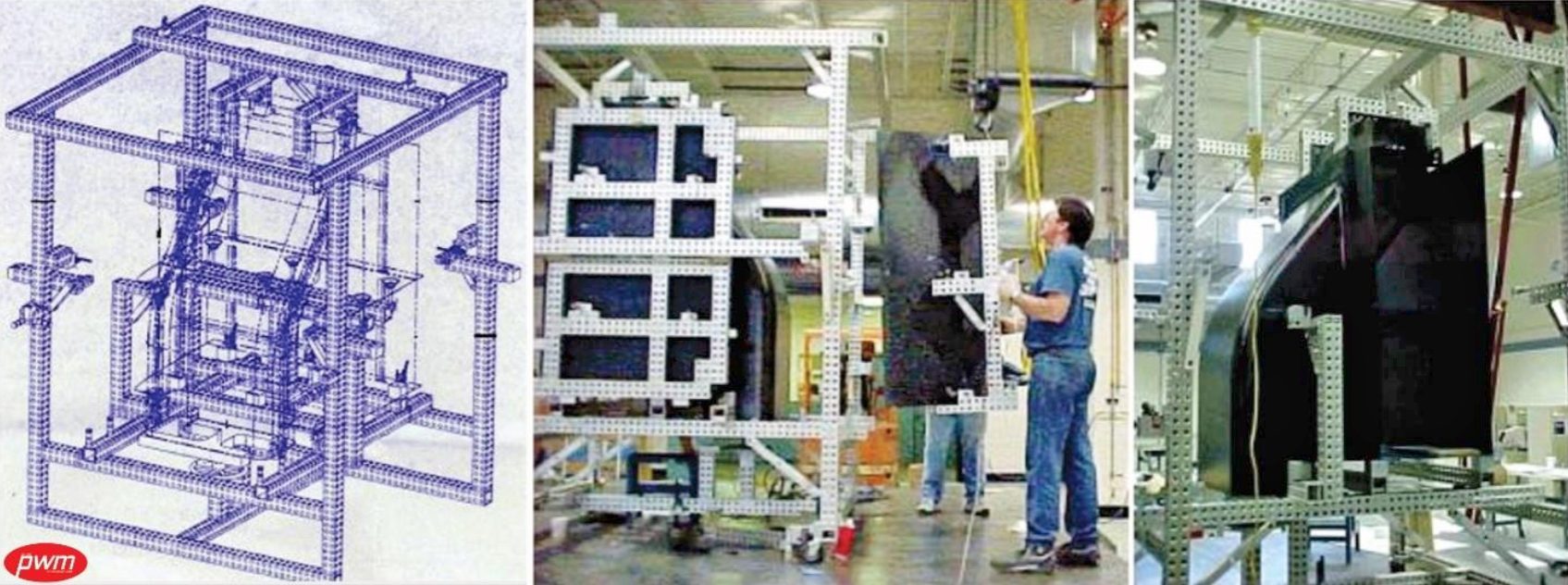
Figure 5
Consider R&D as in “bonding tools”, like the Forward Center Fuselage (FCF, figure 5) implemented by an aerospace team targeting affordability, fabrication and assembly.
A Strategic Tooling Shift for Aerospace
Modular fixturing systems should no longer be seen just as a tooling option, but as a strategic asset that enables aerospace organizations to operate faster, leaner, and smarter.
As aerospace programs adopt shorter development cycles, pursue lightweight production environments, and demand greater responsiveness all around, tooling systems that adapt instantly to new needs will define the next generation of manufacturing efficiency. So, let’s go modular…make your day already!