H2 Deck By Bold Name
h2 xxxxxx
H1 xxxxxx
h2 xxxxx

NDT
Nondestructive testing by its very nature influences our culture. By Eddie C. Pompa
Creativity Influences of
Nondestructive Testing
NDT
H2 Deck Info By Paragraph Style Bold
Headline
In a rapidly changing world filled with technology, advanced science, and self-healing materials, nondestructive testing (NDT) stands at the forefront by offering creative solutions that keep the world safe. The advancement of additive manufacturing has the potential to deliver complex designs to complex issues in ways never imagined before. Inspecting these materials requires creative solutions, thinking from alternative perspectives, and the courage to ask what if.
In a tale of serving the many industries across the world NDT provides colorful images that tell the story about the weld quality, material integrity, hardware health, and predictive maintenance. With test methods like phased array ultrasonics, digital radiography, computed tomography, full matrix capture, shearography, acoustic emission, liquid penetrant, and magnetic particle testing the vivid colors paint the scene. Surreal, serene, or like a Jackson Pollock abstract, the test results evoke calm or chaos to the customer.
The creative influence of NDT comes in so many ways that touch the industry from many different perspectives, when revealed can never be unseen and require greater appreciation for the impact NDT has on our everyday lives.
1. Creativity Through Visualization: Seeing the Invisible
The fundamental principle of NDT is the ability to reveal the invisible indications that lie internally or along the surface only to be revealed when employing one of many different test methods. These test methods include radiography, ultrasound, magnetism, capillary action, and lasers. These tools produce meaningful images that map out flaws, thickness variations, material conditions, and surface interruptions that may lead to delays or worse.
Like an artist filling the canvas with colorful paints, NDT produces colorful images using film or digital platforms, discrete lighting to reveal or capture the unseen hidden material conditions. Inspectors must interpret patterns, understand anomalies, recognize subtle signatures of fatigue, corrosion, creep, or cracking, and translate scientific data into narratives that engineers and decision-makers can understand.

Rather than simply “finding defects,” NDT professionals create visual stories with distinct image results that influence design choices, maintenance plans, and future innovations. This form of industrial storytelling itself is a creative discipline that shapes how products are imagined and built.
2. Creativity in Problem Solving: Each Inspection Is a Unique Puzzle
Despite written procedures and technique sheets, no two inspections are exactly the same. Even with standard procedures and specifications, each component presents its own challenges, including the geometry, access limitations, environmental conditions, materials, coatings, temperature, and service history. NDT technicians and engineers must constantly adapt and utilize what is available around them to complete the inspection needed.
Adaption of techniques
Complex hardware designs that include compound angles, offset interior dimensions, or obscure defect orientation may require the use of phased array ultrasonics to provide maximum detection capabilities. These complex configurations often require custom probe holders to remove as many variables from the inspection as possible.

Custom probe holder
NDT professionals routinely create tools, fixtures, wedges, calibration blocks, and scanner mounts. They solve problems using a blend of engineering intuition and hands-on improvisation.
Radiography testing often requires similar creativity to acquire the appropriate number of radiographs to comply with code requirements. As seen in the image below the use of tape to hold a small stainless steel tubing weld in the precarious position needed to complete the inspection.
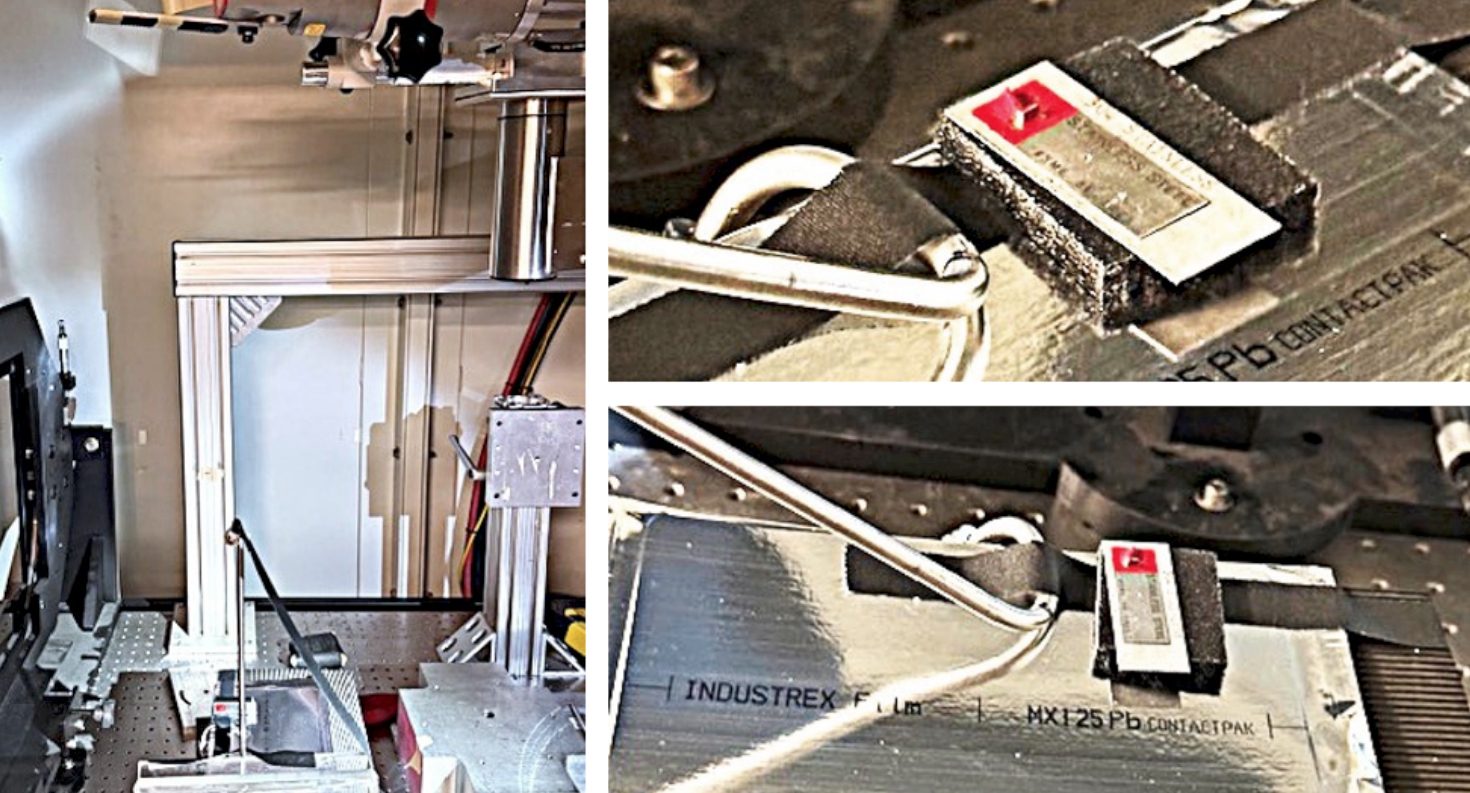
Typical small diameter tubing radiography testing set up
3. Creativity Fuels Manufacturing Innovation
Manufacturing has undergone radical transformation in the past 50 years—from forged metals to composite structures, from machined parts to 3D-printed components, from manual welding to automated robots, from analog tools to digital twins. NDT’s creative influence appears in nearly every manufacturing evolution.
Enabling new materials
Technological advances in materials require advanced NDT as well but also allows for more creative inspection solutions that reduce signal to noise ratios in transducers, digital detectors, while reducing weight, and reduced exposure times. Without these technologies, manufacturers would not confidently adopt new lightweight, high-performance materials.
Digital detectors now use Cesium Iodide (CsI) to produce sharper images than previous Gadolinium Oxysulfide (GadOx) scintillators.
Supporting additive manufacturing
Layer-by-layer 3D printing introduces unique defect mechanisms with common names like lack of fusion, porosity, and cracking, with challenging material properties that require a creative perspective. NDT researchers and practitioners have adapted ultrasonic testing (UT), computed tomography (CT) scanning, and infrared imaging to characterize these novel flaw types. Creativity in inspection has directly enabled creativity in manufacturing.

Closing the loop in design for inspectability
Modern manufacturing teams now work directly with NDT experts in early design phases. Inspectors help engineers imagine how components can be shaped not just for performance, but for inspectability. This input fundamentally influences product design as a shared responsibility that drives quality by embedding inspection possibilities from the start.
4. The Creative Influence on Service Industries: Maintenance, Safety, and Reliability
The use of NDT in the service industries provides creative opportunities that help sustain infrastructure and power generation, aviation, railroads, pipelines, refineries, and down hole drilling.
Predictive creativity
Creative use of inspection data enables predictive maintenance models. Instead of waiting for failure, organizations analyze trends, map degradation paths, and forecast future conditions. Inspectors collect the raw data that fuels these models, using creativity to interpret real-world behavior in machinery and structures.
Creative deployment in challenging environments
Service industries often require inspections in active pipelines, inside aircraft wings, atop wind turbines, underwater, or at remote construction sites. Creativity is essential:

- Robotics and drones carry NDT sensors into hazardous spaces.
- AI-enhanced vision interprets corrosion, cracks, or weld irregularities.
- Wireless sensors detect strain, vibration, and acoustic emissions in real time.
NDT professionals contribute to developing these tools, often turning conceptual ideas into workable field solutions.
5. Creativity in Workforce Development and Culture
Nondestructive testing by its very nature influences our culture. When you take a deep dive into NDT you will see educators, mentorship, innovators, and problem solvers. With few resources NDT professionals improvise to get the jobs done which make them excellent problem solvers and innovators. The fundamental building blocks of progress within NDT lends itself to mentorship and educator roles that in total encourage organizations to think in creative cycles:
- Detect
- Understand
- Improve
- Innovate
This mindset fits into the quality process improvement plans that require continuous improvement which leads to creative mindset and solutions. In the world of NDT a technician finds themselves serving as a cross-functional bridge between engineering, operations, maintenance, production, safety, and quality departments. This perspective is inherently creative because they see how systems behave in the real world across these departments.

Workforce creativity is also rising through:
- Gamification of training
- VR/AR simulation of inspections
- Comic-book-style educational tools (like NDT Hero)
- Collaboration between artists, storytellers, and engineers to inspire new talent
As industries face global workforce shortages, creativity in NDT training becomes essential for attracting and developing the next generation of problem solvers.
6. Creativity Drives the Future of NDT
The next era of NDT will be defined by technologies that merge imagination with engineering in ways that seem unreal even by today’s standards:
- Digital twins that use inspection data to simulate entire structures
- AI-enhanced interpretation of ultrasonic and radiographic signals
- 3D and 4D imaging that visualizes changes over time
- Self-learning inspection robots
- Augmented reality overlays for real-time flaw identification
- Smart materials embedded with self-sensing capabilities
Each advancement requires NDT professionals not only to adopt new tools but to envision entirely new ways of interacting with materials and structures. The creativity of the NDT industry becomes a driving force behind technological progress.
Conclusion
While nondestructive testing is rooted in physics, engineering, and procedural rigor, its true influence lies in its creativity. Inspectors are problem solvers, storytellers, innovators, and builders of safer worlds. NDT shapes the future by unlocking new possibilities in product design, field maintenance, aerospace, and energy, from manufacturing floors to classroom demonstrations.
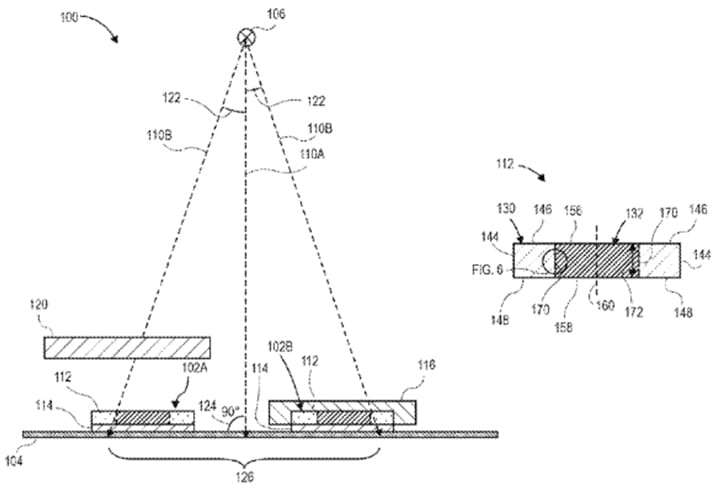
Radiographic Crack Image Quality Indicator – US Patent No.: US 11,747,287 B1
NDT doesn’t just ensure quality; it inspires creativity throughout the manufacturing and service industries. It empowers engineers to dream bigger, technicians to solve smarter, and companies to continuously evolve. In a world hungry for innovation, NDT stands not only as a guardian of integrity but as a catalyst for imagination.
Sources:
- United States Patent, Koshti, Patent No.: US 11,747,287 B1 – Radiographic Crack Image Quality Indicator System and Method