H2 Deck By Bold Name
h2 xxxxxx
H1 xxxxxx
h2 xxxxx

Management
To overcome labor issues and increase productivity, today’s manufacturers incorporate innovative modular robotic palletizing cells. By Rich Parkhurst
Robotic Palletizing
Stacks Up to Productivity and Profitability
Case Study
H2 Deck Info By Paragraph Style Bold
Headline
Palletizing is difficult, dangerous work that sometimes takes workers many feet up into the air to stack products off the production line or service and maintain palletizing equipment. The work is challenging, physically taxing, and often takes place in complex environments. Like many jobs in the manufacturing and production sectors, palletizing positions are difficult to fill, despite the essential nature of the role: If the product doesn’t get off the end of the line, the line stops.
To overcome labor issues and increase productivity, today’s manufacturers incorporate innovative modular robotic palletizing cells. These cells use pre-engineered and custom-designed modules configured and assembled to application specifications.
Modular palletizing cells are efficient, effective, and straightforward to integrate into production lines. Typically, integrators can install an automated palletizing cell within days or hours, depending upon the size and complexity of the unit without significant impact on a company’s production.
According to FOCUS Integration, a Westland, Michigan-based integrator, robots are far superior to manual palletizing and traditional palletizer equipment in virtually all respects. The company provides custom solutions, focusing on two core modular systems that provide manufacturers with proven palletizing solutions.
“Our customer base has been having difficulty finding workers,” said FOCUS owner and president Dean Roberts. “Palletizing is hard work, and people don’t want to be stacking 50-pound, 100-pound products all day long. There’s a very high amount of turnover.”

To meet its customers challenges with labor problems and the need for increased productivity, FOCUS designed two modular palletizing solutions as opposed to taking a one-size-fits-all approach. The company’s CARBON palletizing cell uses pre-engineered and custom-designed modules configured and assembled to customer specifications at FOCUS, tested and verified on the FOCUS floor then shipped to the customer for commissioning. CARBON’s smaller sibling unit, CUBE, is a compact robotic palletizer designed to be a cost-effective palletizing solution. CUBE includes a robot, area scanner, PLC, and light curtain panel.
CARBON modules are built on pre-wired structural platforms that piece together like a puzzle and include robot, conveyor systems, safety fencing, and all equipment necessary for a turnkey solution. The company can have its CARBON solution up and running at a customer’s facility in a single day and the CUBE within a few hours.
“Robots bring flexibility and low maintenance,” Roberts said. “Everything is maintained at floor level, unlike conventional, high-level palletizing machines. You get a smaller footprint at a very competitive price, and they can be reconfigured and moved, if necessary, to another line.”
For its CARBON solution, FOCUS uses KUKA’s KR 140, 180 and 210 QUANTEC-2 PA as its standard robot models, depending on the application and customer requirements. QUANTEC series robots provide 6-axis capability within an extremely small footprint that simplifies cell system planning. Roberts notes that because the QUANTEC does not use grease as a lubricant, maintenance is as easy as changing the oil in a car. The smaller CUBE cells feature the 6-axis KR 50 and KR 70 IONTEC medium payload models. Like its larger counterpart, IONTEC provides a highly flexible solution with the best work envelope in its class.
While FOCUS serves a wide variety of enterprises with its palletizing systems, it found a niche by developing a special end-of-arm gripper for the paint industry that allows heavy paint pails to be picked up by their outer circumference and stacked safely.
“Our system picks up multiple products at a time, and we need a robot that meets the speed and payload requirements. KUKA robots provide very high speed, the right reach and flexible row formation,” Roberts said.
Caption
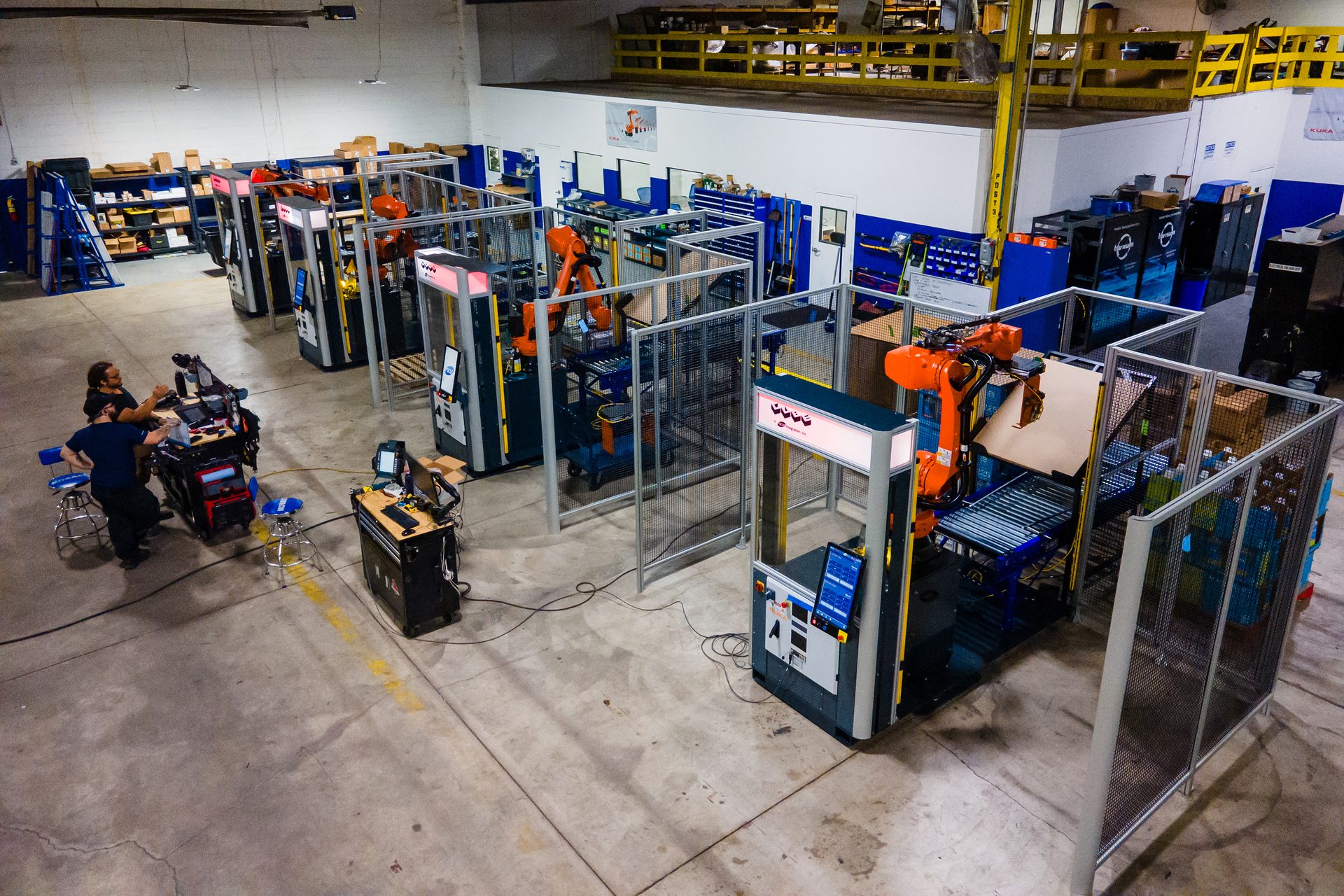
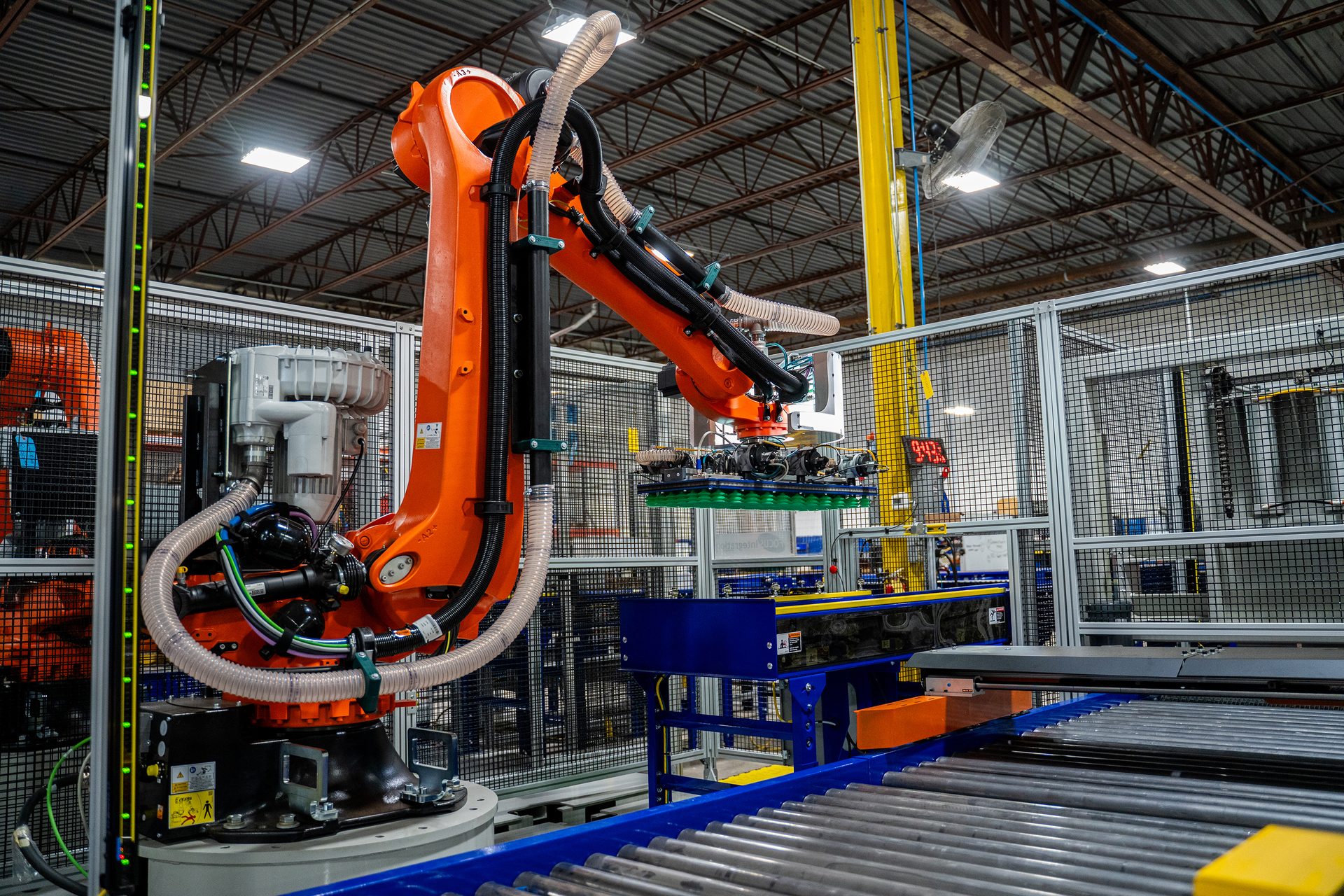
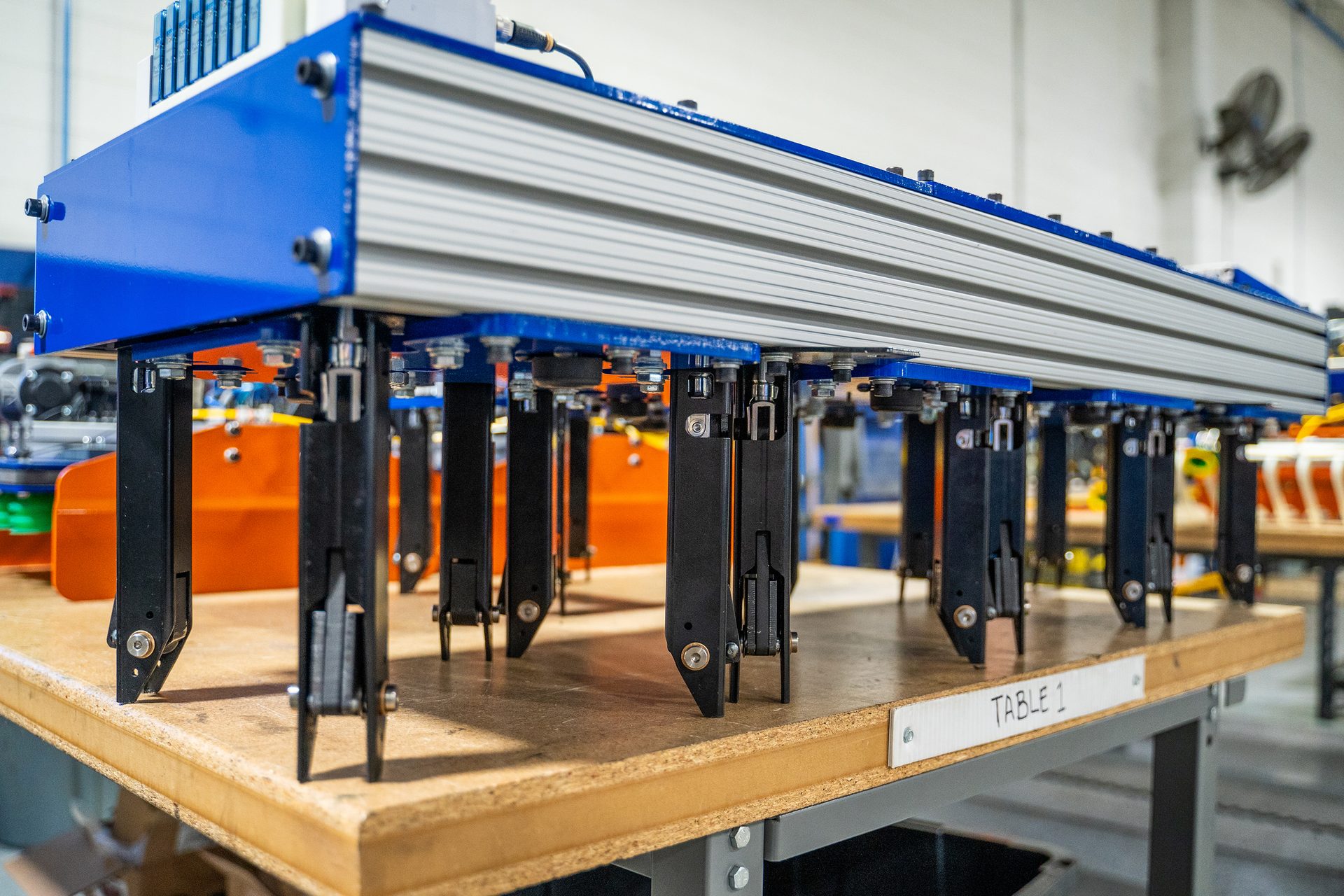
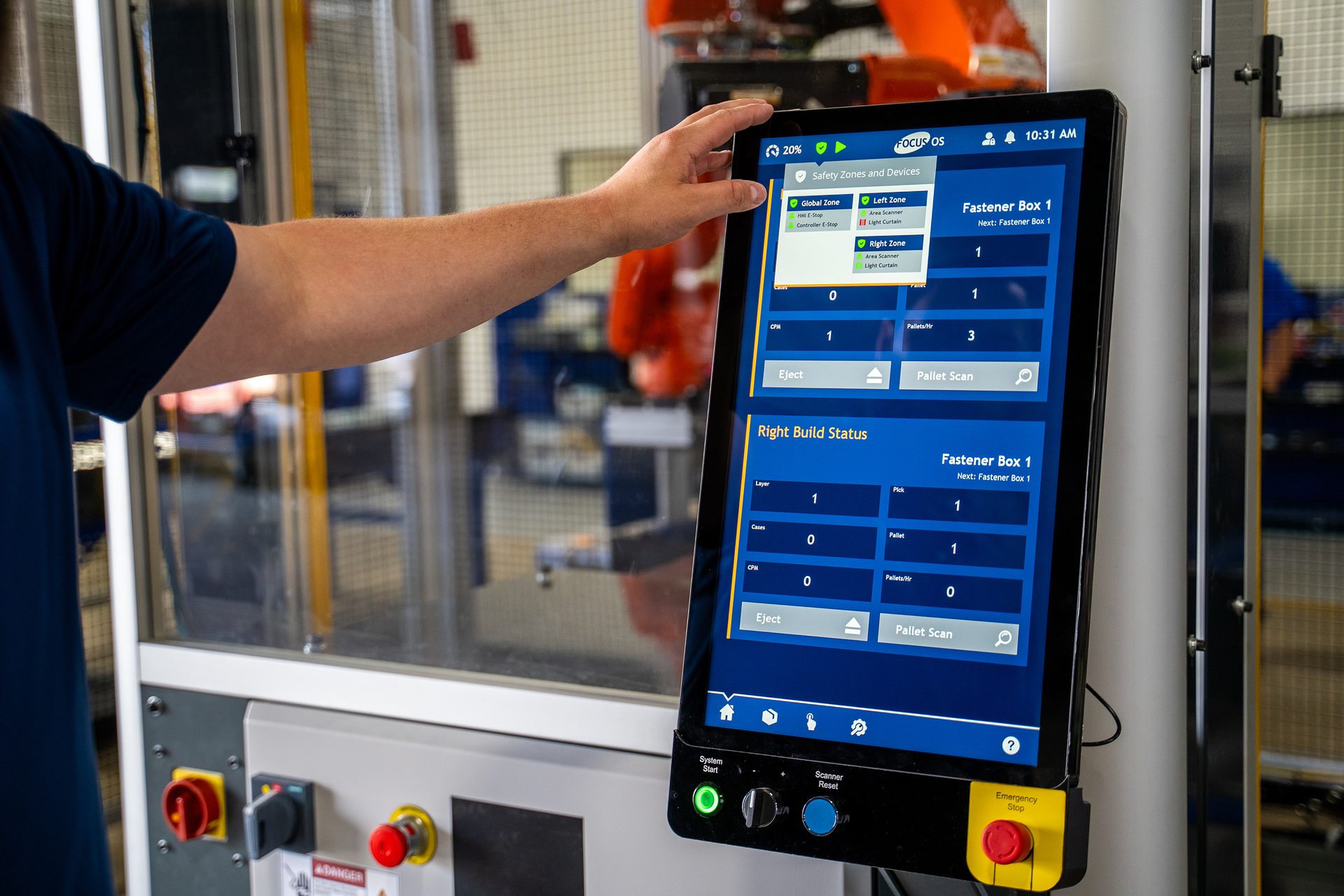
Palletizing solutions from FOCUS have been stacking products for more than 20 years, and the company has built its success with robots from KUKA. FOCUS started specializing in end-of-line robotic automation in 2003, and a mere two years later selected KUKA for virtually all of its systems. Roberts said selecting KUKA as its prime robotic supplier was easier than he anticipated.
“As engineers, we put together a checklist of everything we needed and interviewed the top five robot manufacturers, of which KUKA was one,” Roberts said. “In the end, the decision was fairly simple. KUKA checked all the boxes with the right stuff, including software and support.”
According to FOCUS System engineer Trevor Thobe, the relationship with KUKA has been phenomenal. He pointed out that flexibility and the ease of online/offline programming are additional reasons the company chose KUKA.
To commission new cells, FOCUS engineers use KUKA.WorkVisual engineering suite and KUKA.Sim smart simulation software. The KUKA.WorkVisual suite checks for logic errors while programming steps are being carried out and provides an intuitive platform for configuring, programming, commissioning, and diagnosing systems. KUKA.Sim smart simulation software for offline programming depicts robot sequences prior to bringing them online, allowing engineers to ensure the system will work as designed and anticipated.
KUKA.SafeOperation is another feature FOCUS uses to ensure customers receive a reliable and safe solution. KUKA.SafeOperation software allows shops to reduce their cell space requirements by modeling end-of-arm tooling with six user-defined spheres that move with the robot. The software permanently monitors the cell as configured in the program, and if a sphere touches the limits of the cell, the robot safely stops. The software accurately monitors axis velocities and accelerations and Cartesian velocities in up to 16 configurable spaces within a fixed cell area.
Once cells are installed and operating, KUKA.RemoteSupportView provides customers with online support for robot controllers through a reliable client-server connection. The program allows secure access for maintenance and troubleshooting from a remote computer.
“KUKA.RemoteSupportView is good for sites that don’t have a lot of onsite maintenance capability,” Thobe said. “It allows us to remote in, see what’s happening and quickly provide customers a solution to get them up and running.
“They have account specialists for integrators that we can call anytime,” Thobe said. “Service and after-sales support for everything from the beginning of a project to the end has been superior. It’s been a great partnership.”
Looking to the future, Focus is centered on meeting the rising demand for palletizing and continuing to stack successes one cell at a time.
“Demand for our systems has gone through the roof, and the need for automation in palletizing and packaging will only continue to grow,” Roberts said. “We joined the KUKA team in 2005, and we haven’t looked back since.”