Products
the latest products to help you improve your manufacturing process
Balluff 5GigE Optical Cameras
Balluff Inc., the U.S. subsidiary of Balluff GmbH, launched the 5GigE Vision Cameras, which offer cost-effective, reliable, long-range performance for industrial applications. Balluff’s smallest 5GigE cameras offer high speed image acquisition and transmission with the latest technology. The camera family has the lowest power consumption in its class, yet consistently delivers brilliant images. Low-level heat dissipation maintains reliability with minimal noise.
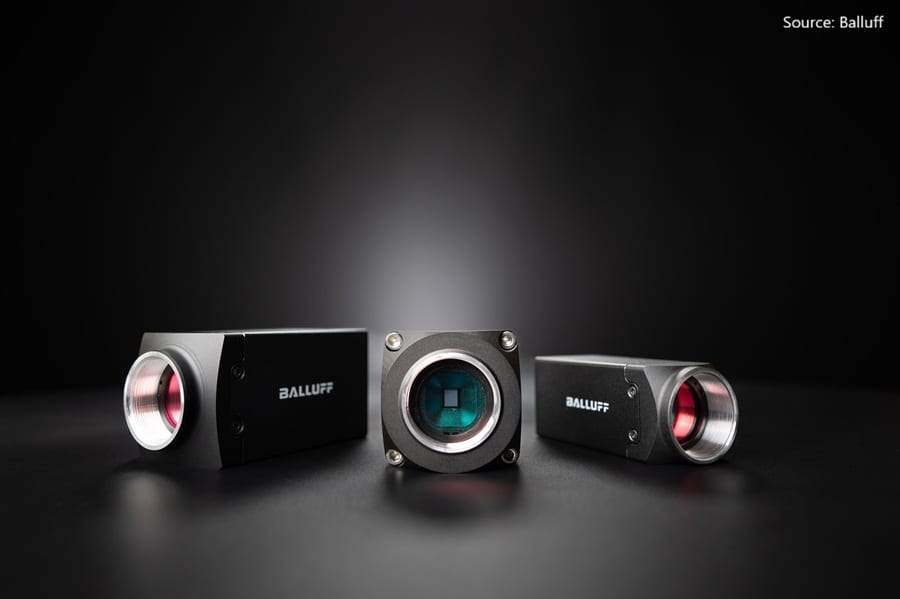
The 5GigE interface includes Remote Direct Memory Access (RDMA) and the RDMA over Coveraged Ethernet version 2 (RoCE v2) protocol. Balluff integrates this efficient transmission standard for the cameras to eliminate CPU overhead associated with traditional TCP/IP networking stacks. The result is significantly reduced latency and increased throughput. This enhanced processing enables high-speed image data transfers, making the 5GigE cameras ideal for machine vision applications requiring rapid data processing.
The cable lengths extend up to nearly 1,000 feet without repeaters by using SFP28 fiber cables. This offers flexible hardware set up as well as stable data transmission. The cameras are equipped with the latest global shutter sensors, generating high image quality at small pixel sizes and the highest transfer rates. The latest Sony image sensor implementation includes IMX901 and IMX902 with wide aspect ratios of 4:1 and 3:1. Balluff’s Machine Vision Software, Impact Acquire, ensures easy implementation, compatibility, and smooth image acquisition for customer computer platforms.
Balluff, Inc.
https://www.balluff.com/en-us
Cincoze MD-3000 DIN-Rail Machine Vision Computer
Cincoze has launched its new high-performance, scalable DIN-Rail computer series (MD-3000), the flagship model of the Machine Computing - MAGNET product line. The MD-3000 series excels in vision-driven smart manufacturing applications, with four major advantages: Superior Performance (powered by Intel® Core™ Desktop-grade processors), Flexible Expansion (supporting over a dozen function modules), Compact Design (only 150 mm in height), and DIN-Rail Mounting combined with two patented designs: the Dynamic Thermal Mechanism and Smart OTP (Over Temperature Protection). Since its launch, it has been highly favored by smart manufacturing system integrators, with inquiries and orders pouring in. The MD-3000, acting as the "real-time brain" of the production line, can analyze, judge, and respond to on-site information and images in real time, giving the equipment the intelligence to "see, judge, and act." This makes it the ideal Computing Platform for Machine Vision and Smart Manufacturing on the factory floor.
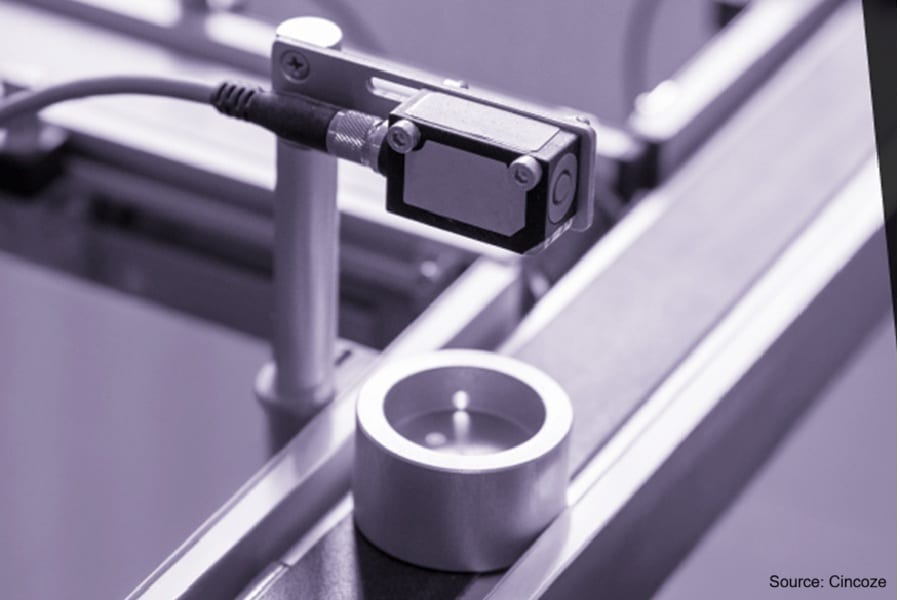
In smart manufacturing, bin picking is a critical step for realizing materials handling automation. By combining 3D vision with AI algorithms, a robotic arm can instantly identify, locate, and precisely pick parts. This type of application relies on stable and powerful computing performance to execute real-time image recognition and trajectory calculations.
The MD-3000 can be equipped with a 14th Gen Intel® Core™ CPU (35–65W), providing high-speed computing and low-latency response to ensure synchronized image recognition and arm control. Its standard DIN-Rail mount allows for direct installation in control cabinets or equipment enclosures. The maintenance area and operating interfaces are located on the front, making installation and maintenance more intuitive and convenient.
Automated appearance inspection systems have become the core of quality control on the manufacturing line. Using high-resolution cameras and deep learning algorithms, they can quickly identify surface flaws, foreign objects, and labeling errors, ensuring product consistency and aesthetic quality.
The MD-3000’s modular scalable design provides flexible I/O expansion, allowing selection of 2-, 4-, or 6-slot expansion. These can be flexibly combined with over a dozen function modules, including I/O interfaces, PoE functionality, M.2 expansion slots, and 2.5-inch storage devices. This allows for the integration of multiple light sources, trigger signals, and image storage based on the requirements of different production lines. With a compact chassis height of just 150 mm, the unit’s volume is close to that of a PLC, allowing flexible integration into various inspection equipment control cabinets. This offers a significant advantage in space-constrained automated production line environments.
Dimensional measurement is the final line of defense in the manufacturing process to ensure that parts conform to design specifications. When integrated with 2D/3D vision, laser, or structured light technology, the system must process massive amounts of geometric data in real time to provide feedback on process precision.
The MD-3000 can be expanded with various wireless transmission and communication interfaces (WiFi, GSM, GNSS, etc.), allowing measurement data to be uploaded instantly to a central system for analysis and tracking. The MD-3000 passes multiple stringent industrial standards, demonstrating its superior ruggedness and reliability, including wide temperature (-40°C to 65°C), wide voltage (9–48VDC), and industrial environment EMC standards (EN 61000-6-2 / 6-4). This ensures stable operation even in environments with vibration, high heat, and electromagnetic interference, making it a reliable edge computing platform for high-precision measuring equipment.
Cincoze
www.cincoze.com
Pico Technology PicoScope 7.2 Software
Pico Technology announced the release of PicoScope 7 Software version 7.2. This significant update introduces powerful new features and enhancements designed to improve waveform capture, analysis and measurement confidence, making the control of PicoScope instruments faster, clearer and more efficient for engineers and technicians worldwide.
The new features in PicoScope 7.2 incorporate suggestions from the PicoScope user community, alongside innovative thinking from Pico Technology's engineering team, to address the practical challenges faced in electronic test and measurement.
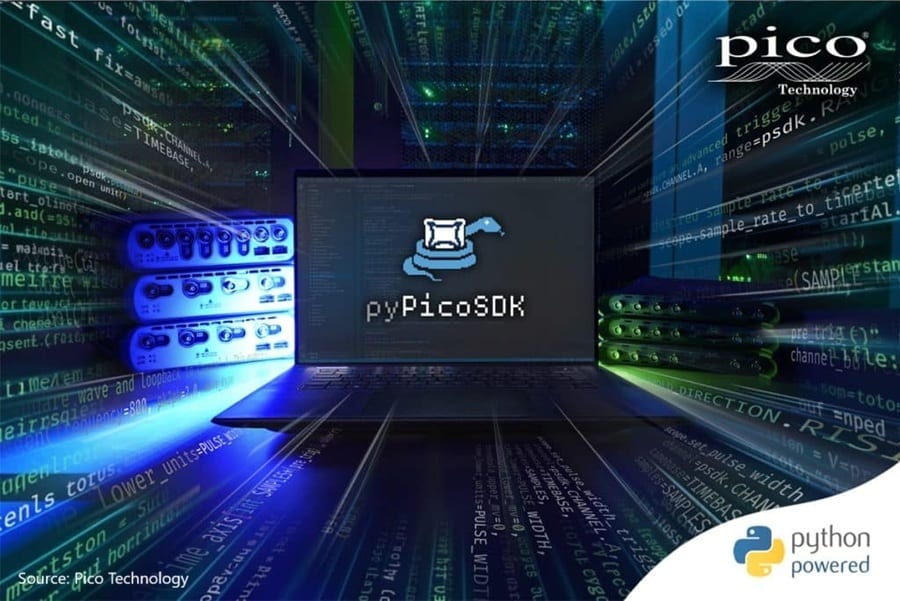
PicoScope 7.2 introduces Waveform Overlays, a powerful visualization tool that displays multiple waveform captures stacked on top of each other in a single view. This feature effectively creates a visual "envelope" of a signal’s normal behavior, enabling users to drill down to view details of intermittent glitches, jitter and anomalies that might be missed in traditional single-shot views. This is analogous to an advanced digital persistence display, providing unparalleled clarity for signal integrity analysis.
The new Serial decoding Advanced Filters tool dramatically reduces the time spent sifting through long serial data captures. This feature allows users to easily set up filters to identify specific packets, data types or indexed date ranges of interest based on criteria such as data length or specific content. Crucially, this advanced filtering works seamlessly across all 40 serial protocols supported by PicoScope 7.
To ensure clarity and foster complete trust in measurement results, PicoScope 7.2 includes Measurement Indicators. These clear visual markers are placed directly on the waveform, highlighting the precise "decision points" PicoScope uses for its automatic measurement calculations (e.g., rise time, frequency). This eliminates guesswork, allowing users to see exactly where values are derived.
The software now features displayable and saveable Capture Timestamps (date and time the waveform buffer was received by the PC, to the nearest second). Furthermore, for PicoScope 3000E and 6000E Series, precise Trigger Timestamps are available, allowing for high-resolution delay measurement between events relative to the first or previous waveform, with resolution down to 200 ps, depending on instrument settings. Timestamp times are recorded by default in can now be exported to a .csv file for detailed reporting and integration with other analysis tools.
PicoScope 7.2 includes a host of smaller, but significant, improvements to streamline the user experience:
- Smarter Actions: The Pass/Fail limit system has been enhanced, allowing users to set up Actions (e.g., saving a file) to trigger based on limits for specific measurements.
- Channel Deskew: A new feature has been added to easily compensate for timing differences caused by probes with different cable lengths, ensuring perfectly aligned multi-channel measurements.
- Precise control: Users can now make coarse and fine adjustments (by pressing the shift key while scrolling the mouse wheel) when entering values in settings control boxes.
- Fresh start: A convenient Factory Reset button has been added to the top toolbar for quickly restoring default settings.
- PicoScope 7.2 is available immediately as a free update for all existing and new users of PicoScope instruments on Windows, macOS, and Linux operating systems.
Pico Technology
https://www.picotech.com/downloads
www.picotech.com
ESAB Tracfinder Welding Tractors, ROBBI Mobile Cobot Welding System
To help metal fabricators improve productivity, quality and workforce needs, ESAB has launched its new Tracfinder Rail and Tracfinder Wheel series of battery-powered welding tractors and unveiled its newly branded ROBBI™ Mobile cobot welding system. ROBBI is now available with the Aristo Edge 500R power source and RoboFeed Edge robotic wire feeder, which offer next-generation capabilities. Compared to manual welding, these automation solutions can typically increase output per operator by 70 to 100%.
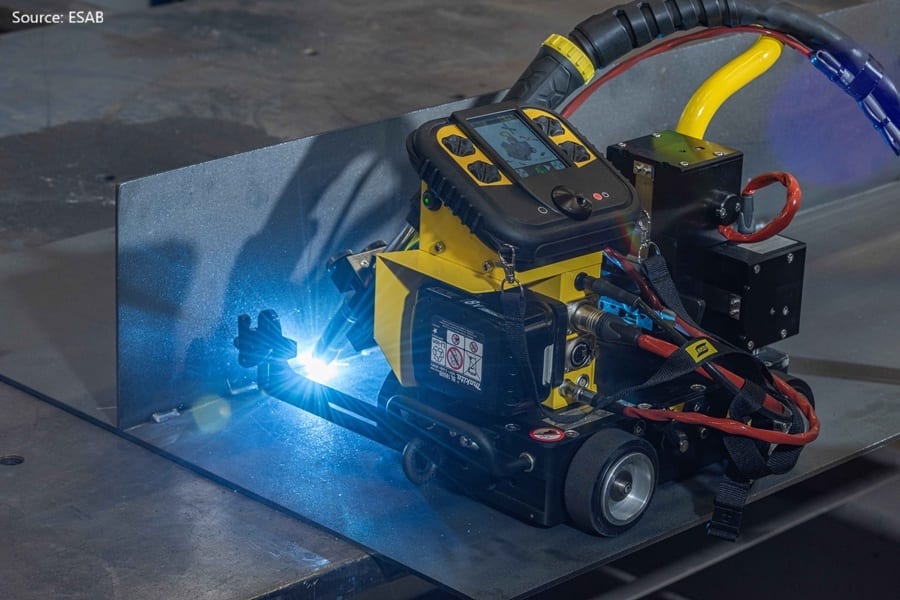
“ROBBI Mobile cobots overcome traditional barriers to welding automation, especially among small- to medium-sized businesses,” says Dan Colvin, ESAB Vice President, North America Robotics & Digital Solutions. “They deploy quickly and easily, feature operator-friendly controls, require no robotic programing knowledge and are suitable for high-mix/low-volume and medium- to high-volume production runs. ESAB automation solutions enable fabricators and manufacturers to leverage the talents of existing staff, strengthen profitability and improve the operator’s working environment.”
ROBBI Mobile welding cobots feature a Universal Robots’ UR10e or UR 20e industrial robot arm and a Siegmund 32- x 48-in. or 5- x 10-ft. table. The ESAB Teach Tool uses a ‘no code’ or plain language program so users can effortlessly incorporate a multitude of functions that enhance performance and productivity.
“ROBBI offers the most intuitive operation of any welding cobot on the market, enabling fabricators to start producing more parts almost immediately,” adds ESAB’s Colvin.
ROBBI is now available with the Aristo Edge 500R power source and RoboFeed Edge robotic wire feeder. Aristo Edge 500R ensures precise arc starts and enhanced stability across four advanced WeldModes — THIN, ROOT, ROOT Pipe and SPEED — as well as an Advanced Pulse WeldMode. All WeldModes enhance arc stability, offer more control at faster travel speeds and reduce spatter for less post-weld clean-up. The Aristo Edge platform also empowers independent development of synergic lines.
Tracfinder Rail is designed for welding in all positions using high-stability rails and a rack-and-pinion transmission to prevent slippage at speeds up to 71 in./min (180 cm/min). Its unique joint-teaching software enables users to create a weld path with up to 50 points.
Tracfinder Wheel, the most versatile autonomous welding tractor on the market, features a magnetic base with 62 lbs. (28 kg) of magnetic force that enables it to operate in all welding positions at speeds up to 79 in./min (200 cm/min), including vertical up and down, overhead and on inside and outside diameters. New tracking software adjusts the Tracfinder Wheel’s trajectory based on torch position, eliminating the need for rails and minimizing setup time. Dual motorization (independent left/right control) and 4-wheel drive ensure optimal traction and stability in all welding positions. The optional remote control lets users adjust direction while the tractor is moving, much like a remote controlled car.
Designed for maximum flexibility, Tracfinder tractors feature a common operator interface that is available with Standard, Advanced and Advanced+ control packages. The two Advanced packages feature a remote control interface for operations up to 66 ft. (20 m) away, as well as advanced software. The Advanced+ package also features a communication module for two-way communication with the Aristo® Edge 500R power source and RobustFeed Edge wire feeder; otherwise, Tracfinder works with any brand of welding power source.
The Tracfinder advanced controllers enable users to save up to 30 jobs, storing programs for tractor parameters that include weld speed and length, delays, repetitions, stitch welding, back-step welding, three standard weaving patterns, the ability to customize the weave dwell time, width and speed, and a special multi-axis weaving function that combines horizontal and vertical weaving. Because all systems feature a common central control base and components, users can start out with the Standard control and upgrade to an Advanced or Advanced+ control.
By making continuous welds, Tracfinder tractors reduce rework associated with start/stop defects. In applications where end-users expect uniform weld bead profile and penetration, mechanized tractors deliver consistency without the cost or complexity of automation. They also reduce operator stress by reducing fume and UV radiation exposure, as well as reduce welding in uncomfortable positions.
Applications include those associated with shipbuilding, offshore yards, structural steel, tank and vessel, pipeline, wind tower, repair and maintenance (especially hardfacing) and high-volume fabrication. Operating time for the carriage battery is between 10 to 20 hours, enabling the tractor to run for an entire shift before swapping out the battery, which is a standard Li-ion 18V power tool battery.
For conventional MIG and pulsed MIG processes, ROBBI pairs with the Aristo 500ix power source and RobustFeed U82 wire feeder, which feature pre-programmed synergic lines for common welding alloys.
ESAB
esab.com