H2 Deck By Bold Name
h2 xxxxxx
H1 xxxxxx
h2 xxxxx

Medical
Scaling a digital quality transformation across a global organization By Michael Schnabel
From Paper to Performance: The Strategic Transition to Electronic Device History Records (eDHRs)
Medical
H2 Deck Info By Paragraph Style Bold
Headline
The stakes for quality in medical device manufacturing have never been higher. Products are becoming more complex, regulatory expectations continue to evolve, and the pressure to deliver faster, more efficiently, and with total traceability is growing every day. Yet, despite this changing landscape, many manufacturers still rely on paper-based systems to manage one of the most essential components of compliance, the Device History Record. The DHR is a collection of all records that document the manufacturing history of a specific medical device unit.
According to Greenlight Guru’s 2025 Medical Device Industry Benchmark Report, 43% of medical device companies still use paper-based systems for quality management. That number rises to 59% when it comes to managing product development records1. Until recently, Cirtec Medical was among them.
We came to a clear realization: relying on paper wasn’t just inefficient, it was a risk. In 2024, we launched a focused initiative to transition from paper-based to electronic Device History Records (eDHRs), beginning with our Costa Rica facility. Over the course of that year, we piloted the system, refined our processes, and learned how digital tools could do more than streamline compliance, they could elevate performance across our operations.
One year later, our pilot turned into a multi-site rollout currently spanning four Cirtec Medical facilities with plans for full implementation. What began as a quality upgrade has evolved into a company-wide transformation that is reshaping how we think about compliance, operational efficiency, and scalability.
The Case for Change
Paper-based records introduce risk at every stage of the process. Handwriting is hard to decipher, signatures go missing, pages get lost or misfiled, and documentation reviews can become bottlenecks that slow down production. Investigating a single deviation might mean digging through stacks of paper and preparing for an audit can take weeks of effort, and even then, there’s no guarantee that gaps won’t surface at the wrong time.
In a manufacturing company where facilities operate globally, these risks are magnified. The inefficiencies, delays, and potential compliance failures that stem from paper processes can impact product timelines, customer satisfaction, and in the most extreme cases, patient safety.
At Cirtec Medical, moving to eDHRs wasn’t just about going digital, it was about turning compliance into a strategic advantage. Electronic systems offer built-in error prevention, enforce workflow discipline, and capture production data in real time. This immediate visibility allows our teams to spot issues sooner, act faster, and maintain tighter control over quality processes.
Even more so, eDHRs build trust. Regulators gain confidence in the integrity of our records. Our partners and customers know their products are built with consistency. And our employees can focus on quality, not paperwork, knowing the system is there to back them up.
Caption
The Pilot: Why Costa Rica
We knew from the start that the success of this initiative would depend on starting small, learning quickly, and demonstrating value early. Our Costa Rica facility was the ideal pilot site. Not only is it one of our most advanced and high-volume locations, but it also has a strong track record of embracing new technologies and driving process improvements.
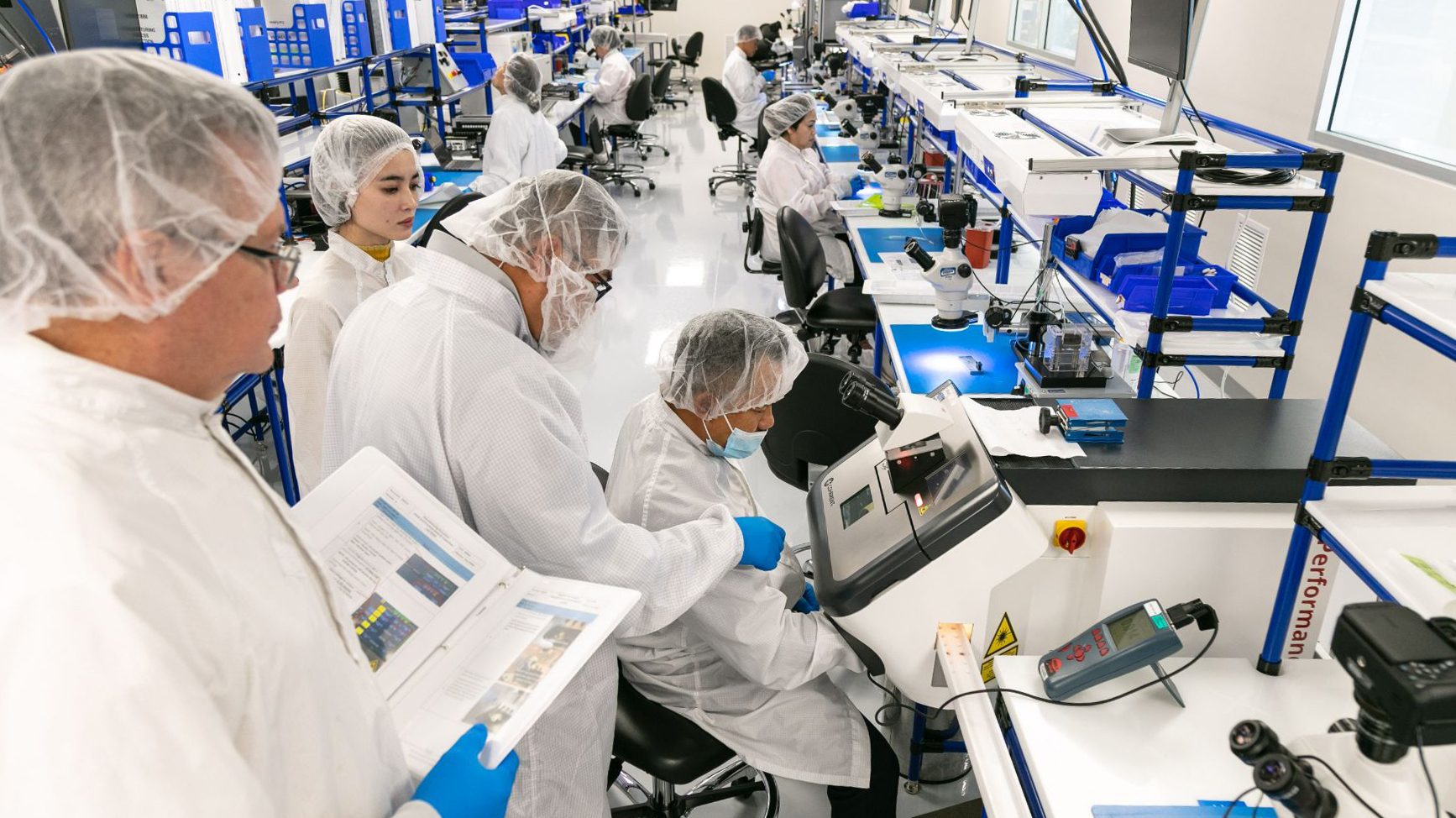
We partnered with MasterControl to implement the eDHR platform and began by mapping existing workflows into a digital environment. Every data entry point, approval, and verification step had to be translated into the system without compromising the regulatory rigor our products demand.
Cross-functional collaboration was key. Teams from Quality, Operations, and IT worked side by side to align on definitions, assign responsibilities, and define success criteria. This close collaboration helped build ownership, minimized resistance, and ensured the new system reflected real-world needs.
By the end of the pilot, the Costa Rica team hadn’t just adapted to the system, they had embraced it. Operators reported spending less time on paperwork. Supervisors gained real-time visibility into production. Quality teams were able to review records as they were created, dramatically accelerating release timelines. The facility became a proof point for what was possible, setting the standard for future rollouts.
Scaling Smart: Expanding Across Facilities
After the pilot’s success, we began scaling to other Cirtec facilities. But expansion wasn’t simply a matter of copying-and-pasting the system. Each site has its own mix of products, unique team structures, and operational rhythms. To ensure success, we needed a rollout approach that balanced standardization with local adaptability.
Our framework established consistent requirements around compliance, data integrity, and system architecture, while giving each site the flexibility to tailor workflows based on their needs. This ensured eDHRs brought consistency without compromising operational fit or team adoption.
Leadership alignment was critical throughout this phase. Quality and Operations leaders worked closely to ensure readiness, from training and resource planning to performance metrics and system validation. At each site, we also identified champions, local advocates who could support users, troubleshoot issues, and serve as a bridge between teams and leadership.
The impact was visible early. Review cycle times dropped significantly. Record errors declined. Deviations that once took hours or days to identify could now be caught in real time. Customers noticed the difference, more reliable delivery timelines, fewer surprises, and greater confidence in our ability to scale with their needs.
But perhaps most importantly, this phase proved that eDHRs were more than a technology upgrade, they were a cultural shift. Teams across sites began to see digital tools not as compliance burdens, but as performance enablers. That mindset shift has been key to the success of the broader initiative.
People and Culture: The Heart of Adoption
Technology doesn’t transform organizations, people do. While our eDHR rollout was built on strong systems and smart process design, its real success has come from the people who use it every day.
One of our earliest challenges was time. As a fast-paced organization juggling multiple priorities, dedicating focus to the eDHR transition wasn’t easy. We had to coordinate across teams, train subject matter experts at each site, and ensure the right resources were available at the right time.
Executive support played a pivotal role. Company leadership helped keep the initiative front and center, clearly communicating that this was a strategic priority, not just a side project.
Training was another major focus. We took a role-based approach, ensuring that every stakeholder, from operators to supervisors to quality reviewers, understood how the system supported their day-to-day work. Just as importantly, we created feedback loops so users could raise concerns and suggest improvements. When people saw their input taken seriously, trust in the system grew.
Celebrating small wins also helped drive momentum. When teams saw how quickly deviations could be resolved, or how much time was saved during review, initial skepticism turned into advocacy. Users who were once hesitant became champions of the new system, sharing their experiences and helping bring others on board.
Strategic Outcomes: More Than a Quality Upgrade
One of the most immediate improvements has been in data integrity. Errors that once went undetected are now automatically flagged and prevented by the system.
Product release timelines have also accelerated. With eDHRs, reviews can happen in real-time, enabling teams to identify and resolve problems before they impact delivery. The result is faster, more predictable results and greater agility to respond to customer needs. It has also enabled a shift in resources from manual document review to higher-value activities that directly benefit our customers.
Most importantly, eDHRs have laid a foundation for scalable growth. As we take on more complex devices and increasingly sophisticated customer programs, our ability to manage production data accurately and efficiently has become a key differentiator.
What’s Next: Beyond eDHRs
The eDHR transformation is only the beginning. With four facilities now using eDHRs and more planned, we’re entering the next phase of our digital evolution.
Our next step is integration, connecting eDHRs with other Cirtec electronic systems, including manufacturing resource planning, employee training, calibration, and labeling to create a highly controlled and error-resistant manufacturing environment. This will eliminate redundancy, enhance traceability, and provide full visibility with valuable data and metrics across the entire production lifecycle.
Ultimately, our goal is to build a connected digital ecosystem, one that goes beyond compliance to deliver predictive insights, process improvements, and creates long-term value for our customers and partners. By unlocking the power of our data, Cirtec Medical is not just keeping pace with industry demands but we’re helping define the future of quality in medical device manufacturing.
Balancing Compliance and Risk in a Digital World
In the regulated world of medical devices, adopting electronic systems for manufacturing and quality records comes with understandable concerns—cybersecurity, software reliability, and regulatory acceptance under 21 CFR Part 11. These risks are real and must be addressed through rigorous implementation.
However, paper-based systems aren’t without risk either. Lost pages, missing signatures, and manual errors can jeopardize compliance and product quality. In many cases, these risks outweigh those of a validated electronic system.
A properly implemented eDHR system within the regulatory framework, mitigates key vulnerabilities. Built-in controls prevent incomplete records, audit trails ensure traceability, and validation confirms the system works as intended and meets regulatory standards. No system is risk-free, but digital systems offer stronger safeguards.
References:
- Greenlight Guru. (2025, September 26). The best QMS makes quality your competitive differentiator. https://www.greenlight.guru/blog/best-qms-software-quality-management#:~:text=We%20surveyed%20more%20than%20500,manage%20global%20compliance%20at%20scale