H2 Deck By Bold Name
h2 xxxxxx
H1 xxxxxx
h2 xxxxx
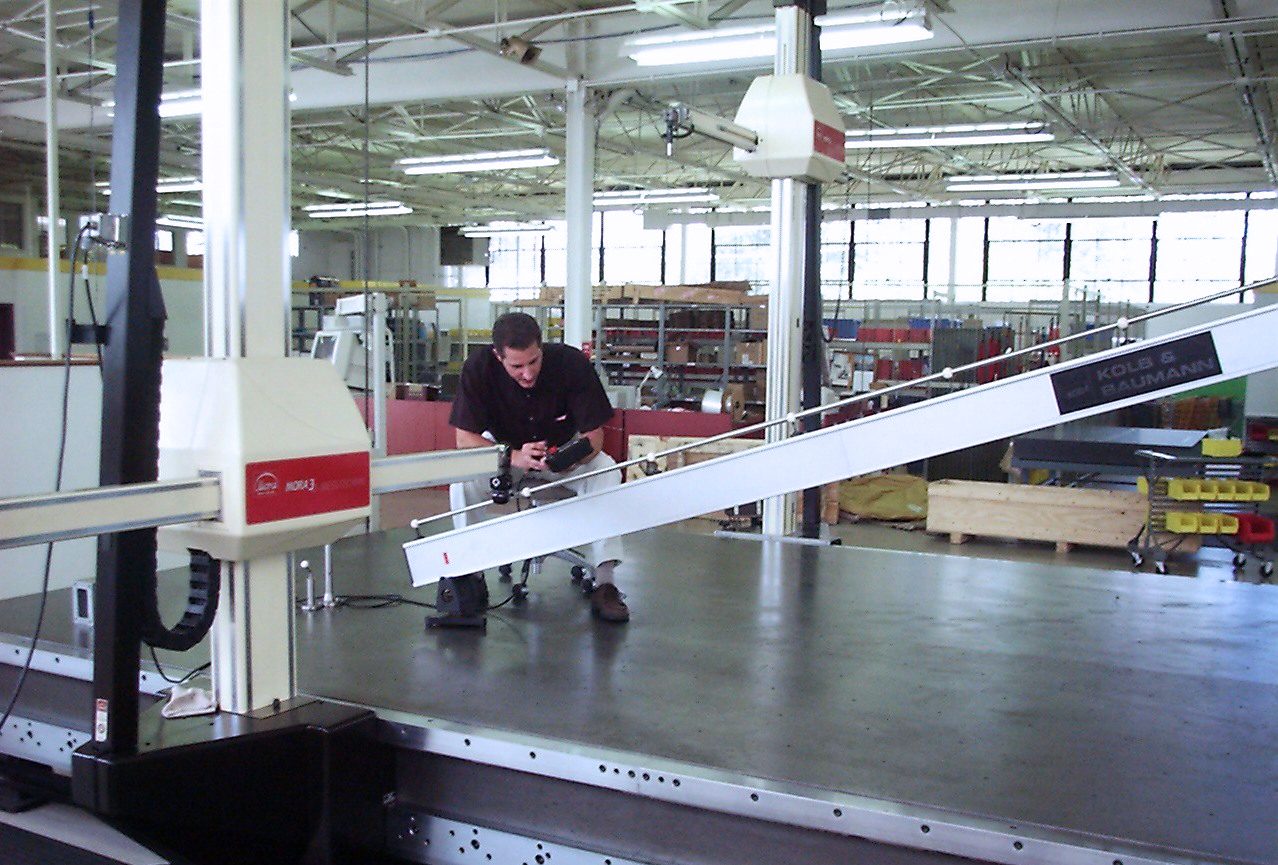
measurement
CMMs have been in the industry since the ‘70s and historically had an untrusted stigma. Because of their time in the industry and their continued evolution, that’s changed. By Linda Goodwin-Marino and Tim Hogan
CMM Technology
on the “Shop Floor”? Why Not!
measurement
H2 Deck Info By Paragraph Style Bold
Headline
“The biggest challenge with CMMs is that they are CMMs. They have been in the industry for a very long time and typically have a negative connotation about them. However, because they have been in the industry for so long, they are one of the most accurate, reliable, and cost-effective tools for measuring parts three dimensionally. In fact, I’d venture to say there is no more cost-effective way to measure three dimensionally, accurately, than with a CMM.” - Tim Hogan, AIMS Metrology
It’s no longer a question of but rather a choice of where and when to implement successful inspection. Over along the back wall, in the corner you just might see one highly skilled human multi-tasking both the CNC machining operations with “in-process gaging” followed by final measurement by a CMM while the CNC works on the next part. It’s overdue!
Efficient traditional metrology practices and manufacturing challenges keeping pace with the speed of production is still never ending. Coordinate measuring machines (CMMs) in particular have traditionally had a very delicate “aura” about them.
Many CMMs need their own “room,” and you must keep them clean to a degree of spotlessness. They are the “calm, cool and collected” ones who need creature comforts in an environment (i.e. a climate controlled clean room), requiring specialized artifacts (such as a step gage) for monitoring calibration standards that are traceable to labs worldwide. Continuously testing and maintaining a routine to monitor tolerances according to manufacturers’ existing verification of accuracy since installation is also necessary. Then there’s often elaborate and complex software with personnel to run them and turn out top notch products of all types with precision.
Whew…. can some of these “crybaby” CMMs be trained to play outdoors? Technological advances in the manufacturing of multi-environment and portable arm probing systems make it possible that we can think creatively about non-traditional measurement spaces. For instance, a single operator performing MRO (Maintenance, Repair and Operations) on turbine components mounted on an aircraft engine with a portable arm CMM in a hangar.
Metrology, like manufacturing, has evolved and thanks to more robust and accurate components and software choices, the shop floor option is gaining traction for the procedural mode of operations in many industries. No longer is the laboratory environment the only application required for all; however, you still need to keep your house clean, and everyone will want to know how you do it.
One of the remaining challenges is to find and train qualified personnel. More and more manufacturers are integrating CMMs into their manufacturing cells. Existing pick and place, load and unload robotics, automatic statistical analysis, and even automated tool compensation back to CNC equipment again, all save time with the talent already in place. Maybe even so far as to successfully implement a “lights out” operation.
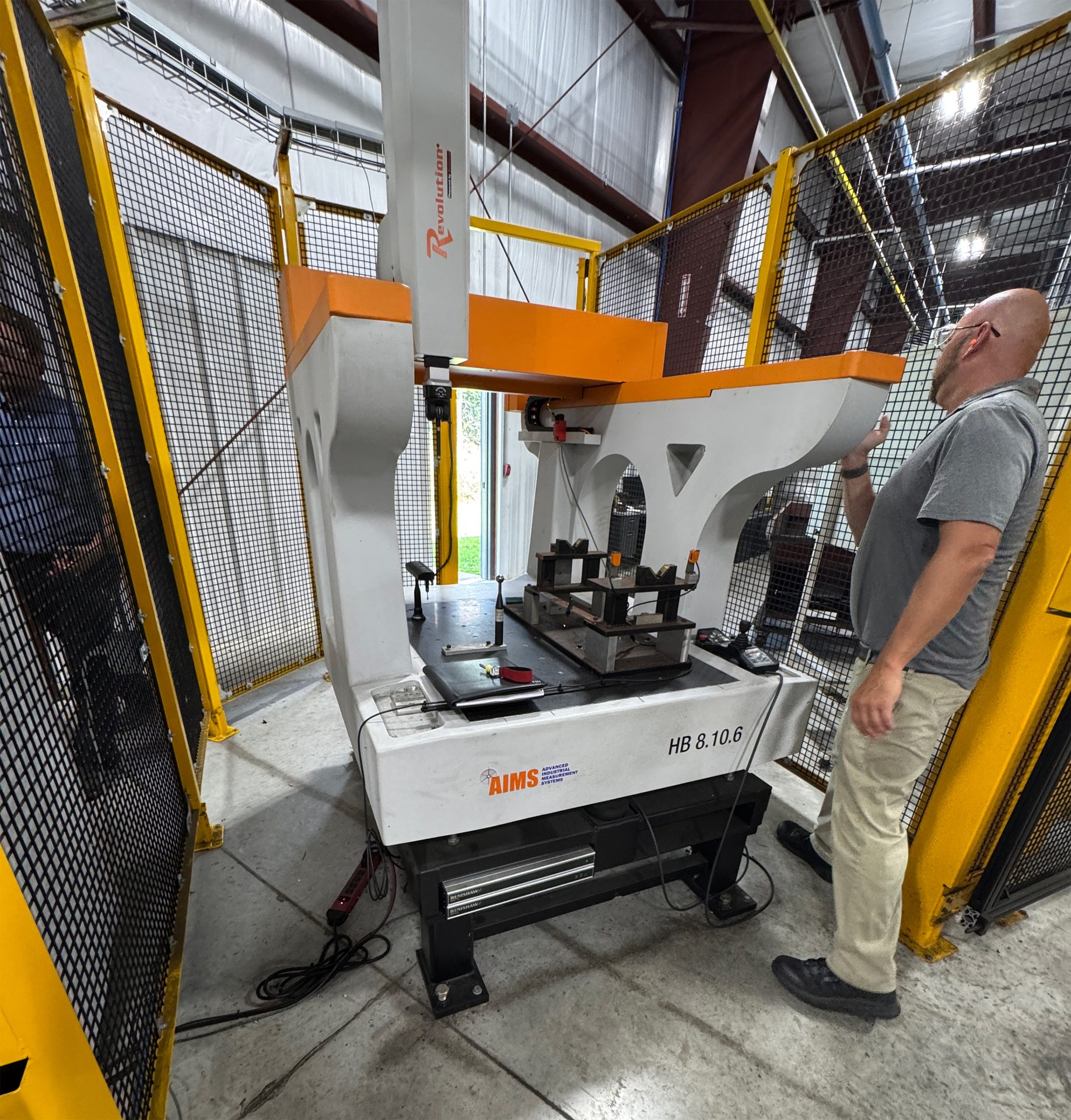
Photo courtesy of AIMS Metrology
CMMs are a fundamental communication tool for machine shops. It’s a method for Quality to communicate to Production, a way for Management to communicate priorities to Personnel, a means to validate compliance to the accrediting bodies and a manner for the company to proudly demonstrate quality to its customers.
I asked Tim Hogan of AIMS Metrology in Miamisburg, Ohio, to tell me more. He said, “5-axis measurement productivity, coupled with shop-floor versatility and CAD-based programming efficiency is the CMM solution most machine shops are looking for in metrology.”
When I asked him about something new and/or improved he added, “We’ve provided 5-axis scanning technology on our largest shop floor CMM for automotive powertrain components, including transmission housings, engine crankshafts, engine blocks, and rear differentials to name a few.” These high-quality requirements are just a small segment of the automotive sector known for high production.
Enter AI. It’s new, trendy and maybe even sexy by proving to be a valuable tool in program creation, data analysis, but the data still needs to be acquired. Capturing data on the shop floor saves time and money and it will only increase confidence levels in the future.
All in all, the Shop Floor advantage is still undergoing scrutiny. I can almost picture a room full of CNC Turning Centers alongside a simple Pick-and-Place Robot loading completed components onto its new friend the CMM for inspection. Can you just hear that conversation when you turn on the lights with your cup of joe and say, “Good morning, ladies and gentlemen…how was your evening?”
It’s a thought…