H2 Deck By Bold Name
h2 xxxxxx
H1 xxxxxx
h2 xxxxx

Test & INspection
As testing becomes more integrated, standards and calibration practices carry added weight. By Genevieve Diesing
Force Testing
Adapts to Smaller, Smarter, and More Connected Products
Test & INspection
H2 Deck Info By Paragraph Style Bold
Headline
Force testing rarely draws attention until it fails. When components crack, seals leak, or devices do not activate as expected, engineers often trace the problem back to how force was applied, measured, or interpreted. As products grow more complex and smaller in scale, force testing has moved from a basic verification step to a more integrated part of product development and quality control.
Manufacturers now want force testing systems to do more than record peak values. They expect consistent results across sites, traceable data for audits, and test methods that reflect how products behave in real use. Instrument suppliers say the changes are most visible in medical devices, electronics, and other industries where precision, repeatability, and documentation carry equal weight.
Complexity and miniaturization change the testing equation
Product complexity is not new, but the way engineers test complex products has changed. Sammi Sadler, senior applications engineer at Instron, points to drug delivery devices as a clear example. Autoinjectors require multiple force-related checks, including cap removal, activation force, click detection, injection time, needle depth, delivered volume, and needle guard lockout.
“In the past, labs often needed several systems to perform all those tests,” Sadler says. “That approach took time and introduced variation between setups.”
Semi-automated systems now allow labs to combine those steps into a single test sequence. Engineers can run one program instead of moving samples between machines. That consolidation improves consistency and reduces handling errors, particularly when labs test large volumes of product.

Miniaturization introduces a different set of constraints. Smaller components require lower force ranges, but they also demand careful fixturing and sensor selection. Declan Tierney, international sales manager at Mark-10, says shrinking parts increase sensitivity to noise, deflection, and measurement drift.
“As components become smaller and more intricate, we need lower force ranges with higher precision and repeatability,” Tierney says. “That requirement applies not just to the sensor, but to the entire test frame.”
Tierney notes that small-capacity sensors now measure forces below one newton while maintaining tight accuracy tolerances. To support those measurements, test stands must provide smooth motion and maintain rigidity under load. Even small amounts of deflection can distort results when forces fall into the millinewton range.
Carl Bramley, materials testing product manager at Mecmesin, sees the same changes. He says manufacturers increasingly request systems that measure low forces and micron-level displacements. Those requirements push testing equipment toward smaller frames and lower-capacity load cells designed for precision rather than strength.
Sadler adds that load cell selection often becomes the limiting factor. Engineers must balance sensitivity with protection. A low-capacity load cell can measure small forces accurately, but heavy grips or fixtures can overload it before testing even begins. Careful system design now matters as much as the test method itself.
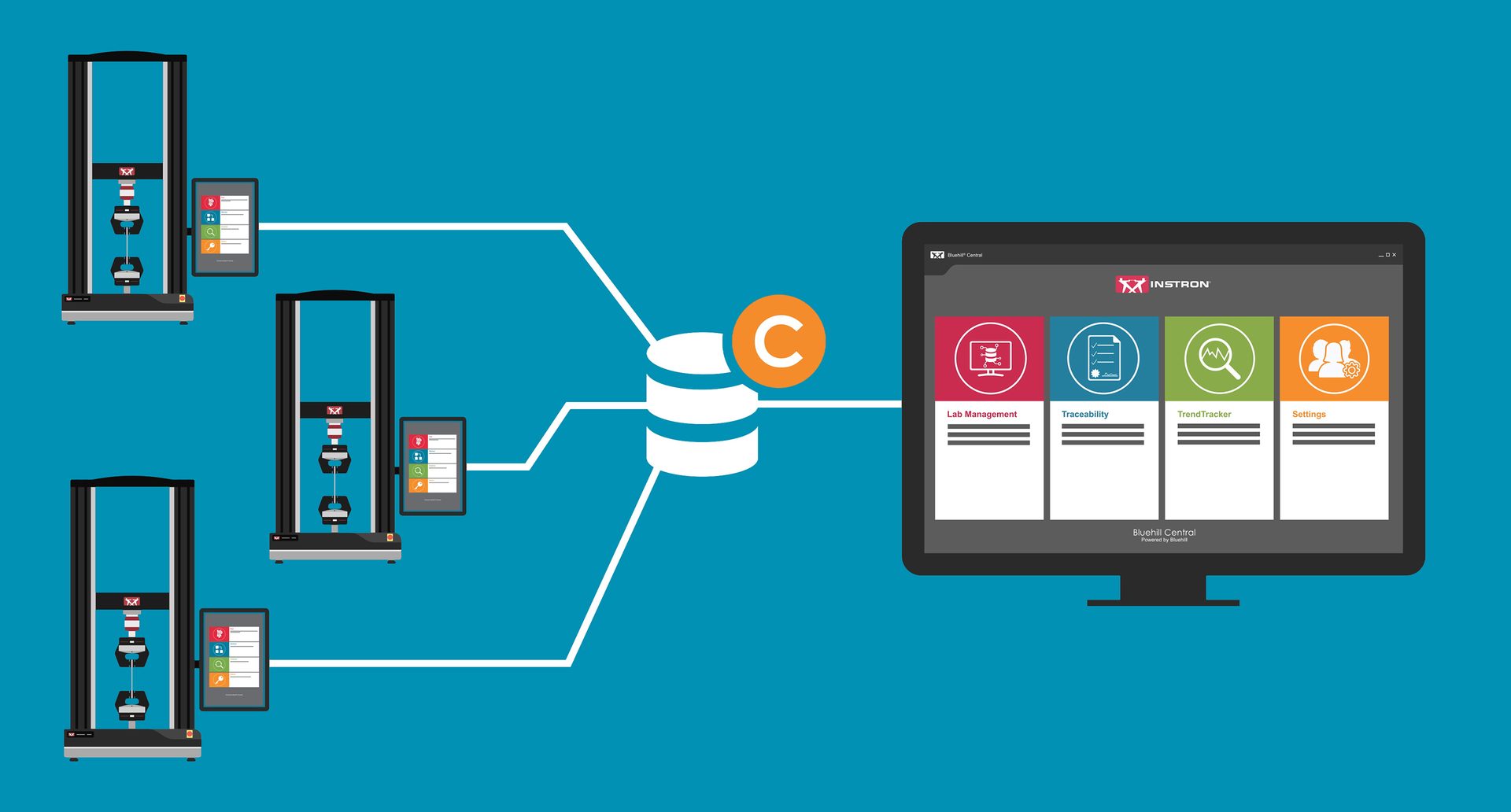
Network connected lab management software enables remote management of connected testing systems.
Sensors, software, and automation redefine test execution
Hardware improvements alone do not explain how force testing has changed. Software and connectivity increasingly shape how labs run tests and manage results. Stephan Botzki, senior applications engineer at Instron, says manufacturers with multiple labs face pressure to standardize methods and control access.
“Global manufacturers often operate several labs,” Botzki says. “They need confidence that everyone follows the same procedures and uses the same test definitions.”
Centralized lab management platforms allow quality teams to distribute approved test templates, manage user permissions, and maintain audit trails. Engineers can review results remotely and track file revisions without relying on local spreadsheets or shared drives. That structure supports regulatory compliance while reducing administrative work at individual sites.
Tierney emphasizes the role of software in test execution, not just reporting. Modern force testing software allows operators to define multi-step sequences that control motion, capture force and displacement data, and evaluate results against acceptance criteria.
“Software has to handle complex tests, but it also has to remain usable,” Tierney says. “Many manufacturers struggle to find experienced technical staff, so intuitive interfaces matter.”
Advanced sensors contribute to this shift by reducing noise and drift during loading and unloading. Stable readings allow engineers to focus on how components behave rather than questioning the measurement itself. High sampling rates also capture short events that older systems might miss, such as snap fits or release points.
Bramley notes that integrated sensors increasingly capture multiple inputs during a single test. Instead of running separate measurements, engineers can record force, displacement, and other parameters at once. That approach shortens test cycles and improves correlation between data sets.
Connecting force data to digital quality systems
Force testing data no longer stays within the lab. Manufacturers increasingly route results directly into quality management systems and manufacturing execution systems. Frank Lio, principal applications engineer at Instron, says speed often drives this integration.
“In many operations, products cannot ship until testing confirms they meet requirements,” Lio says. “Delays in approvals delay shipments.”
Application programming interfaces now allow testing software to send results directly to enterprise systems. Quality teams receive data as soon as tests finish, rather than waiting for manual uploads or reports. That flow reduces bottlenecks and supports faster decision-making.
Tierney says treating force data as a core quality input improves traceability. When systems capture results automatically, manufacturers reduce transcription errors and maintain a clearer record of what happened during testing. That record supports investigations when issues arise later in production or the field.
Bramley adds that interoperability between systems continues to improve. Data interconnectivity allows manufacturers to share results across platforms rather than locking information inside proprietary formats. That flexibility helps organizations scale testing practices across sites.
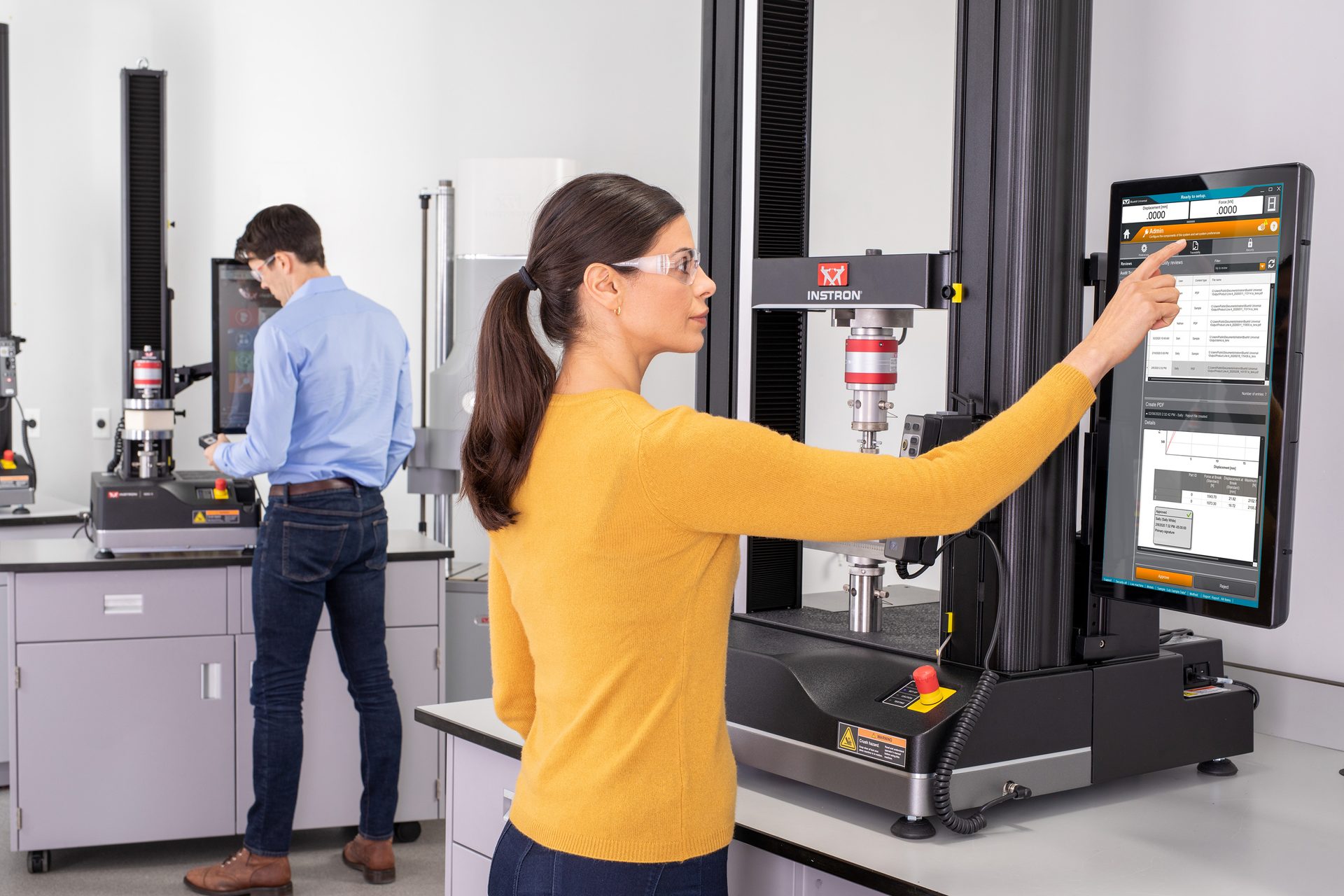
Operator reviewing method modifications as part of the traceability process.
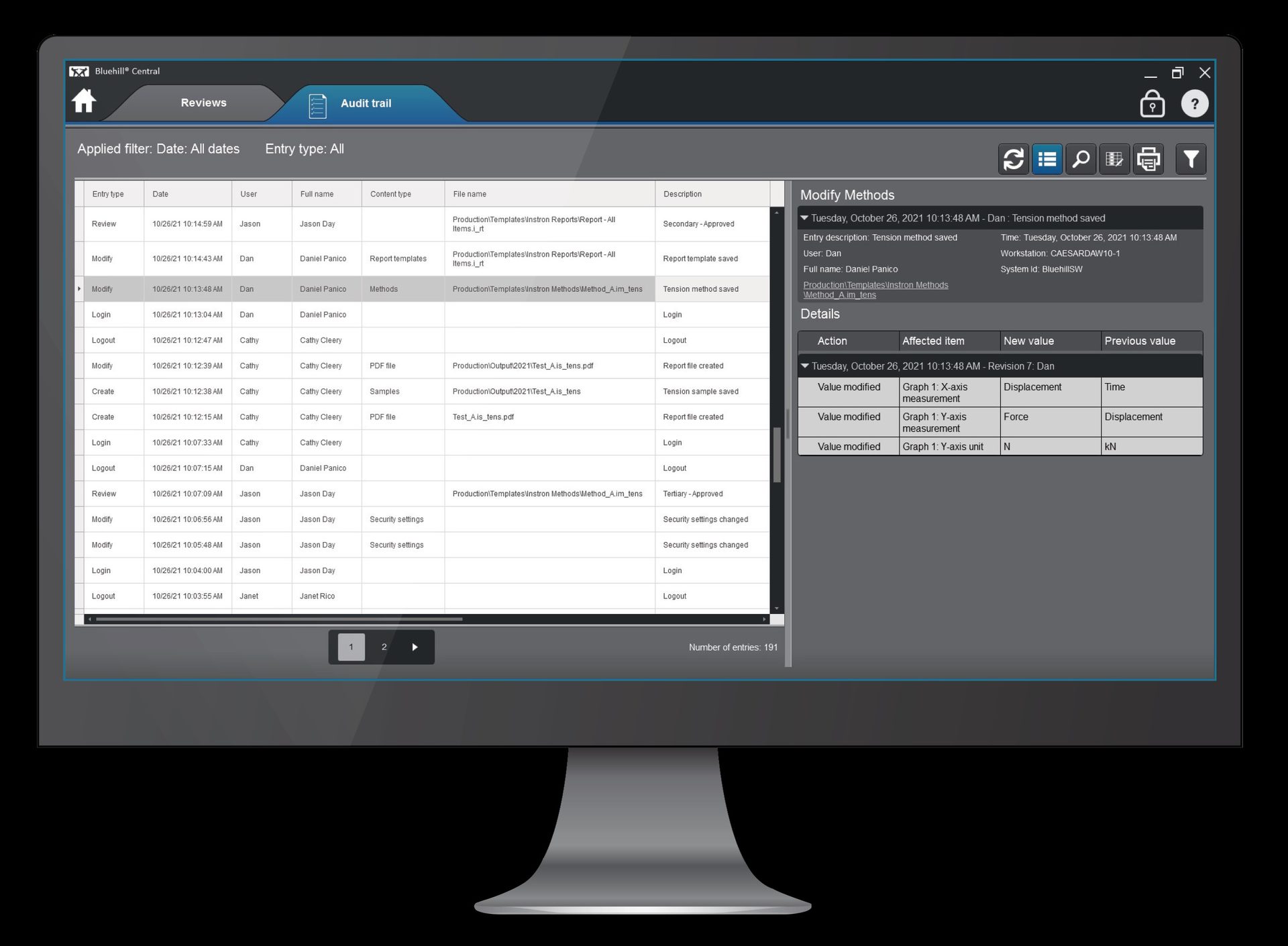
An example audit trail shows who did what and when on connected testing systems.
Standards and calibration reflect a push for consistency
As testing becomes more integrated, standards and calibration practices carry added weight. Force testing relies on established methods from organizations such as ASTM International, the International Organization for Standardization (ISO), the European Norm (EN), British Standards (BS), and the Japanese Industrial Standards (JIS). While many standards address similar tests, differences in parameters can complicate global manufacturing.
Lio points to tensile testing as an example. ASTM D638 and ISO 527-2 define different procedures, which can produce results that do not align. Manufacturers serving multiple markets may need to run separate tests to satisfy each standard.
“There is gradual movement toward harmonization,” Lio says. “Some British and European standards already align with ISO, which reduces duplication.”
Full alignment across all standards remains unlikely in the near term, but suppliers see progress toward consistency. That progress helps manufacturers reduce redundant testing while maintaining compliance.
Calibration practices also reflect higher expectations. Tierney says most end users now enforce regular calibration, often on an annual basis. In regulated industries, verification occurs more frequently.
“Medical device manufacturers may verify load sensors monthly or even before testing a new batch,” Tierney says. “They want assurance that measurements remain within tolerance.”
Bramley notes growing interest in automated calibration systems. Automated routines reduce operator influence and limit variability introduced by manual procedures. That consistency matters when measurements approach the lower limits of force detection.
Traceability and speed drive the next phase of force testing
Manufacturers increasingly expect testing systems to support traceability without slowing production. Sam Havel, applications engineer at Instron, says industries with long regulatory histories provide a preview of where force testing is headed.
“Biomedical and aerospace companies have required traceability for years,” Havel says. “Now other sectors are adopting similar practices.”
Digital traceability tools capture method changes, electronic signatures, and audit trails automatically. Engineers no longer rely on paper logs or separate databases to reconstruct testing history. When issues occur, teams can identify who performed the test, which method they used, and when changes occurred.
Tierney sees similar trends on production floors. Manual test sequences give way to motorized systems that control motion and record data consistently. Software-driven testing reduces variability between operators and builds confidence in results.
“If problems show up later, traceability data helps teams understand what happened,” Tierney says. “That visibility supports corrective actions.”
Bramley expects continued investment in automation and higher sampling rates. Faster testing allows manufacturers to keep pace with production while capturing dynamic events that influence performance.
A more integrated role for force testing
Force testing has moved closer to the core of quality operations. As products shrink and assemblies become more complex, manufacturers need precise instrumentation, coordinated test methods, and data that flows directly into digital quality systems.
Suppliers say these changes do not eliminate the need for engineering judgment. Instead, they place greater emphasis on system design, method definition, and data interpretation. As force testing continues to evolve, manufacturers who align equipment, software, and standards stand to gain clearer insight into how products perform under real conditions.
For quality professionals, force testing no longer ends with a peak value on a screen. It extends into how data supports decisions across design, production, and compliance.